ZP’s AI ‘Dnyanrath’ stalled amid testing delays
| Date :26-May-2026 |
By Kunal Badge :
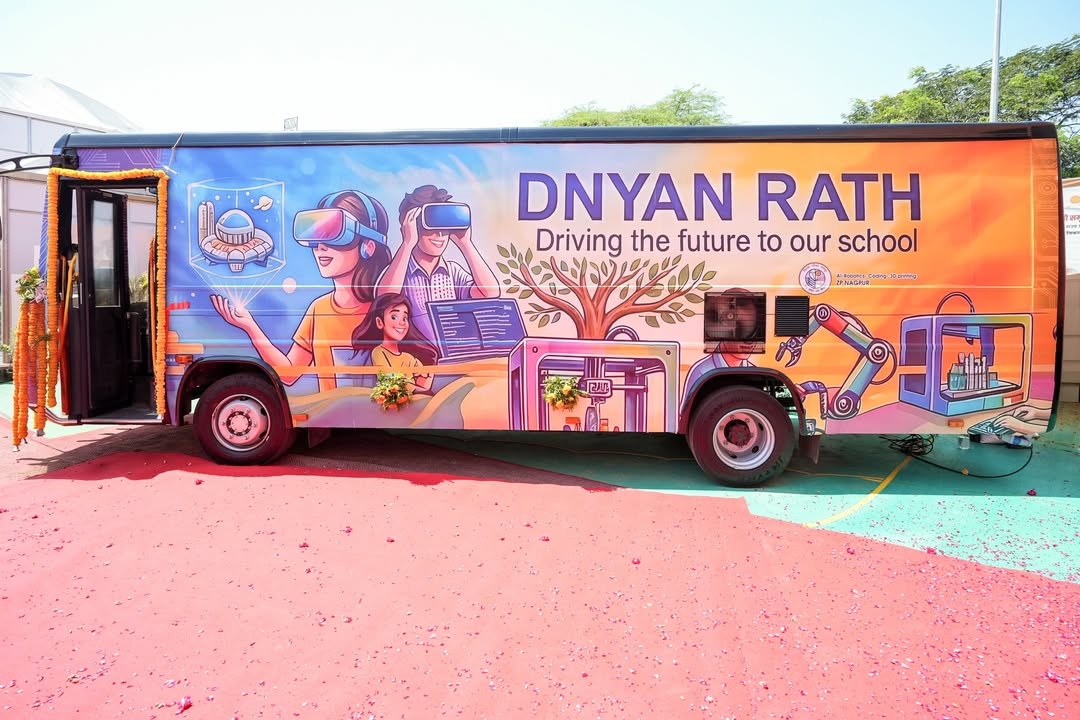
An ambitious initiative by the Nagpur Zilla Parishad to bring advanced digital education to rural students has hit a roadblock, with its much-publicised ‘AI Lab on Wheels,’ branded as ‘Dnyanrath’ lying idle for nearly two months due to pending testing and procedural clearances.
The specially designed mobile laboratory, equipped with cutting-edge learning tools, was envisioned as a transformative project to bridge the technological divide between urban and rural students. However, despite the project being unveiled with much enthusiasm, the vehicle currently remains parked inside the Zilla Parishad premises.
Officials had earlier attributed the delay to the absence of mandatory Regional Transport Office (RTO) permissions. Sources now indicate that the vehicle is awaiting technical testing from a Government Polytechnic or Industrial Training Institute (ITI) before it can be deployed across tehsils.
Interestingly, a second ‘Dnyanrath’ vehicle arrived at the Zilla Parishad headquarters on Friday, even as the first remains non-operational. Authorities claim that all remaining RTO approvals for the new vehicle are expected within the next two days.
The initiative was conceptualised under the leadership of Chief Executive Officer Vinayak Mahamuni with the aim of ensuring that students in remote villages are not deprived of exposure to modern technology due to lack of infrastructure.
Nagpur Zilla Parishad oversees 1,512 schools, a large number of which are located in remote and tribal regions. The mobile AI laboratories were designed to carry advanced educational tools directly to these schools.
Each Dnyanrath has been fitted with high-speed computers, interactive smart panels, virtual reality kits and 3D printers. The project also includes coding and robotics modules intended to familiarise students with artificial intelligence and emerging technologies at an early age.
Officials said the buses are not merely computer labs on wheels, but ‘future-ready learning centres’ capable of providing immersive educational experiences. Through virtual reality, students would be able to explore subjects ranging from space science to marine ecosystems, while 3D printing and coding kits would allow hands-on learning and innovation.
Despite its futuristic promise, the project’s prolonged delay
has raised questions over administrative preparedness and
execution.