SHG-run Dry Waste Collection Centres in city helping to cut 690 tonnes of CO2 annually: Study
| Date :28-May-2026 |
Staff Reporter :
The report suggests that the city would need around 40 centres, or one per ward, to manage waste effectively at the local level.
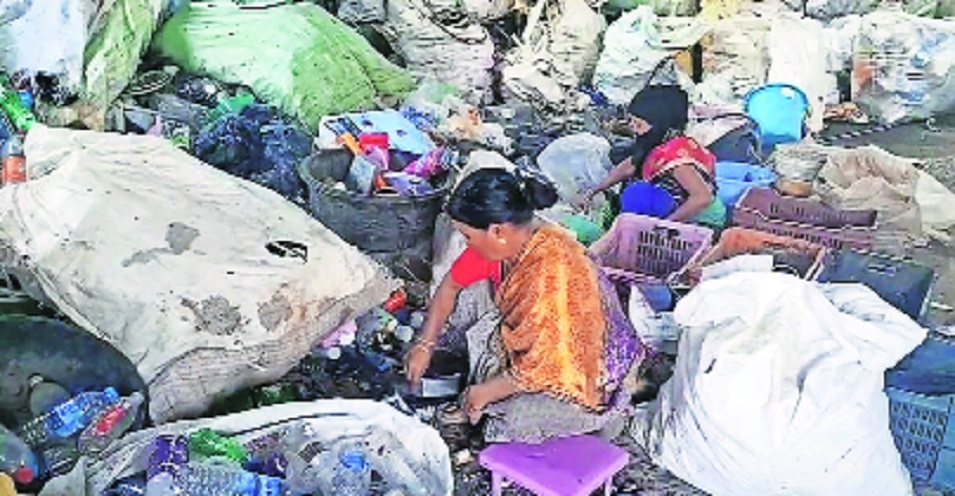
Small contributions can bring big changes in the society. With this objective, a women led self-help-group (SHG) in Nagpur took the responsibility of that hefty task which often local bodies struggle to handle. In a revolutionary move, four local waste centres led by women’s groups help the city to tackle waste while also contributing to measurable climate benefits.
According to a report by Centre For Sustainable Development (CFSD) and Asar Social Impact Advisors reveals that just four local Dry Waste Collection Centres (DWCCs) in city are cutting nearly 690 tonnes of Carbondioxide emissions annually.
Four such centres in the city located in Satranjipura Zone, Mangalwari Zone, Gandhibag Zone and Hanuman Nagar Zone, whose data was studied in 2025, currently handle about 325.7 tonnes of dry waste a year. The SHG is supported by Nagpur Municipal Corporation (NMC) through agreement signed in 2021, and manage day-to-day operations, from waste collection and sorting to the sale of
recyclable materials.
The report finds that these centres reduce emissions in two ways, first, recycling reduces the need to produce new raw materials, saving energy and cutting emissions. This accounts for about 307 tonnes of Carbondioxide equivalent emissions avoided each year. Second, by collecting and managing waste, the centres prevent it from being openly burned, a common practice in many cities.
This avoid another 383.31 tonnes of emissions annually, the study claimed.
Together this adds up to nearly 690 tonnes of emissions avoided each year, showing that local waste systems can also serve as climate solutions.
Nagpur currently has ten DWCCs functioning since November 2024, of which seven are operational. The report suggests that the city would need around 40 centres, or one per ward, to manage waste effectively at the local level. This initiative will also create jobs for over 200 people.
Nagpur generates approximately 1,200 metric tonnes of solid waste per day.
NMC transport all waste to Bhandewadi dumping yard daily. Such DWCCs in all Prabhags will help to decentralise waste management and reduce the burden of Bhandewadi dumping yard, claimed the report.
The centres face several practical challenges like lack of basic amenities such as drinking water and toilets. ‘Workers are having to pay high electricity bills from their own earnings.
It become even harder during certain times of the year. In monsoon, the centres face water-logging and in summer, the heat poses bigger challenge for the workers. NMC should address these challenges in the existing centres and start more DWCCs in all wards,’ claimed Lena Buddhe, Director, CFSD while talking with The Hitavada.