Court sends Giribala Singh, Samarth to five-day CBI custody till June 2
| Date :30-May-2026 |
Staff Reporter
:
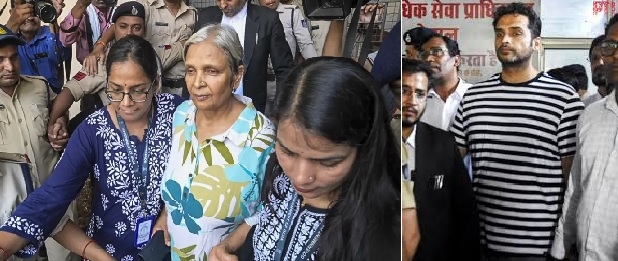
The Bhopal District Court on Friday remanded former judge Giribala Singh and her son Samarth Singh to five-day CBI custody in connection with the high-profile death case of Twisha Sharma.
Special Judge Shobhana Bhalave granted the Central Bureau of Investigation (CBI) permission to hold the accused until June 2
for intensive interrogation following their production before the court.
The court proceedings on Friday marked a notable shift in the legal trajectory of the case, highlighted by the irony of the venue. Giribala Singh, who previously presided as the Principal District and Sessions Judge in the same Bhopal District Court, found herself standing in the dock as an accused. The mother and son stood together in the same enclosure for nearly two hours during the hearing, during which they were observed
talking to eachother.
CBI investigators formally requested for the five-day remand to facilitate a thorough investigation, citing the need to prevent the tampering of evidence and the potential intimidation of witnesses.
Counsel for the accused did not oppose the remand request. The proceedings followed the Madhya Pradesh High Court’s recent decision to cancel the anticipatory bail previously granted to Giribala Singh, determining that custodial interrogation was essential to the investigative process. As a part of its ongoing technical probe, the CBI is constructing a digital reconstruction of the events leading up to the death of Twisha Sharma on May 12. Sources indicate that the agency is synchronising CCTV footage, mobile phone data, Wi-Fi logs, call detail records, and forensic mapping of the three-storey residence. This simulated digital avatar aims to track the precise movements of the deceased and the accused within the home, allowing investigators to identify discrepancies in timelines and statements. Twisha Sharma was married to Samarth Singh in December 2025. Her family has alleged persistent dowry harassment and mental abuse, leading to the registration of a case under the Bharatiya Nyaya Sanhita, 2023, and the Dowry Prohibition Act, 1961.