Chhattisgarh among India’s highest alcohol-consuming states: NFHS-6
| Date :01-Jun-2026 |
By K Anand Rao
:
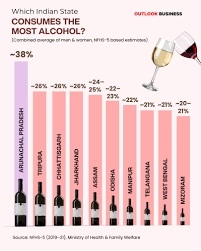
Chhattisgarh has emerged as one of India’s leading alcohol-consuming states, with the latest National Family Health Survey (NFHS-6, 2023-24) placing it second among the country’s major states in alcohol consumption among both men and women.
According to the survey, 38.3 per cent of men aged 15 years and above in Chhattisgarh consume alcohol, compared to the national average of 18.9 per cent. Among women, the prevalence stands at 5.7 per cent, significantly higher than the national average of 1.1 per cent. The figures indicate that nearly four out of every 10 adult men and about six out of every 100 women in the state consume alcohol.
The survey also highlights a strong rural trend. Nearly half of rural men in Chhattisgarh reported alcohol consumption, suggesting that drinking remains widespread across many villages and smaller settlements. The survey highlights a strong rural trend, where 41.1% of men and 6.8% of women consume alcohol, compared to 27.8% men and 1.6% women in urban areas. The state’s figures are more than double the national average for men and over five times higher for women.
Among India’s major states, Telangana topped the list with 43.9 percent of men and 7.1 percent of women reporting alcohol consumption. Chhattisgarh ranked second, followed by Jharkhand, where 33.6 percent of men consume alcohol. Other states with relatively high prevalence include Himachal Pradesh, Tripura, Meghalaya and Uttarakhand.
While Telangana and Chhattisgarh lead among larger states, Arunachal Pradesh
recorded the highest alcohol consumption in the country overall. The survey found that 50.5 percent of men and 23.2 percent of women in the northeastern state consume alcohol. More than half of rural men and nearly one in four women in Arunachal Pradesh reported alcohol use. Sikkim also reported high prevalence, with 42.2 percent of men and 19.9 percent of women consuming alcohol. For Chhattisgarh, the data highlight the need for greater public awareness, community-level interventions and health initiatives aimed at addressing alcohol-related social and health concerns, especially in rural areas where consumption remains particularly high.