Kanha Tiger Reserve shifts gears to extensively combat spread of CDV
Date :01-Jun-2026
By Ashish Rajput :
Kanha Tiger Reserve administration has stepped up efforts to prevent the spread of Canine Distemper Virus (CDV) among carnivores in the reserve, combining extensive vaccination drives with large-scale public awareness campaigns in villages surrounding the forest.
Speaking to ‘The Hitavada’, Field Director of Kanha Tiger Reserve, Ravindra Mani Tripathi (IFS), said the administration is treating the situation with utmost seriousness. Special awareness programmes are being conducted through Gram Panchayat-level meetings to educate villagers and farmers about the risks posed by the virus. Residents are being urged to vaccinate their pet dogs regularly and prevent them from straying into forest areas, where they could potentially transmit infections to wild carnivores.
Tripathi clarified that the exact cause behind the recent deaths of a tigress and her cubs has not yet been established. The forensic examination report is still awaited, and only after its receipt will officials be able to determine whether the deaths were linked to any disease, including CDV.
Recognising the potential threat, the Principal Chief Conservator of Forests
(Wildlife), Madhya Pradesh, has constituted a high-level committee under the chairmanship of the Chief Conservator of Forests (CCF), Jabalpur. The committee includes Deputy Directors (Veterinary) from Jabalpur and Mandla, the Chief Medical and Health Officer (CMHO), and veterinary experts from the School of Wildlife Forensics and Health, Jabalpur. The team has been tasked with collecting samples from carnivores and water bodies for scientific analysis and disease surveillance.
As part of preventive measures, more than 1,100 dogs in villages around the tiger reserve have already been vaccinated with the support of the National Tiger Conservation Authority (NTCA).
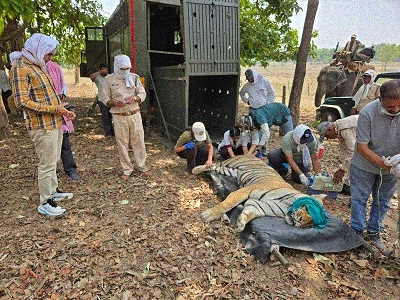
Tripathi further revealed that during the ongoing surveillance campaign, three tigers showing signs of illness were identified, examined, treated, and released back into the wild after sample collection. Rapid antigen tests conducted on these animals did not indicate the presence of the virus. Forest patrolling teams have been instructed to maintain heightened vigilance, monitor big cats for any unusual symptoms, and collect range-wise health data on tiger populations.
The tiger reserve administration is also ensuring strict implementation of guidelines issued by the Wildlife Conservation Trust (WCT) under the Animal Birth Control (ABC) Programme.
Members of Eco Development Committees, local NGOs, and community volunteers are actively supporting the campaign. Meanwhile, hotel and restaurant owners operating in and around the reserve have been directed not to dispose of food waste in forest areas, as such practices attract stray dogs and increase the risk of disease transmission to wildlife.
Officials believe that a combination of scientific monitoring, community participation, vaccination drives and strict adherence to conservation protocols will be crucial in safeguarding Kanha's rich wildlife population from the threat of Canine Distemper Virus.