Long duty hours, fatigue taking toll on commercial vehicle drivers
| Date :01-Jun-2026 |
By Kunal Badge :
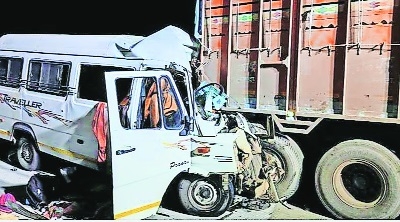
As roads across Maharashtra become smoother, straighter and faster, the dangers associated with road travel have increased significantly. The repeated accidents involving commercial passenger vehicles on the Samruddhi Mahamarg over the past few years, which have claimed hundreds of lives, have highlighted a growing concern. Investigations into many of these accidents have often pointed towards driver negligence, lack of sleep or fatigue.
The concern is not without basis. Union Road Transport and Highways Minister Nitin Gadkari has cited findings showing that 58.3 per cent of commercial vehicle drivers experience fatigue or lack of sleep during journeys. While the figure underscores the scale of the problem, there is still no comprehensive mechanism to assess fatigue levels or sleep deprivation among drivers in real time.
A regulatory blind spot
Despite growing recognition of fatigue as a road-safety issue, there is no comprehensive framework regulating how long commercial passenger vehicle drivers can remain on duty, how much rest they must receive between shifts, and whether they are physically and mentally fit to transport passengers over long distances.
Thousands of tourist buses, passenger vans and employee transport vehicles operate daily on Maharashtra’s roads. While operators must comply with permit conditions, vehicle fitness norms, insurance requirements and licensing regulations, there is no mandatory electronic system tracking the actual duty hours of most drivers.
The science behind
driver fatigue
Research conducted by the Indian Institute of Technology, Bombay, has highlighted the dangers associated with sleep deprivation among drivers. The study found that drivers who sleep for less than five hours face a significantly higher risk of being involved in accidents.
Several major accidents reported in Maharashtra in recent years have also drawn attention to concerns regarding driver fatigue. In many cases, investigators have examined whether drivers may have fallen asleep or lost concentration after prolonged hours behind the wheel.
Commercial pressure, compromised rest
A senior executive associated with a private travel company, speaking on condition of anonymity, acknowledged the pressures faced by operators. “Passengers expect overnight connectivity and operators try to maximise vehicle utilisation. Drivers are frequently required to complete multiple trips within short intervals,” he said.
Another transport operator from Vidarbha pointed to an increasing shortage of experienced drivers. “Many drivers work for multiple contractors. One operator may not know how many hours a driver has already spent on another assignment before reporting for duty,” he said.
In the absence of specific regulations governing duty hours, the responsibility of maintaining safe working conditions largely falls on transport operators and drivers themselves.
While operators seek to maximise vehicle utilisation and profitability, drivers—many of whom earn modest wages—often have little option but to comply with demanding schedules. Although labour laws provide for rest after prescribed working hours, industry sources say drivers frequently do not receive adequate respite during peak travel periods.
Kiran Bidkar, Regional Transport Officer, Nagpur (City), said the department follows all existing regulations applicable to commercial passenger vehicles.
“Even though there is no provision for regulation of duty hours for commercial vehicles, the department can act on any complaint by a driver if labour law provisions are being violated,” said Bidkar. While fatigue-monitoring tech has been mandated for heavy commercial vehicles, its implementation is scheduled only from January 1, 2028. Until then, the question confronting policymakers is whether regulations will continue to focus primarily on vehicles, or begin addressing condition of person behind the wheel before next preventable tragedy occurs.