Paver block–cement road gap turns into skid trap
| Date :01-Jun-2026 |
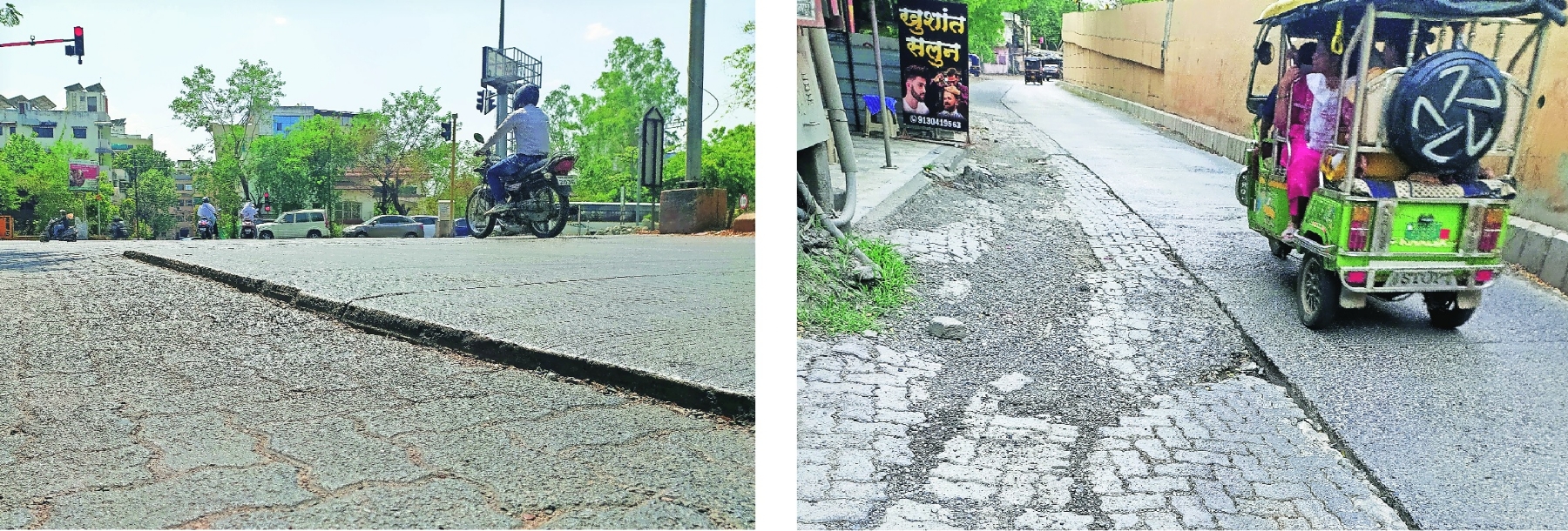
(Left) In front of petrol pump, near Rahate Colony Sq. (Right) Road leading towards towards Ashok Chowk from Suresh Bhat Auditorium.
By Kabir Mahajan :
Cement roads built to provide smoother and safer travel are now turning into a source of concern for commuters across the city. Several newly-constructed cement roads in Nagpur have developed noticeable height
differences between the main concrete surface and adjoining paver-block sections, creating dangerous stretches that pose
a serious risk to two-wheeler riders.
At many spots, the paver blocks have sunk below the level of the cement road, leaving an uneven edge between the two surfaces. While the difference may appear minor, riders say it can be enough to destabilise a two-wheeler, especially when changing lanes or moving towards the roadside.
Experts point out that when a two-wheeler moves from a lower paver-block section onto the higher cement road, the tyre can hit the raised edge unexpectedly. The sudden jerk can throw the vehicle off balance, causing the rider to wobble or skid. The reverse situation can be equally dangerous. If a tyre slips off the cement road onto a sunken paver-block shoulder, it can get dragged downward abruptly, making it difficult for the rider to maintain control.
Heightened risk
during monsoon
The risk increases largely during the night and monsoon season. Poor visibility, water-logging and slippery road conditions can make these uneven stretches almost impossible to notice in time, leaving commuters vulnerable to accidents.
According to observations from several parts of the city, the problem appears to be linked to the way paver blocks have been installed. While the cement roads rest on a solid concrete base, many paver-block sections are reportedly laid on sand or loose soil. Continuous movement of heavy vehicles causes vibrations that gradually compact the soil underneath, leading the blocks to sink over time.
As a result, gaps and uneven levels develop where the two surfaces meet. What begins as a construction defect eventually becomes a safety hazard for daily commuters. Commuters have urged the Nagpur Municipal Corporation (NMC) to inspect recently completed cement road projects and identify stretches where paver blocks have settled unevenly. They have also called for stricter quality checks and greater accountability from contractors responsible for the work.