78 yrs after Independence, Road connectivity reaches Abujhmad’s Mayuripara
| Date :10-Jun-2026 |
Staff Reporter
:
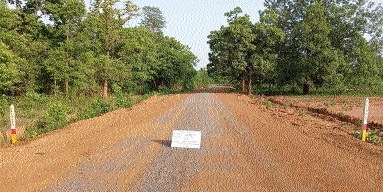
Seventy-eight years after Independence, the remote village of Mayuripara in the sensitive and erstwhile Maoist-affected Abujhmad region of Bijapur district is finally witnessing a tangible symbol of development, with road connectivity reaching the area under the Pradhan Mantri Gram Sadak Yojana (PMGSY).
The 16-kilometre road being constructed from Bail to Mayuripara is transforming the lives of residents who for decades remained disconnected from essential services and development opportunities. Officials said 13 kilometres of earthwork has been completed, while gravelling and construction of six culverts are in the final stages. The remaining work is expected to be completed during June.
For generations, villagers depended on forest tracks and difficult terrain for access to markets, schools and healthcare facilities. During the monsoon season, crossing rivers often required the use of boats,
making travel both time-consuming and risky.
Bail village Sarpanch Juggi Athami said the absence of road connectivity had kept the area isolated despite decades passing since Independence. She noted that geographical challenges and the region’s history of Maoist influence had slowed infrastructure development, but the ongoing project is bringing visible change to the lives of local residents. The improved connectivity is already benefiting schoolchildren by making daily travel easier and safer. Access to healthcare services has also improved significantly, enabling patients to reach hospitals and emergency care facilities in time.
Residents described the road as more than just a transport link, calling it a gateway to education, healthcare, economic opportunities and social progress. They expressed hope that completion of the Bail-Mayuripara road would accelerate development and improve living standards across the region. Officials said the project reflects continuing efforts to connect remote habitations with the development mainstream and ensure that the benefits of public infrastructure reach even the most inaccessible parts of the State.