BMC adopts four-tier waste segregation system with heavy fines
| Date :10-Jun-2026 |
Staff Reporter :
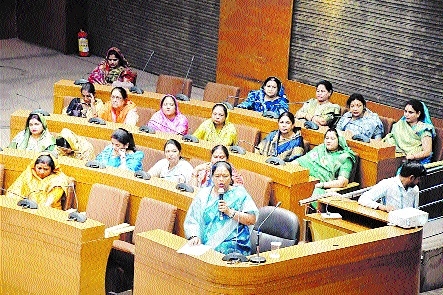
A special session of the Bhopal Municipal Corporation (BMC) Council was convened at the ISBT Council Hall on Tuesday to address the implementation of the Solid Waste Management Rules 2026. Presided over by Council Chairman Kishan Suryavanshi, the session featured a detailed presentation by environmental expert Atul Khare. The presentation highlighted that although these central regulations came into force nationwide on April 1, the Supreme Court had expressed strong displeasure over sluggish grassroots implementation across various states. Following reprimands from the apex court, the Urban Administration and Development Department directed all municipal bodies to conduct intensive awareness campaigns among public representatives and citizens, prompting this special session.
Expert Atul Khare explained that under the new regulatory framework, citizens must segregate domestic, institutional, and commercial waste into four distinct categories before disposal. The rules mandate strict punitive action and heavy fines for open dumping or burning of garbage. Furthermore, organisers of any public or private event expected to host over 100 people must notify the municipal corporation at least three days prior. Bulk waste generators are now legally required to manage their own organic waste onsite and complete mandatory registration on the centralised federal portal. Following the presentation, a heated discussion ensued as municipal councillors vehemently rejected the civic administration’s assertions of being fully prepared to execute the rules.
Councillors pointed out that severe shortages of field staff and essential equipment would hobble the enforcement of these stringent regulations. Congress councillor Azizuddin raised concerns over additional levies proposed for bulk waste generators, which administrative officials failed to clarify. Similarly, Mohammed Sarwar argued that waste management policies would remain ineffective on paper until the administration cracked down on single-use plastics and polythene, noting that silt excavated from drains is often left rotting on roadsides for days.
The debate heavily focused on the acute shortage of physical resources across various municipal wards. Councillor Yogendra Singh ‘Guddu’ Chauhan expressed deep concern over the lack of clarity regarding budget allocation and logistical backup, stating that when a garbage collection vehicle breaks down, waste remains uncollected for up to five days. Councillor Vilas Rao Ghadge highlighted that while the city’s total waste volume continues to surge, the
number of active sanitation workers per ward is being systematically reduced, urging the administration to prioritise human resource recruitment. Meanwhile, Rajendra Chouksey raised the issue of deteriorating cleanliness in multi-story government residential complexes, citing a severe shortage of collection vehicles for thousands of flats.
Highlighting the sluggish operational pace of the civic body, Devanshu Kasana reported that it took a municipal team six days to clear a fallen tree blocking a road in his ward, illustrating systemic administrative inertia. This statement drew sharp objections from ruling Bharatiya Janata Party councillors, leading to a brief but intense verbal altercation in the house. Conversely, Devendra Bhargava supported the new waste management rules, stating they would strengthen urban sanitation, though he emphasised that strict punitive measures must first be enforced against industrial zones and major commercial establishments. Amidst the flurry of allegations and systemic gaps, municipal officials announced that the corporation will soon draft a comprehensive five-year action plan to assess total urban waste generation, evaluate disposal methodologies, and project estimated financial outlays. Defending the administration’s performance, Mayor Malti Rai stated that night-shift sanitation drives are being actively reinforced at the grassroots level.
She remarked that ward councillors who remain active in their respective localities are well aware of the continuous, systemic efforts being made to streamline the city’s waste management infrastructure.