Need policy for unutilised industrial plots in Hingna MIDC: MIA
| Date :10-Jun-2026 |
Business Reporter :
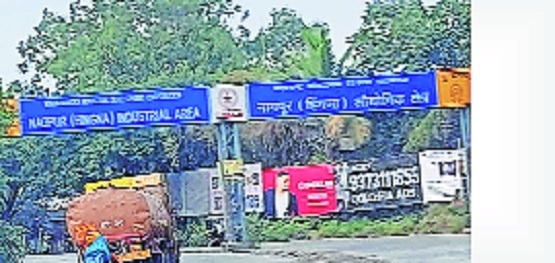
MIDC Hingna Industrial Area, Nagpur—one of Vidarbha’s oldest and most strategically located industrial estates—stands at a point of critical transformation. Industrialists said that Nagpur is witnessing renewed industrial interest driven by improved connectivity, logistics advantages, and a national push for decentralised manufacturing, Hingna MIDC is
being pushed into avoidable stagnation.
P Mohan, President, MIDC Industries Association (MIA), Hingna said that there is concern over large number of industrial plots in Hingna MIDC remaining idle, even as existing industries are unable to expand and new entrepreneurs are denied entry due to so-called “non-availability” of plots. Therefore, MIA strongly urges MIDC and the State Government to initiate immediate and decisive policy intervention. This must begin with a comprehensive audit of all long-pending and unutilised plots in Hingna MIDC, followed by firm corrective measures such as time-bound development milestones, incentives linked to early and verifiable project execution, voluntary surrender mechanisms with transparent and swift re-allotment, takeover of long-idle large plots with subdivision into MSME-friendly parcels, priority allotment to existing operational units seeking expansion, and creation of ready-to-use, plug-and-play industrial plots with simplified procedures.
There are over 100 industrial units in Hingna MIDC that are currently closed or non-operational.
Transparent monitoring, periodic review of plot utilisation, and clear accountability mechanisms are essential to ensure that industrial land is used strictly for its intended purpose, he said.
Hingna MIDC was conceived as a planned industrial estate to ensure productive land use, employment generation, and regional economic development. Unfortunately, over the years, several large industrial plots—belonging to closed or defunct units have remained locked
without any meaningful industrial activity.
Among the most prominent is Maharashtra Antibiotics and Pharmaceuticals Limited (MAPL), Richardson & Cruddas, MELTRON, Wavin India, have remained locked without any manufacturing or employment-generating activity for prolonged periods.
Beyond these large and well-known units, there are several smaller plots allotted decades ago where no industrial activity has taken place for over ten years. These plots, though smaller in size, collectively contribute significantly to artificial land scarcity within Hingna MIDC, he said.
Factors contributing to this include high ready-reckoner land rates, restrictions on transfers, prolonged litigation, regulatory closures, and declining economic viability of older business models.
Historical environmental compliance records further indicate that several industrial units in and around the Hingna industrial region were shut down by regulatory authorities due to non-compliance or unauthorised operations. While enforcement is necessary, the failure to subsequently unlock and reallocate such land has resulted in decades of unproductive land holding.
This situation reflects a serious structural failure in industrial land management.
Industrial land is a scarce public resource. “Allowing industrial land to remain idle indefinitely while genuine entrepreneurs struggle for space defeats the very purpose of MIDC and erodes confidence in the State’s industrial policy framework,” he said.
The impact is felt most acutely by MSMEs, the backbone of Vidarbha’s industrial economy. Several operational units in Hingna MIDC have fully utilised their permissible FSI and are ready to expand production, invest additional capital, and generate employment. Yet, due to the absence of adjoining or nearby plots, these units are forced to shelve expansion plans or look beyond Nagpur. At the same time, first-generation entrepreneurs eager to establish manufacturing units in Hingna MIDC are turned away due to artificial land scarcity created by non-performing allotments.
This stagnation is particularly unfortunate because the fundamentals are otherwise
strong. Hingna MIDC benefits from improved road and rail connectivity, proximity to logistics corridors, and renewed national focus on manufacturing decentralisation.
However, closed or non-operational units is preventing the estate from capitalising on this opportunity.
“The economic cost of idle industrial land is enormous. Every hectare of functional industrial land generates direct and indirect employment, supports ancillary industries, strengthens industrial clusters, and contributes to state and local revenues. When land remains unused for decades, jobs are lost, MSME growth slows, public infrastructure remains underutilised, and the region’s industrial momentum weakens,” P Mohan pointed out.