City rider becomes first to visit India’s 58 tiger reserves on motorcycle
| Date :11-Jun-2026 |
Staff Reporter :
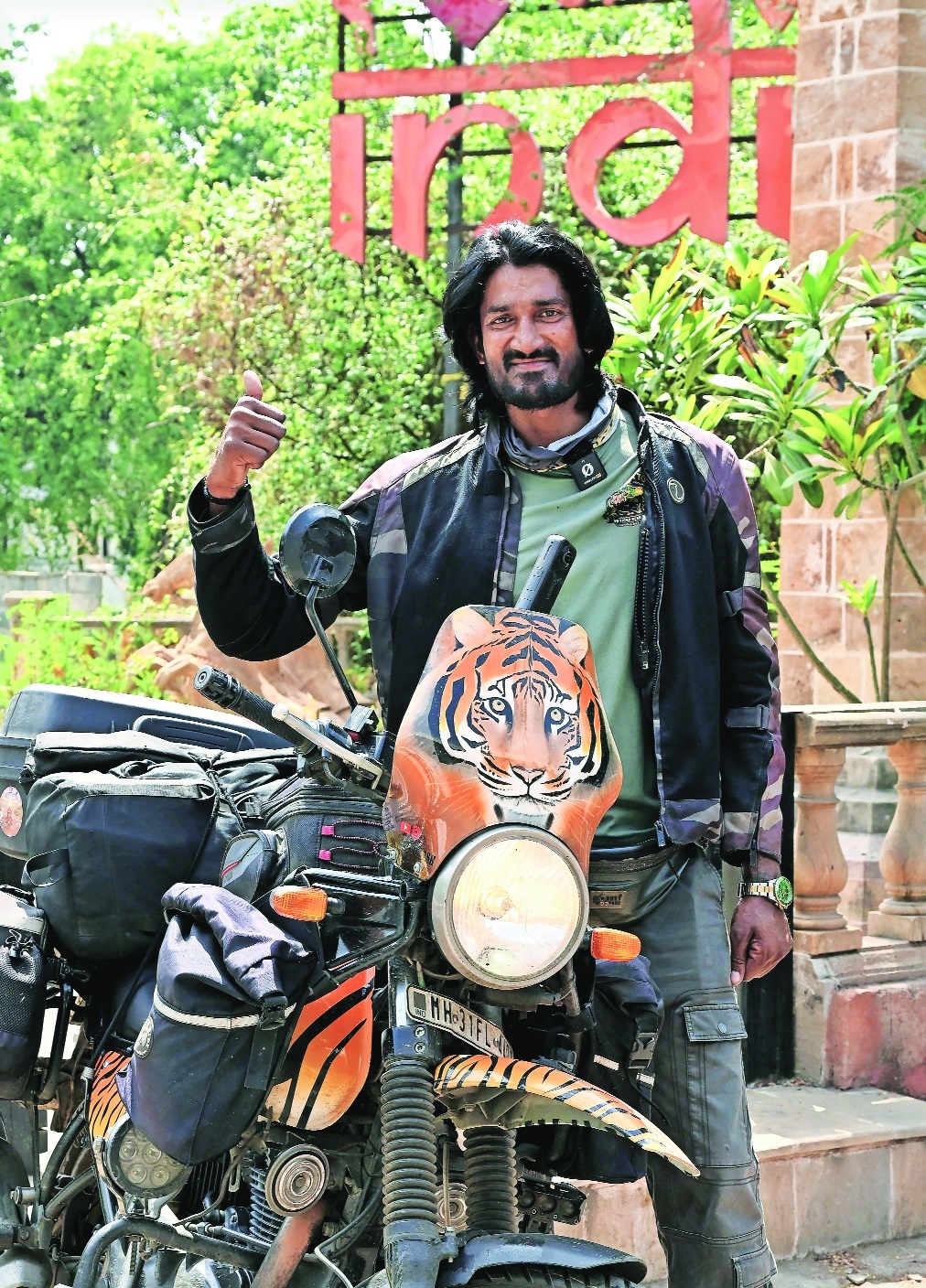
Ashish Yadav rode out of Zero Mile on the morning of February 10, carrying with him a resolve to visit every Tiger Reserve in India on a motorcycle. On June 10, 121 days and more than 18,500 kilometres later, he rode back to the same spot, completing what is believed to be a first in Indian wildlife travel
history.
Yadav just closed a journey that took him through 58 Tiger Reserves across nearly every corner of the country, from the dense forests of Arunachal Pradesh and the remote hills of Mizoram, to the wildlife corridors of South India and the grasslands of central Maharashtra.
Yadav is not a newcomer to long distance riding. He has completed four expeditions to Ladakh and ridden through several Indian states. Yadav lived inside Bandhavgarh National Park in Madhya Pradesh for 26 months, immersing himself in wildlife. It was there,
on an ordinary morning in the forest, that the idea crystallised. He realised he should not limit himself to one park when India has 58 others account for the expedition.
The most harrowing moment of the journey came in Arunachal Pradesh.
Travelling between Kamlang Tiger Reserve and Namdapha Tiger Reserve, Yadav chose what appeared on the map to be a 44 kilometre shortcut, avoiding a 150 kilometre detour. However, there was no road.
For three hours, he was stranded in a remote stretch near the Myanmar border with no path forward. He eventually found a village of five houses. The residents helped him load his motorcycle onto a boat and cross two rivers.
Crossing states where neither Hindi nor English was widely spoken presented its own challenge.
Yadav relied heavily on translation applications on his phone to ask for directions and communicate with locals.
Across the country’s tiger reserves, he also documented a recurring problem : the conflict between growing human populations living inside reserved forest areas and increasing wildlife populations.
Overall, the expedition, titled the All India Tiger Reserve Motorcycle Expedition, was conceived not only as a personal achievement but as a platform for conservation awareness and responsible nature tourism.