Pranic Concept & Energy Code
| Date :14-Jun-2026 |
By DR BHUSHAN KUMAR UPADHYAYA :
The concept of Prana occupies
acentral place in the Yogic
understanding of life. Ancient
Yogictexts describe Prana as the
vital forceanimatingthe body,
mind, and consciousness. Prana is
not only breath, although breath is
the easiestexpression of Prana.
According to Yoga, Prana flows
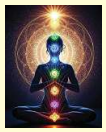
in subtle energychannels called
Nadis and concentrated in Chakras
-the energycentres.Health, vitality, emotional balance, and spiritual
growth are said to be dependent
on harmonious flow of Prana.
Modernneurosciencedoes not
use the word Prana, but recent
findings in brain science, psychology,bioelectricity ,and neural activity demonstrate an intriguing parallel to the Pranic model.While
neurosciencetalks of neural networks, electrical signalling, autonomic regulation, and energy
metabolism; Yoga supports Prana,
Nadis, and Chakras.
While the terminologydiffers, the underlying
understanding points to the same
human experience.
Yogictraditions describefive
major subdivisions of Prana -
Prana, Apana, Samana, Udana ,
and Vyana. These governrespiration, elimination, digestion, communication, and circulation respectively.Interestingly these functions
correspond closely with the physiological systems regulated by autonomic nervous systems.The body
continuously communicates
through billions of electrical
impulses along neurons creating a
dynamic network that sustains life.
In asense the nervous system may
be viewed as the physical counterpart of the energetic pathways
described by Yoga.
Neurosciencehas also demonstrated that breathing patterns
directly influencebrain activity.
Slow and rhythmic breathing activates the parasympathetic nervous
system through the vagus nerve ,
reducing stress hormones and promoting calmness.Yogic practices
such as Pranayama designed thousands of years ago regulate Prana
through breath control.
Today
research showsthat controlled
breathing can improve emotional
regulation, attention, heart rate
variability, and cognitive performance. In this waybreath becomes
the bridge between the ancient
science of Yoga and modernscience of the brain.
The idea of the energy code of
the body can be understood as the
integrated network of neural, hormonal, and energetic communications that governthe functioning of
the body.Everythought, emotion,
and bodily action is associated
with the patterns of electrical and
chemical activity.Yoga suggests
that these activities are deeply
influenced by the quality and
direction of Prana.When Prana
flowsfreely, the mind
becomes clear, emotions become balanced
and the body functions
optimally.When Prana
is distributed, fatigue,
anxiety, and diseases
mayoccur.
Meditation offers
another fascinating
connection between
Yoga and
Neuroscience.
Brain imaging studies suggest regular meditation
alters neural pathways, enhances
emotional resilienceand improves
self awareness.Yogic philosophy
explains these changes as the
refinement and conservation of
Prana. As mental fluctuations
decrease, energy that is dissipated
through constant thinking becomes
available for higher awareness and
creativity.The Chakra system provides an additional framework for
understanding the energy code of
the body.While the Chakra system
is not physically
proved, its location
certainly corresponds
with the nerve plexuses andendocrine
glands. Chakras certainly represent the
physiological centres
of the body.
Ultimately, Yoga
explores experiences
from inside through
direct awareness, while neuroscienceexamines it from outside
through observation and measurement.Both indicate that human
beings are not merely biochemical
,but an integrated system of the
body, mind, energy, and consciousness.The ancient Yogicsystem remains remarkably relevant
even today by refining breath, cultivating awareness, and balancing
Prana.
(The writer is Former DG Police
&CG, Homeguards,
Maharashtra) ■
