Parking crisis in Nagpur: A collective failure, a collective responsibility
Date :15-Jun-2026
By Tejinder Singh :
Renu
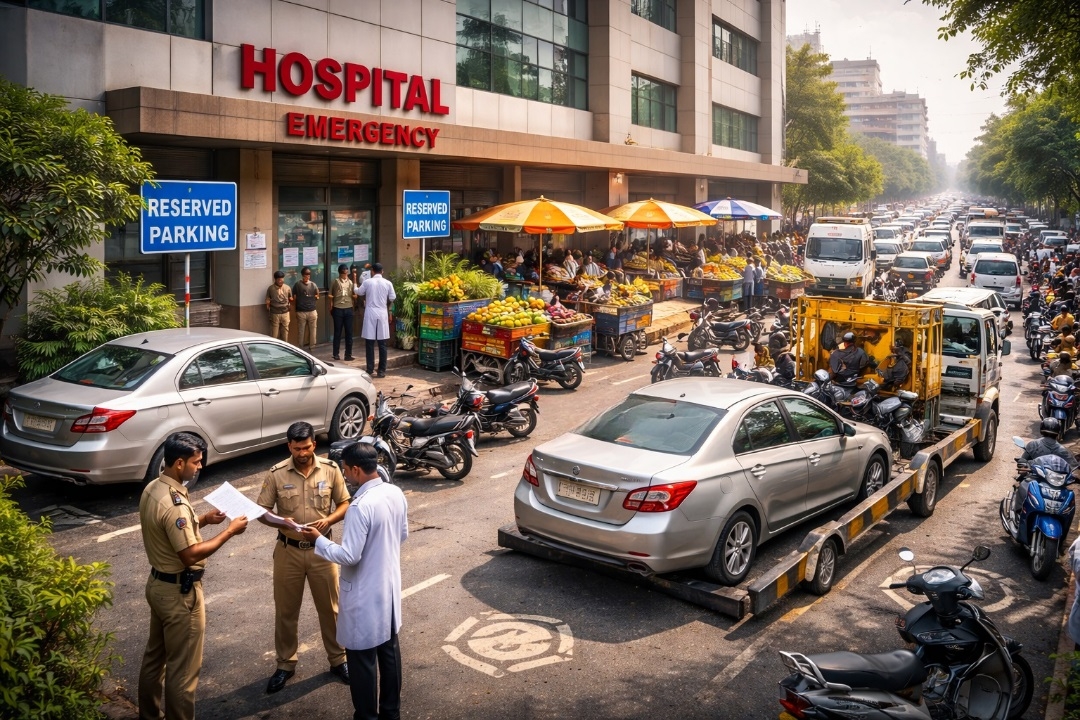
Nagpur’s parking crisis is not the fault of any one individual or institution; it is a collective failure. While the administration has not adequately planned parking infrastructure in the Development Plan, citizens too have often ignored basic parking discipline and responsible vehicle ownership. Many households own multiple vehicles without ensuring sufficient parking space within their premises.
Ironically, several bungalows and residential properties with ample internal parking continue to park vehicles on public roads. At the same time, our city’s Development Plan is nearly four decades old, whereas Nagpur has expanded rapidly in every direction.
This mismatch between planning and growth has inevitably created chaos. Instead of merely highlighting problems, we should focus on practical solutions:
1. Identify and redesign parking-stressed zones. In areas facing chronic parking issues, authorities should assess whether existing footpaths are genuinely serving pedestrians or have become largely decorative. Many footpaths are encroached upon or poorly maintained, forcing pedestrians onto roads. Wherever feasible and safe, road space may be rationally redesigned to improve traffic movement and parking management.
2. Deploy dedicated traffic personnel during peak hours.Traffic police presence should be increased in high-congestion areas, particularly during evening peak periods.
3. Strengthen the traffic enforcement machinery. As the city has grown manifold, the strength of traffic personnel has not increased proportionately. This gap needs urgent attention.
4. Regulate high-traffic commercial activities. Certain businesses generate substantial vehicle movement, but operate with minimal scrutiny regarding parking impact. The NMC should consider introducing approvals or regulatory mechanisms to ensure adequate parking provisions before permitting such establishments.
5. Address parking in residential areas. Property owners who have parking space within their compounds should be encouraged and where necessary directed, to utilise it rather than occupying public roads. Many residential lanes today face severe parking congestion despite available private parking. It is also worth noting that several Government and administrative buildings themselves lack adequate parking facilities.
This clearly demonstrates that responsibility for the current situation is shared by citizens, planners, and Government agencies alike. The solution lies not in blame but in gradual, well-planned enforcement accompanied by adequate public awareness and reasonable transition periods.
Since the problem is collective, the responsibility to solve it must also be collective. Only through co-operation between citizens and authorities can Nagpur move towards a more organised and sustainable parking system.