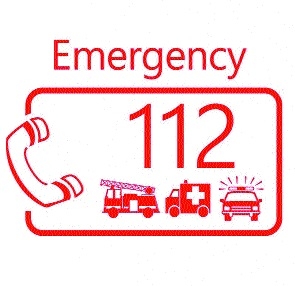
Single 112 call to activate police, ambulance, fire services
Date :18-Jun-2026
Staff Reporter :
In a major step toward simplifying emergency assistance, citizens will no longer have to struggle with remembering different contact numbers for the police, ambulance and fire brigade during crisis. The Central Government is set to launch the advanced Emergency Response Support System (ERSS 2.0) across Madhya Pradesh, including the State capital Bhopal. Under this sophisticated technical infrastructure, dialling the single emergency number 112 will instantly activate the command centres of the police, health, and fire departments simultaneously, ensuring synchronised and rapid dispatch of emergency services to the spot.
GPS technology to instantly pinpoint caller location: Designed to optimise disaster management, medical response, and crime control, the new system leverages cutting-edge Global Positioning System (GPS) technology. The moment a distress call is placed, the caller’s precise real-time location will be automatically traced and plotted on the central command centre’s digital mapping interface. This automation removes reliance on verbal directions from panicked callers, allowing dispatchers to immediately locate and alert the nearest patrolling vehicle, ambulance, or fire tender.
Real-Time Data Transmission prior to call completion: To eliminate critical administrative delays, ERSS 2.0 incorporates a revolutionary digital dispatch mechanism that bypasses conventional workflow bottlenecks. Responding field units will not have to wait for the caller to finish explaining the situation to the operator. Instead, initial data entered by the call-taker will stream instantly to the Mobile Data Terminals (MDTs) or smartphones of patrolling teams on the ground while the conversation is still ongoing, ensuring assistance is already en route during the vital golden hour of life-saving interventions.
Artificial Intelligence to filter fake and prank calls: To maintain operational efficiency, the system is integrated with a specialised Artificial Intelligence (AI) powered filtration engine. This advanced software is capable of instantly identifying and isolating spam, repeat prank calls, and non-emergency dials. By filtering out these nuisance calls before they reach human operators, the AI tool will significantly alleviate pressure on dispatch resources, leaving emergency lines clear for genuine callers in desperate need of assistance.
Live traffic integration to guide drivers through congestion: Navigation and route planning for the emergency fleet will also receive a major technological upgrade, as 112 response
vehicles are being linked to live traffic networks and digital mapping services.
This centralised system will actively analyse real-time road congestion patterns and suggest the fastest, bottleneck-free routes to the dispatch drivers. The traffic-aware routing is expected to dramatically lower response times, particularly in congested urban hubs such as Bhopal where traffic jams often delay critical help.
Digital shield modelled on global emergency networks: India’s unified 112 helpline has been engineered on the lines of world-class emergency networks like the 911 system in the United States and the 112 protocol in Europe.
With the launch of ERSS 2.0, the country is consolidating its police, medical, and fire rescue operations under a single, highly resilient digital
platform.