NMC’s nullah cleanliness drives leave Nagpurians at monsoon’s mercy
Date :02-Jun-2026
Staff Reporter :
At many stretches, filth and debris remain uncleared, even as dark clouds hover over Nagpur
Year after year, the Nagpur Municipal Corporation (NMC) rolls out its calendar of monsoon preparedness drives, sounding the trumpets of civic vigilance. Yet, as the sky darkens and the monsoons loom just days away, the claims made during the review meetings seems to be falling apart on the ground. Despite repeated, heavily publicised cleanliness campaigns, the civic body is fundamentally failing to clear the city’s vital drainage arteries, exposing a deep chasm between official paperwork and grim reality.
When The Hitavada team conducted a ground assessment of several major nullahs across the city, the structural negligence was glaring. Far from being monsoon-ready, the actual condition of these stormwater channels indicates that completion is miles away.
When asked about the ongoing work to the residents residing beside the nullahs, they expressed that while the NMC did deploy heavy machineries to clear highly visible patches near major intersections but they have not seen the machineries working at the locations mentioned below to clear the patch.
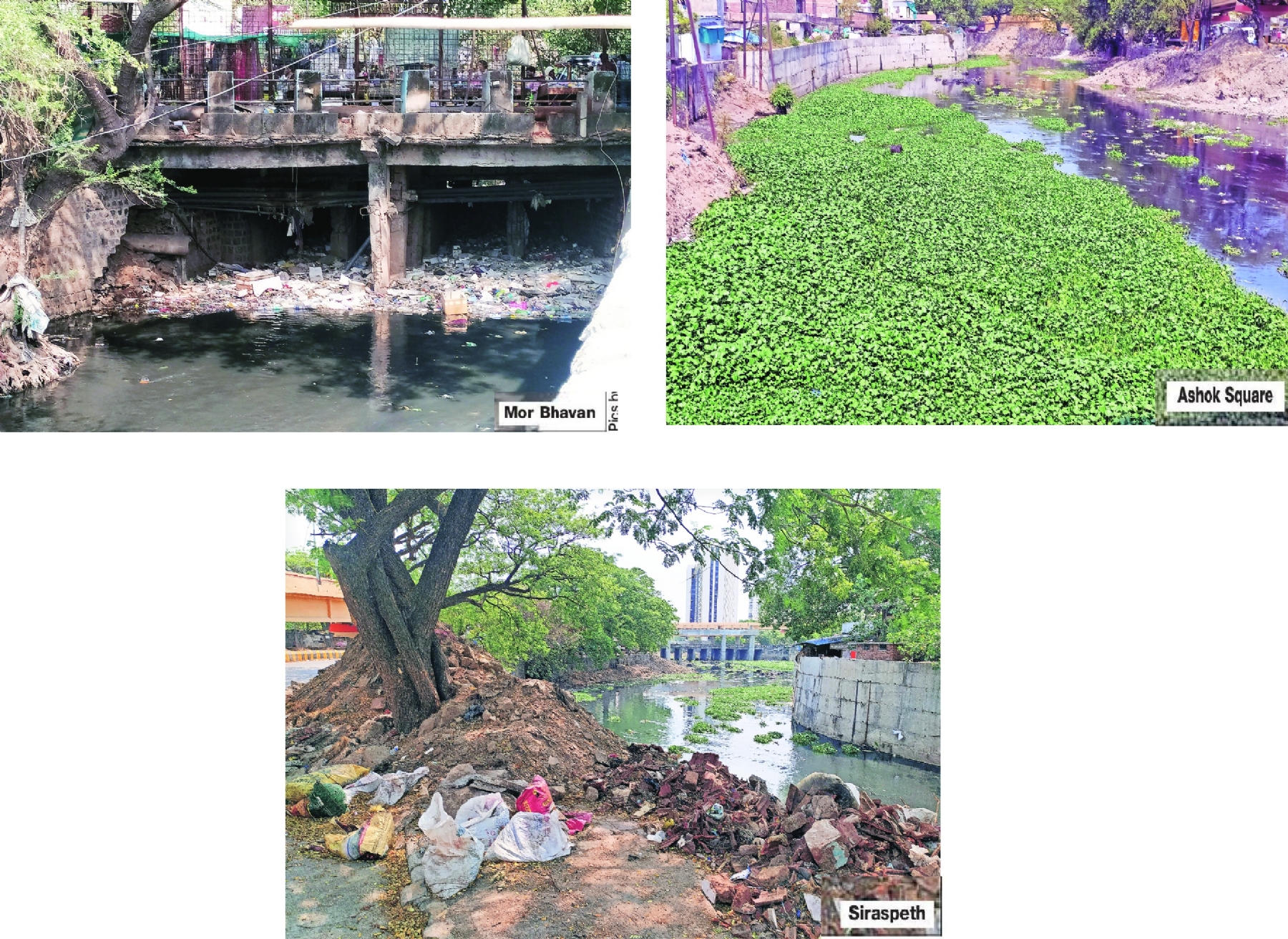
At Reshimbagh, Ashok Chowk and Imambada, residents argued that the thick blankets of invasive water hyacinth cover the water surface throughout the year. Despite repeated cleanliness drives, these nullah remains filled with the water hyacinth.
Eye-soaring visuals appear at Sitabuldi Gawlipura and Siraspeth, where heavy debris and construction waste dumped along the banks threaten to cave into the stream and severely affecting the natural flow. Perhaps most shocking is the sight at Mor Bhavan, where an entire underside passage of the culvert sits completely choked with domestic plastic trash.
Images captured across key locations reveal a severe lack of preparedness that could trigger widespread urban flooding. The superficial touch-ups at mere few spots do not constitute an entire systemic cleanup. The absolute truth is that the interior stretches of these channels remain severely silted.
This extensive, ongoing failure poses a direct and catastrophic threat to Nagpur’s citizens. Environmentalist suggest that if these clogged subterranean systems hit the torrential downpours of peak monsoon with zero natural ventilation or flow, urban water-logging is completely unavoidable. Even worse, the severe back flow will ensure that toxic, black sewage water forces its way directly into the basements and living rooms of low-lying residential areas, turning a management failure into a full-blown public health crisis.
In an attempt to seek accountability regarding these incomplete desilting metrics and operational loopholes, The Hitavada repeatedly tried to contact Chief Engineer Manoj Talewar from the NMC's Public Works Department (PWD) but he did not respond to repeated calls.
True to the prevailing culture of administrative evasion, no response was received.
As the first rains approach, the citizens of Nagpur are left with a sobering realisation: they are paying for a multi-crore illusion of safety, while the city’s actual defenses against flooding remain completely choked. NMC officials had claimed that the annual drive would be over by end of May, but looking at ground situation, in case of heavy deluge Nagpurians are likely to face submerged roads and flooding of low lying localities, and all thanks to shallow working of NMC that too in second capital of State.