Elevated cement roads across city leave homes vulnerable, commuters at risk
| Date :20-Jun-2026 |
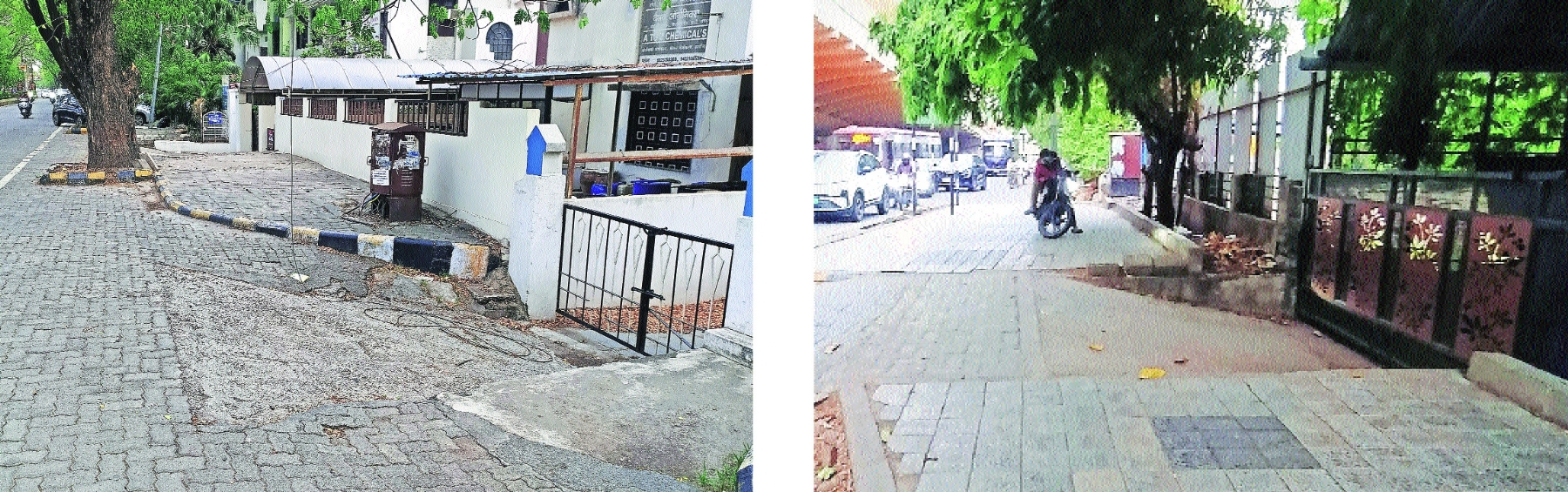
Cement roads built at an elevated height in Laxmi Nagar (left) and Sai Mandir Chowk (right) leaving homes at risk with the approaching monsoon. The steep drop may also cause two-wheeler riders to lose their balance. (Pics by Satish Raut)
By Reema Mewar :
The city’s ambitious cement road project was envisioned as a long-term solution to potholes and deteriorating asphalt surfaces. But as monsoon approaches, a different concern is surfacing across several areas: many of these newly constructed roads have been built significantly higher than the adjoining roads, lanes and properties, creating a host of problems ranging from commuter safety to fears of waterlogging which were experienced in the past few years.
Despite growing public concern, the NMC and other government agencies continue to construct elevated roads without adequately addressing the consequences. Residents allege that there appears to be little concern for citizen safety and no clear plan to resolve the problems caused by the increasing height difference between roads and surrounding properties.
The issue is visible at multiple locations.
At Janata Square, the road leading towards Rahate Colony has been raised considerably, leaving commuters to navigate a bumpy and poorly finished slope despite the road being brand new.
Along Wardha Road, near Sai Mandir, the height difference is even more obvious. The drop from the main cement road to adjoining lanes is so steep that two-wheeler riders risk losing balance while entering or exiting side roads. Commuters expressed concern that the sharp drop could damage the underside of four-wheelers. What should have been a seamless connection between roads has instead become a potential hazard.
The concerns do not end with mobility. Residents along the stretch from the RTO office towards Zenda Chowk on Amravati Road fear that the elevated roads could worsen waterlogging during the monsoon. Ongoing construction and dug-up portions have already exposed vulnerabilities. Following a brief spell of rain on Saturday, water accumulated in pockets near adjoining lanes. Citizens now wonder what will happen when the city experiences hours of continuous rainfall. Many fear that water could flow into lower-lying residential areas and commercial establishments, causing avoidable damage.
From Laxmi Bhavan Square to Traffic Park, the first rains have already exposed shortcomings in execution. Gravel slopes created alongside newly constructed roads are being washed away, leaving behind uneven surfaces and fresh inconvenience for commuters.
Temporary fixes are literally being eroded before the monsoon has properly begun.
Taken individually, these may appear to be isolated complaints. However, they point to a larger question: has the city admin’s aggressive push for cement roads overlooked crucial aspects such as drainage planning and integration with surrounding infrastructure? As the rains intensify, citizens may soon discover whether these roads were built to withstand the monsoon -- or merely to survive until it arrived.