Pathetic state of affairs in IT Park lanes
| Date :22-Jun-2026 |
By Reema Mewar :
Illegal parking, encroachments and garbage dumping are the rule in narrow lanes around IT Park
What were meant to be internal roads serving some of the city’s largest IT offices have turned into congested lanes due to illegal parking, encroachments, and unregulated garbage dumping. Employees and building owners in the IT Park area right beside the Persistent Systems building in Gayatri Nagar say the problem has persisted despite repeated complaints to authorities.
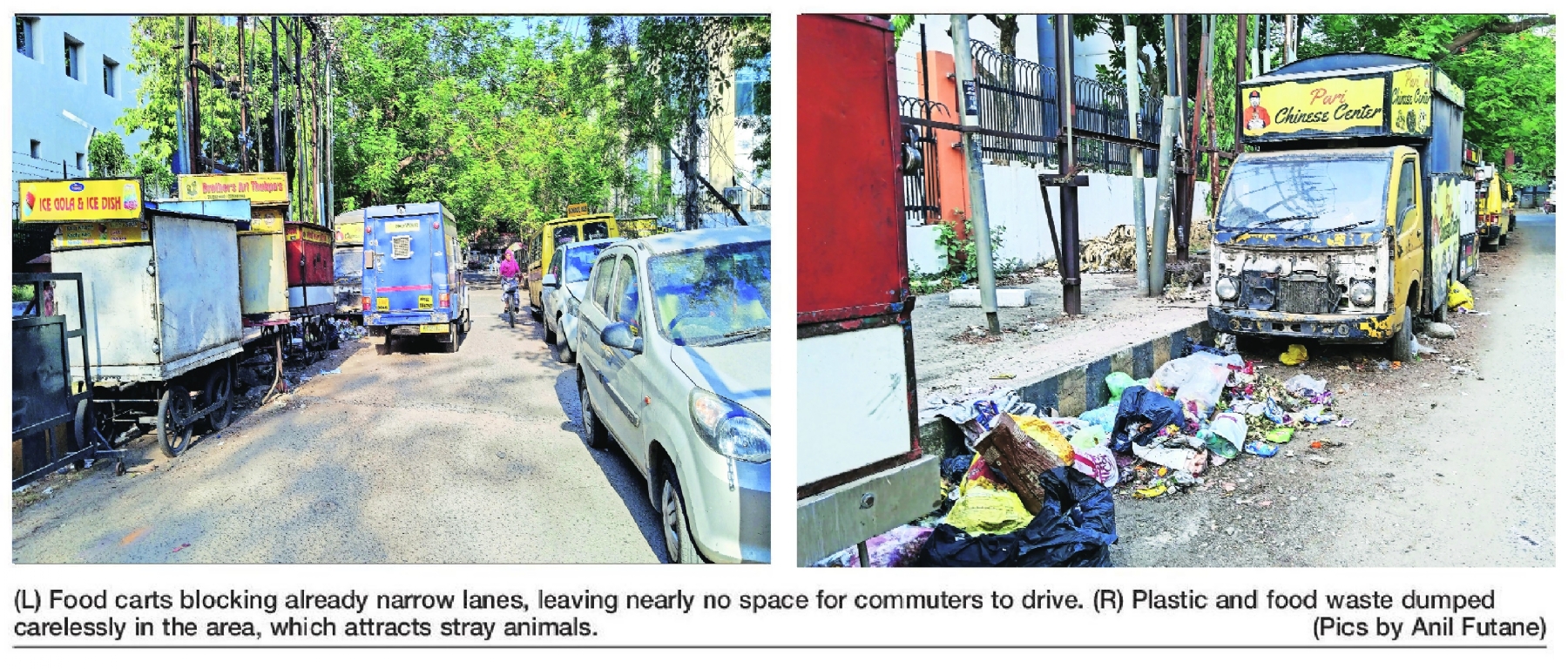
The narrow lanes surrounding the office complexes are routinely occupied by food carts. Parking spaces meant for office employees and visitors have been encroached upon by temporary stalls, forcing them to park along roadsides and adding to congestion in an area that already witnesses heavy traffic. Additionally, vans carrying students from nearby coaching institutions also park in these narrow lanes, leaving no space for pedestrians or drivers. Residents and office-goers claim that, the Nagpur Municipal Corporation (NMC) has conducted encroachment drives on multiple occasions, but the relief has been temporary. According to locals, many food stall owners shift their carts to these narrow lanes during encroachment drives. Since these lanes are not inspected, the encroachments continue rampantly. A local resident said, complaints have been lodged with multiple authorities over the years.
At one point, NMC deployed personnel to monitor certain spots, which reduced the problem in those locations. However, the activities merely shifted to nearby lanes rather than being eliminated altogether.
Garbage disposal
Garbage disposal has emerged as another major concern.
According to residents, several vendors dispose of waste generated during the day directly on roadsides after closing their stalls. Despite regular waste collection services in the area, the garbage is often dumped in the open without being segregated or bagged.
The accumulated waste has led to foul odour and attracts stray animals, creating inconvenience and raising safety concerns, particularly, during
the night.
Locals say, the issue requires sustained monitoring and co-ordinated action from civic authorities rather than periodic drives that offer only short-term relief.