With Hydrogen-powered bus round the corner, city recalls its green Ethanol bus project
| Date :23-Jun-2026 |
By Kunal Badge :
Union Minister Nitin Gadkari announced launch of Hydrogen bus in city within three months
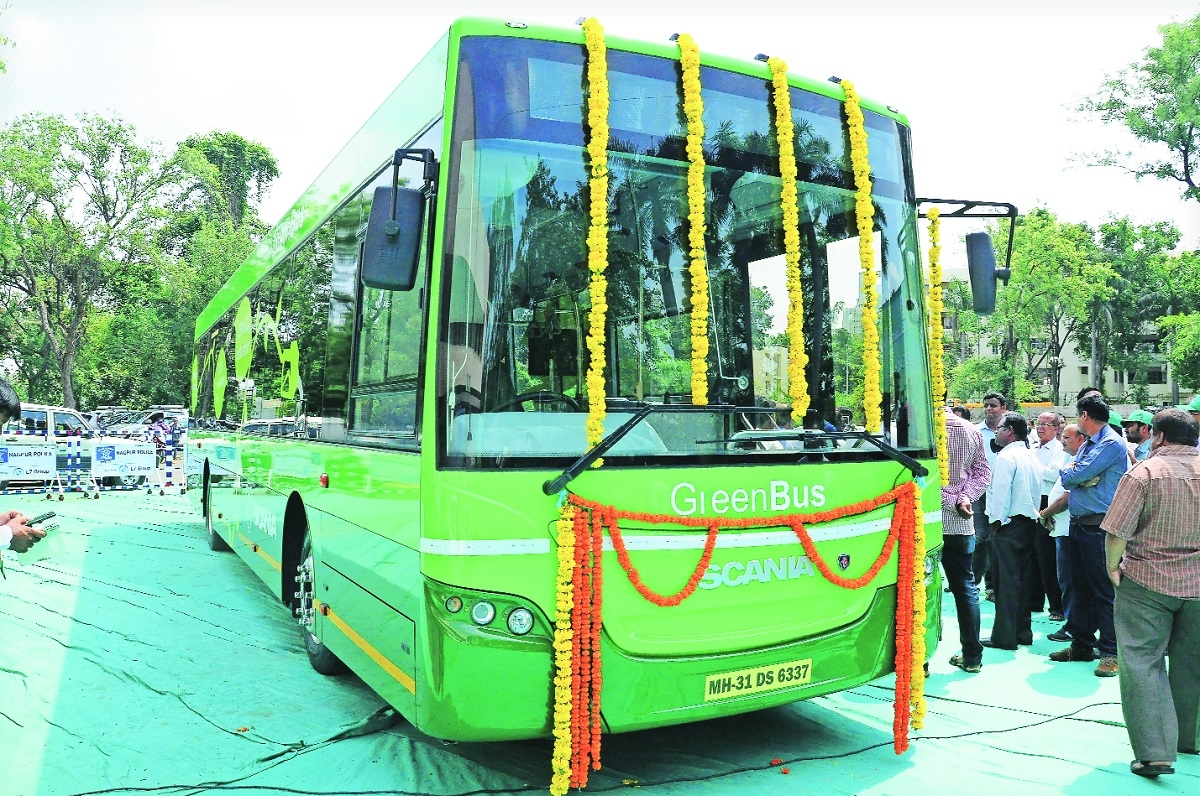
In August 2014, a green ethanol-powered bus quietly began operating between Sitabuldi and Dr Babasaheb Ambedkar International Airport. The pilot project, launched by Swedish manufacturer Scania in partnership with the Nagpur Municipal Corporation (NMC) and backed by Union Minister Nitin Gadkari, was projected as a model for cleaner public transport and reduced dependence on imported fossil fuels.
At the time, the idea appeared radical. Ethanol as a transport fuel was still a niche concept in India.
Dedicated supply chains were virtually non-existent, vehicle technology was new and policymakers were only beginning to discuss alternative fuels as a serious option for mass transportation.
Today, with the Government once again championing alternative fuels and announcing plans to introduce a hydrogen-powered bus in Nagpur within three months, memories of the city’s abandoned ethanol bus experiment have resurfaced.
The comparison raises an uncomfortable question: Did city’s first green bus project fail because the technology was flawed, or because the ecosystem around it was not ready?
What began with a single airport service was supposed to grow into a fleet of 55 ethanol buses and 25 bio-gas buses.
Instead, the project never moved beyond 25 ethanol buses. The promised expansion failed to materialise even as the buses became a familiar sight on select city routes.
By August 2018, the experiment had effectively collapsed.
Scania’s subsidiary, SST Sustainable Transport Solutions, issued a termination notice to NMC and withdrew operations. The company cited non-fulfilment of contractual obligations and demanded nearly Rs 20 crore, including pending bills, bank guarantees and other claims. NMC, meanwhile, accused the company of managerial failures, violation of service-level agreements and failing to deliver the full fleet promised under the project.
Legal disputes followed. At one point, municipal officials revealed that Scania had removed buses from Nagpur and shifted them to Bengaluru without informing the civic body.
The result was that India’s first ethanol city bus project disappeared almost as quietly as it had arrived.
Yet the story has acquired new relevance.
The Government’s current push for ethanol blending in petrol has dramatically changed the landscape. Ethanol production has expanded, supply chains have matured and the fuel is now central to India’s strategy for reducing oil imports, supporting the sugar industry and farm sector.
Many of the challenges that existed when ethanol buses were launched in 2014 no longer exist today.
That does not necessarily mean the project would succeed if relaunched. The collapse exposed a different lesson, that innovative technology alone cannot sustain public transport. Financial viability, fuel availability, institutional coordination, contractual clarity and operational accountability matter just as much.
As the city prepares to welcome another green mobility experiment, as Gadkari has announced to launch hydrogen-powered buses in three months, the city’s ethanol chapter serves as both a warning and a lesson. Sometimes an idea arrives before its time. Sometimes the technology survives but the project does not.
The question now is whether policymakers have learned enough from the last experiment to ensure that history does not repeat itself.