Anti-narcotics drive stepped up in Maharashtra: Fadnavis
| Date :24-Jun-2026 |
MUMBAI :
Cops linked to drug crimes not suspended, directly dismissed
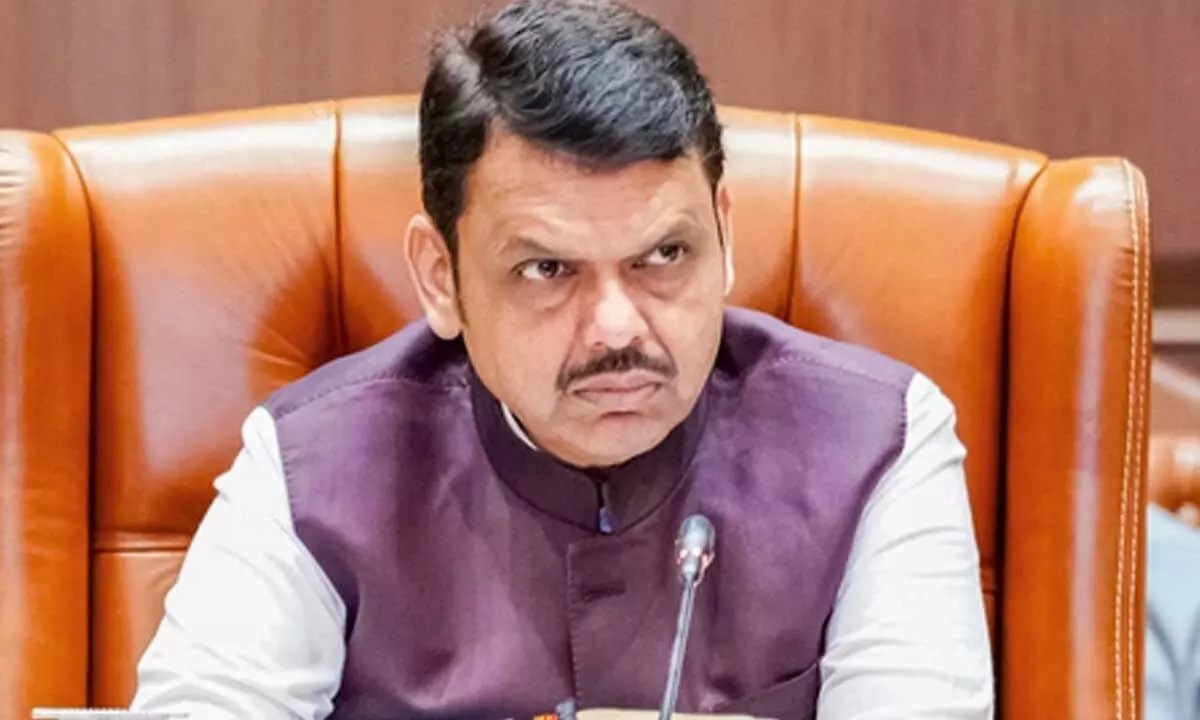
MAHARASHTRA Chief Minister Devendra Fadnavis on Tuesday said police personnel found involved in drug-related crimes have been dismissed, not merely suspended, and asserted that the Government has intensified its crackdown on the narcotics menace.
Replying to a discussion during Question Hour in the Legislative Assembly, Fadnavis said the State Government was strengthening its anti-drug machinery and expanding dedicated units to tackle the growing threat.
“Police officials found linked to drug-related crimes have been dismissed, not just suspended,” he said.
The Chief Minister informed the House that Salim Dola, one of the biggest masterminds behind a drug racket in the country, had been arrested and brought back to India after a Red Corner Notice was issued against him.
According to information available with the authorities, Dola had set up MD drug manufacturing units in Maharashtra, Madhya Pradesh, Karnataka and Telangana and had produced and sold around 4,000 kg of the synthetic drug.
“Most of the network has now been dismantled, and this is a major success in the fight against drugs,” Fadnavis stated.
He said seven anti-drug units are currently operational, and these would be gradually decentralised and expanded across the State. Additional manpower is also being created for the purpose.
The Government is considering a system of incentives for officers engaged in anti-drug operations, on the lines of those provided in anti-corruption and anti-Naxal campaigns, Fadnavis informed the House.
“The best officers will have to fight this battle, and we are creating a system of incentives to encourage them,” he said.
The Chief Minister further said he personally reviews narcotics-related matters on a daily basis.
He also announced an awareness campaign covering around 3,000 schools and colleges to educate students about the dangers of drug abuse and ways to overcome addiction.
The Government is also working on a mechanism to reward informants while protecting their identities, he said.
On concerns over the glorification of drugs in films, Fadnavis said existing rules allow action to be taken and complaints can be lodged against violations.
Special anti-narcotics squads will be set up in every police station in the State, and efforts are being made to deploy capable officers in these units, he said.
The public health and social justice departments have been tasked with establishing de-addiction centres in every district, the CM said.
The Centre has initiated the process of amending the Narcotic Drugs and Psychotropic Substances (NDPS) Act, and Maharashtra has sent its suggestions to the Union Government in this regard, he added.
Inferior-quality coal hit power
generation in Maharashtra: Fadnavis
MUMBAI,
June 23 (PTI)
MAHARASHTRA Chief Minister Devendra Fadnavis on Tuesday admitted in the State Legislative Assembly that the supply of inferior-quality coal has hit power generation in the State, and promised strict safeguards in tenders to keep errant suppliers at bay.
Raising the issue during the Question Hour, Congress Legislature Party leader Vijay Wadettiwar said that the State has been witnessing power shortages, rising demand and shutdown of generating units.
He alleged that poor-quality coal was one of the reasons behind the technical problems faced by several units of State-run Maharashtra State Power Generation Company (Mahagenco).
Electricity demand reached record levels during the summer, he said, seeking action against suppliers providing substandard coal.
Responding to the concerns, Fadnavis said the quality of coal supplied to the State had impacted power generation.
He informed the House that the State Government had held discussions with the Union coal minister and had conveyed its stand on proper sampling of coal.
The Chief Minister assured that safeguards would be incorporated in fresh tenders to block suppliers of inferior coal and those seeking to take undue advantage.
Wadettiwar also asked whether the Government planned to establish higher-capacity generating units based on new technologies in view of the State’s growing power demand.
To this, Fadnavis said that preliminary work and inspections were underway for an 800-MW supercritical thermal power project in Chandrapur.
He noted that the State’s power demand had increased by 4000 MW, and electricity generation this year has been 32000 MW, while next year, it is expected to be 45000 MW.