MAFSU develops process to turn stubble into sustainable feed
| Date :26-Jun-2026 |
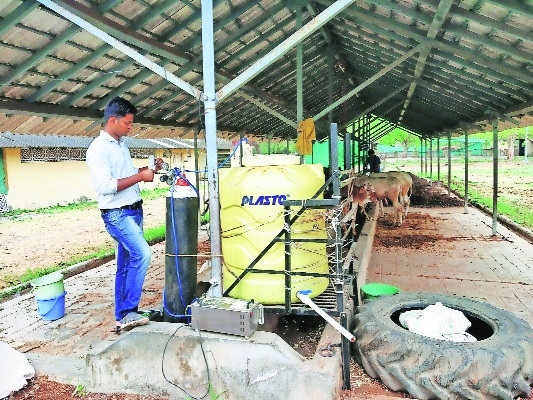
Agriculture stubble waste (‘Parali’) being treated at Nagpur Veterinary College.
By Rohit Pawar :
Ozone-based technology converts stubble into fodder, offering a double climate dividend
To tide over crop residue burning and livestock methane emissions, two major environmental challenges for Indian agriculture, researchers at Maharashtra Animal and Fishery Sciences University (MAFSU), in collaboration with IIT Powai, have developed an ozone-based technology that converts agricultural waste into nutritious livestock feed while eliminating need for stubble burning and methane emissions. “Our studies showed that ozone-treated cotton stalk completely replaced conventional gram straw in goats without affecting animal health, improving body weight gain while reducing methane emissions by nearly 20 per cent,” said Prof Dr Atul Dhok, Head of the Department of Animal Nutrition, Nagpur Veterinary College.
The finding is significant as livestock contributes nearly 60 per cent of India’s agricultural methane emissions, with almost 90 per cent of this methane produced through enteric fermentation, or burping, by cattle and other ruminants.
A single cow emits an estimated 70-120 kg of methane annually, while globally enteric fermentation accounts for around 33 per cent of anthropogenic methane emissions. India also faces recurring dry fodder shortages despite millions of tonnes of crop residues being burnt every year.
“Ozone selectively breaks down lignin while preserving cellulose and hemicellulose, improving digestibility and increasing the digestible energy available from feed. This enables better nutrient utilisation, body weight gain and growth performance while reducing methane formation during digestion,” opined Prof Dr Dhok. Unlike chemical treatments, ozone decomposes back into oxygen after use, leaving no residue.
Crop residues are soaked overnight, ozone-treated for about five hours and sun-dried to below 15 per cent moisture before being fed to cattle, buffaloes, sheep and goats like conventional dry fodder.
The process costs about 50 paise/kilogram and is expected to become cheaper with atmospheric oxygen-based generators. Plus, ozone also acts as a sterilising agent producing fodder which has a shelf life of six to eight months.
Prof Dr Dhok said farmers can collect 1-1.5 tonnes of crop residue per acre and earn about Rs 1,000/acre instead of burning it. Besides cotton stalk, the technology upgrades pigeon pea, soybean, safflower, paddy straw and groundnut haulms into quality fodder.
The technology has been under research at Nagpur Veterinary College (NVC) since 2021 with support from the Rajiv Gandhi Science and Technology Commission, which also
funded its commercialisation. It is now being used by a Farmer Producer Organisation (FPO)
in Malkapur to manufacture
and market ozone-treated livestock feed in bulk across
the region.
Nagpur Veterinary College is inviting entrepreneurs, FPOs, dairy cooperatives and other interested organisations across Vidarbha to adopt the technology and establish similar processing units, helping convert crop residues into value-added livestock feed while reducing pollution and creating an additional income source for farmers.