Cash deals beware! AI joins I-T Deptt to hunt black money
| Date :30-Jun-2026 |
By Simran Shrivastava :
I-T Dept targets hawala, dabba trading, realty deals
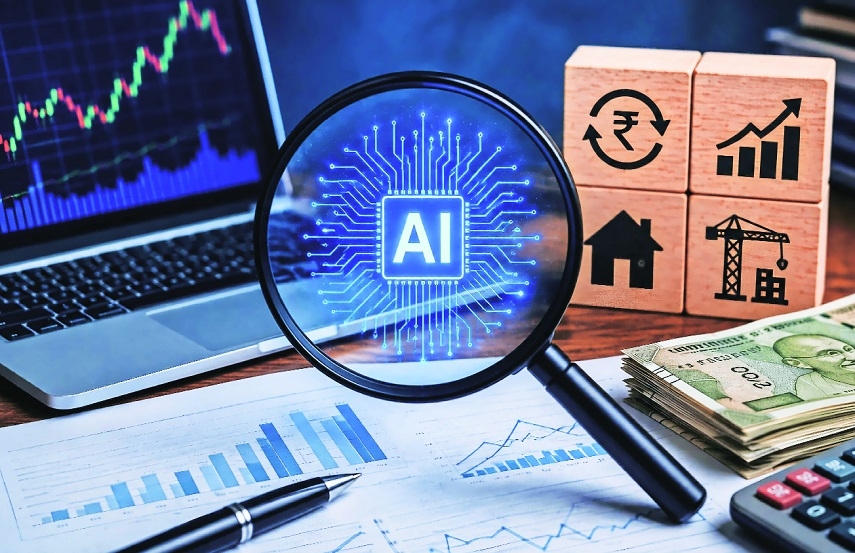
The Income Tax (IT) Department has stepped up its use of Artificial Intelligence (AI) to monitor and analyse cash-heavy sectors in the city. The technology is now being deployed to identify irregular financial patterns in hawala transactions, dabba trading, real estate dealings and the construction sector.
These sectors have traditionally operated with substantial cash flows. Hawala transactions bypass formal banking systems, while dabba trading functions as an illegal parallel stock market conducted entirely in cash without payment of Securities Transaction Tax. Similarly, property deals often involve unaccounted cash beyond registered values, and construction payments frequently remain undocumented.
Officials explained that AI tools analyse large volumes of financial data, including sales, purchases, contract receipts and banking transactions. “The system compares declared income in tax returns with data from GST filings, TDS records, Sub-Registrar Offices (SROs) and banking channels to identify discrepancies,” a senior official explained. However, he assured that a human officer then reviews the case before any action is
taken. AI serves only as a detection tool. Every flagged case undergoes manual verification before notices or investigations are initiated to avoid errors.
The department has also introduced the KAR SAATHI chatbot to assist taxpayers and officials with queries related to the new Income Tax (IT) Act, 2025, which came into effect on April 1, replacing the 1961 Act. The chatbot is available round the clock and aims to simplify compliance. At the national level, AI-driven initiatives have already shown results. According to the Central Board of Direct Taxes (CBDT), such campaigns encouraged 1.11 crore taxpayers to file updated returns, and generated over Rs 8,800 crore in additional revenue.
“AI tools are now part of mandatory training for officers handling International Taxation, Exemptions, TDS, Intelligence and Criminal Investigation, and Central Charges,” another official explained. They also highlighted the rollout of TRACES 2.0, an upgraded platform aimed at simplifying TDS compliance and reducing procedural complexity. With data from GST invoices, property registrations, bank transactions and TDS records now being cross-referenced automatically, officials believe that sectors dependent on unaccounted cash are coming under scrutiny more and more now, as technology enables early detection of financial inconsistencies.