Bhopal Rail Division deploys AI, IoT-based sensors to tackle water scarcity in trains
| Date :04-Jun-2026 |
Staff Reporter :
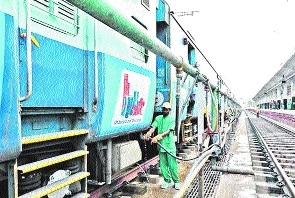
In a bid to eliminate the persistent issue of water running out in coaches during train journeys, the Bhopal Rail Division of the West Central Railway has introduced an innovative technology utilising advanced sensors and Artificial Intelligence (AI). The absence of water in toilets and washbasins has long been a primary source of passenger discomfort on long-distance routes. To address this issue at its root, the division initiated a pilot project at the Rani Kamalapati Railway Station.
Under this system, an automatic alert is dispatched to the central control room and upcoming station management before a coach’s water tank runs completely dry, ensuring that refilling is arranged as soon as the train pulls into the next designated watering station.
According to railway officials, the new tracking technology was initially tested on the Pune Humsafar Express and the Santragachi Humsafar Express operating from Rani Kamalapati station, yielding highly successful results.
Custom-designed electronic water level sensors have been installed in the water tanks of every coach on these trains to provide continuous telemetry. These sensors constantly measure the water levels. The moment the volume in any tank drops below 30 per cent of its total capacity, the system automatically triggers a web-based alert and sends an automated SMS to the train supervisor, the base station, and the technical staff at the next watering station, without requiring any manual intervention. Official data indicates that during the peak of last summer, nearly 40 percent of long-distance trains reported severe water shortages mid-journey.
The lack of water often created unhygienic conditions, sparking passenger anger which occasionally resulted in unauthorised chain-pulling, protests, and operational delays at stations. The implementation of this automated alert system is expected to eliminate such disruptions. With real-time updates, ground maintenance staff can bypass manual checks and proceed directly to the specific coach flagged by the system, saving labour and ensuring that travellers do not face dry taps during hot summer commutes.
The defining feature of this new monitoring infrastructure is its seamless automation and real-time data transfer capabilities. Once the water level falls below the critical threshold, the sensor transmits data to a centralised server using Internet of Things (IoT) technology.
This network allows technical staff at upcoming stations along the train’s route to view the exact real-time water status of each coach on their computer screens.
Because of this predictive monitoring, ground crews are informed of the precise refilling requirements at least 30 minutes before the train actually arrives at the platform. Public Relations Officer (PRO) of the Bhopal Rail Division, Naval Agrawal, confirmed the success of the pilot project on both the Pune and Santragachi Express routes. He noted that the system was activated on April 15 and has delivered highly positive outcomes, effectively streamlining watering operations. Following these encouraging results, the Bhopal Division plans to install the IoT-based level sensors across other major long-distance trains in a phased manner to guarantee a hassle-free travel experience for passengers.