Traditional ‘Kavelu’ tile industry in decline as rural workers search for new jobs
| Date :04-Jun-2026 |
Parseoni Correspondent :
A specialised skill passed down from generations now faces risk of disappearing.
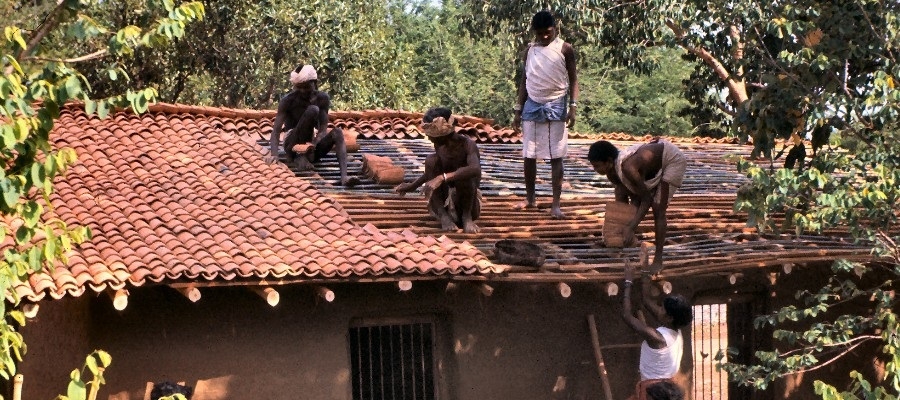
The traditional ‘kavelu’ (clay roof tile) industry, once a major source of livelihood in rural areas, is steadily declining, forcing labourers and artisans to seek alternative employment. The growing use of cement, concrete and modern roofing materials has sharply reduced demand for clay tiles, threatening a long-standing rural occupation.
For decades, kavelu roofs were a common feature of village homes. Affordable and effective against heat and rain, clay tiles provided steady employment to hundreds of workers. However, changing construction practices and the preference for concrete structures have significantly reduced their use.
Local artisans say tile-making once provided year-round work, but demand has fallen so sharply that earnings no longer justify the labour involved.
Wage rates have seen little improvement, discouraging younger generations from entering the profession. Many families have abandoned their ancestral occupation and shifted to agricultural labour, construction work and other informal sectors.
Workers in Parseoni tehsil recall a time when clay-tile kilns operated across the region, employing large numbers of labourers.
Today, most have shut down or function on a limited scale.
Experts note that the ‘kavelu’ industry was not merely a building-material business but an important part of the rural economy. Clay preparation, mould-making, firing and transportation generated work for numerous people, and its decline has affected all these occupations.
Artisans warn that ‘kavelu’ making is a specialised skill passed down through generations. With fewer young people entering the trade, the craft
itself faces the risk of
disappearing.
Workers and villagers have urged the Government to provide financial assistance, marketing support and special schemes to revive the industry, preserve rural heritage and generate employment.