Nearly 40 years on, Environmental Science Deptt at Instt of Science still relies on visiting faculty
Date :05-Jun-2026
By Reema Mewar :
- Deptt has maintained steady student enrollment since its inception in 1987, but still relies on temporary teaching staff.
- HoD maintaines that students and teachers have an excellent rapport amd students’ academics are not suffering because of absence of permanent teaching staff.
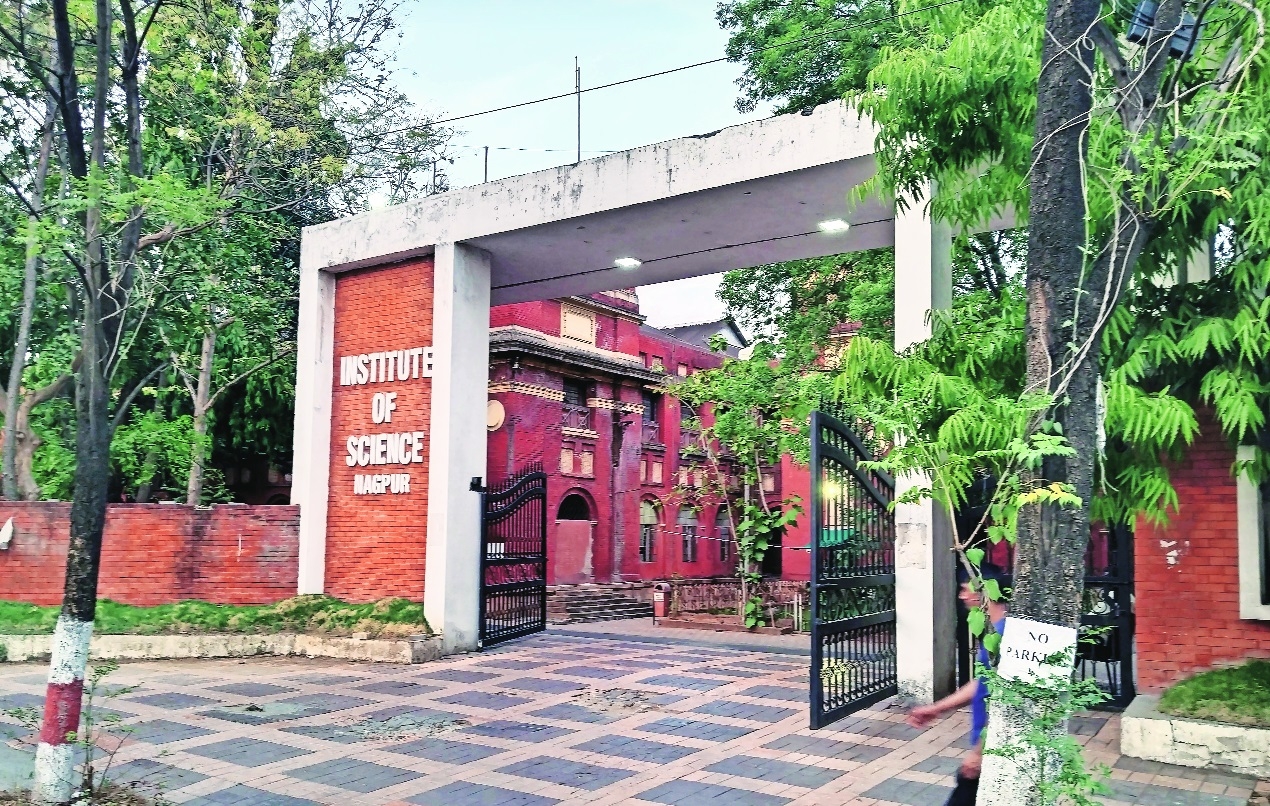
Established in 1987 in collaboration with CSIR-National Environmental Engineering Research Institute (CSIR-NEERI), the Environmental Science Department of Institute of Science, Nagpur, has consistently attracted students for nearly four decades. Yet, despite its long history and sustained enrolment, the department continues to function largely with visiting faculty members, with Head of Department being the only permanent faculty member. According to Dr Idrees Mohammed, Head of the Department(HOD), proposals related to full time faculty appointments have been forwarded to the relevant Government authorities and remain under consideration.
The department was introduced as a self-financed course with a focus on addressing environmental issues and promoting socially relevant education. In its early years, teaching responsibilities were shared by faculty members from disciplines such as chemistry, zoology and botany, owing to its interdisciplinary nature.
Faculty members say student interest in the subject has remained consistent since the department’s inception. The department currently offers a three-year BSc programme and a two-year Master’s programme. Each year of the BSc programme has around 14 students, while the Master’s programme has 11 students per batch.
Despite having only one permanent faculty member, the HoD maintains that the department does not face any academic difficulties or staff shortages. ‘The institution has sufficient teaching staff and continues to engage experienced and qualified faculty members to ensure students receive the required academic support. Students have not suffered academically because of the faculty structure,’ he said.
Explaining the appointment process, Dr Mohammed said recruitment to permanent teaching positions is conducted through the Maharashtra Public Service Commission (MPSC). Proposals have already been submitted to the appropriate government authorities and are currently under consideration. ‘Wherever additional teaching workload arises, temporary faculty members are engaged on a clock-hour basis until regular appointments are made through the prescribed recruitment process.
This ensures that classes and academic activities continue uninterrupted,’ he added.
The situation stands in contrast to the growing importance of environmental education. From climate change and pollution to water scarcity and the environmental impact of rapid urbanisation, environmental concerns have become increasingly prominent in recent years. In Nagpur, debates around tree loss, cement roads, dying lakes, and large-scale construction projects have further highlighted the need for scientific understanding of environmental issues.
The department has continued to update its curriculum in response to emerging environmental challenges and technological developments. Subjects taught include toxicology, sustainability, climate change, remote sensing and GIS mapping.
GIS mapping has been introduced into the curriculum in recognition of its growing role in environmental monitoring, planning and research. ‘The department is sourcing GIS mapping software for upcoming semesters, but in the meantime, our students have used the software available at the Visvesvaraya National Institute of Technology (VNIT) to ensure they don’t miss any practical experience.’ said Prof Pranita Tiwari, visiting faculty at the department.
For a programme that has operated continously for forty years, and maintained steady students enrolment, dynamic syllabus, a team of dedicated teachers, laboratory facilities, sufficient emphasis on practical exposure, good connections with institutes like CSIR-NEERI, and hands-on training, why the Government is not allotting permanent teaching staff remains a pressing question.