Pandhrabodi lake: A ‘pond’ of encroachment, apathy
| Date :07-Jun-2026 |
By Vikas Vaidya
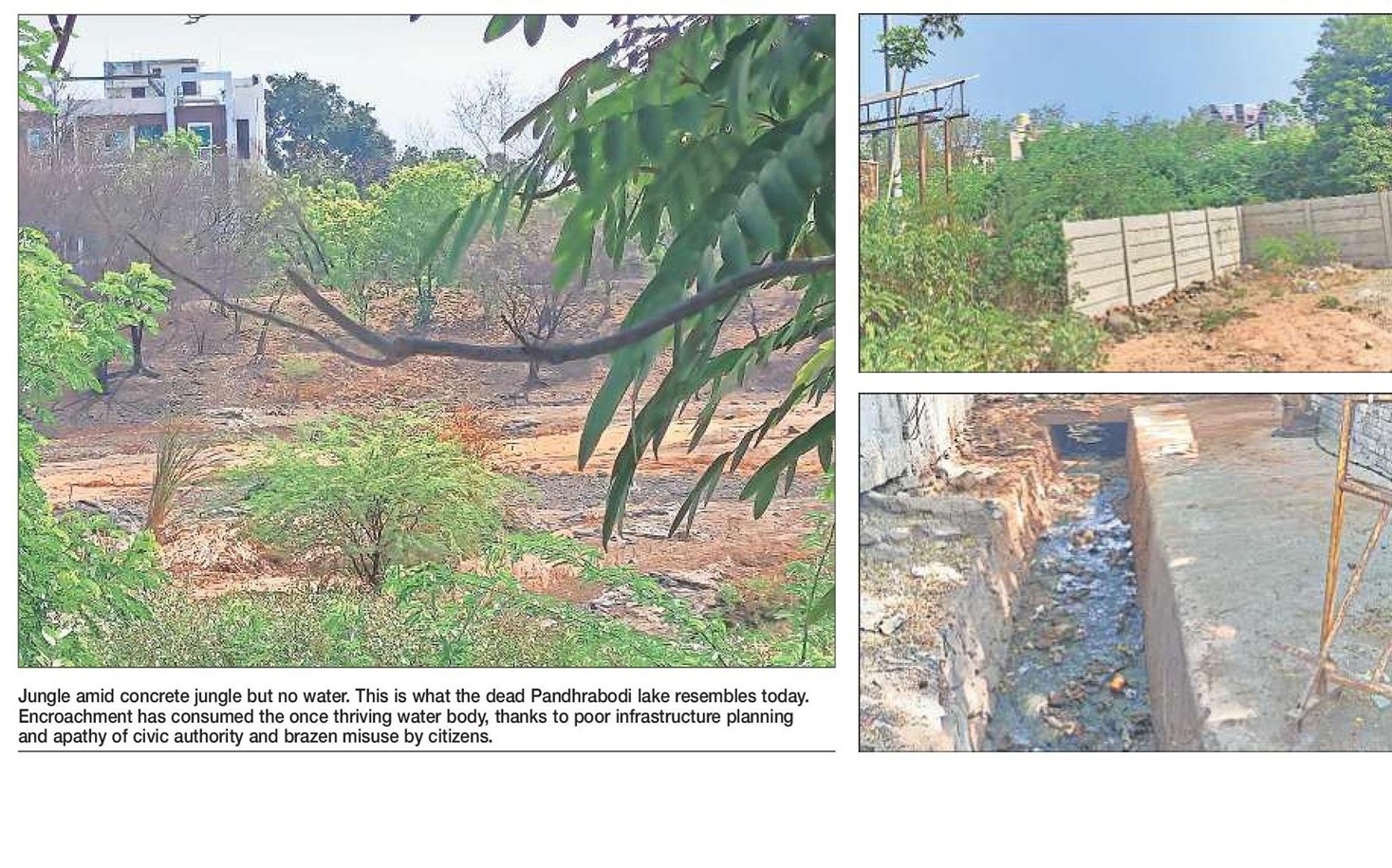
Once thriving with migratory birds and serving as a natural reservoir for the surrounding area, the Pandhrabodi lake has been reduced to just a pond sans water. Today, the water body stands as a glaring example of neglect, poor planning and unchecked urbanisation.
According to local residents and water experts, degradation of the lake began after walls were constructed around it, obstructing the natural inlets facilitating rain water to fill and re-fill the water body. Over time, slums and other settlements mushroomed around the lake and expanded significantly. Unchecked and overlooked by the civic bosses, the temporary structures have gradually transformed into pucca houses.
The unplanned sewerage infrastructure spelt doom for the already messed up natural water body. As a result, sewage got mixed with storm water in a large drain flooding almost every road and residences. During monsoon, the area gets water-logged and disconnected with rest of the city.
Residents complain that the contaminated water often enters their homes, creating unhygienic conditions and exposing them to health risks.
A senior water expert said, storm water earlier entered the lake through a systematic natural drainage network, helping maintain its water levels throughout the year.
“There was a time when Pandhrabodi lake sustained a substantial quantity of water and attracted a variety of birds. Today, it has shrunk drastically,” the expert said.
The situation is particularly alarming in Bajiprabhu
Nagar, a colony located close to the lake. Internal roads in the locality are dotted with damaged manholes, while sewage mixed with storm water frequently overflows onto the streets. Residents say, “Broken manholes and clogged drains have become a permanent civic problem here.”
The main drain carrying storm water is choked with garbage, much of which is allegedly dumped by nearby settlements. During rains, the accumulated waste—including plastic, diapers, sanitary pads and other refuse—is washed into residential areas, spreading filth and posing serious health concerns.
Garbage is dumped in the lake despite warning boards. Repeated complaints to the civic authorities have yielded little action.
While development works in the area were undertaken by the Nagpur Improvement Trust (NIT), both the Nagpur Municipal Corporation (NMC) and NIT now tend to shrug off the responsibility when civic problems arise, the residents claimed. Citizens point out that they pay taxes to both authorities, but continue to suffer due to lack of accountability for the mess they are facing year after year.
Urban planners and environmental activists believe restoring Pandhrabodi lake will require a comprehensive and integrated rejuvenation plan. Such a plan would need to address drainage deficiencies, prevent sewage from entering storm water channels, remove accumulated waste, restore natural water inflows and regulate encroachments in the catchment area.
Particular attention, they say, must be given to settlements that have occupied portions of the hill slopes near LITU, from where rain water traditionally flowed into the lake. However, any attempt at reorganisation or rehabilitation is likely to be politically sensitive, given the large voter base residing in the area.
Unless corrective measures are taken soon, residents fear that one of Nagpur’s important urban water bodies could disappear altogether, leaving behind only memories of a lake that once supported biodiversity and helped maintain the ecological balance of the locality.
Government had said that, Pandhrabodi lake revival work had been completed and all the sources of lake had opened. This is a lie.
In fact, NMC constructed only walls, which prevented water from coming inside the lake. On one side of the lake, there is water in a very small quantity, while on the other, water flowing from the surrounding locality enters the nullah. The area between this nullah and a small portion of lake looks like a desert. If one visits this desert-like part, one would find bottles of liquor, playing cards and garbage.
The sufferings of this lake continue. Despite not doing anything concrete, NMC has claimed that it did so much for the conservation of this lake under the scheme. If that is so, then why the lake has taken a form of a small pond, is a million dollar question.