Stored, shared, forgotten: Vanishing art of preserving memories
| Date :07-Jun-2026 |
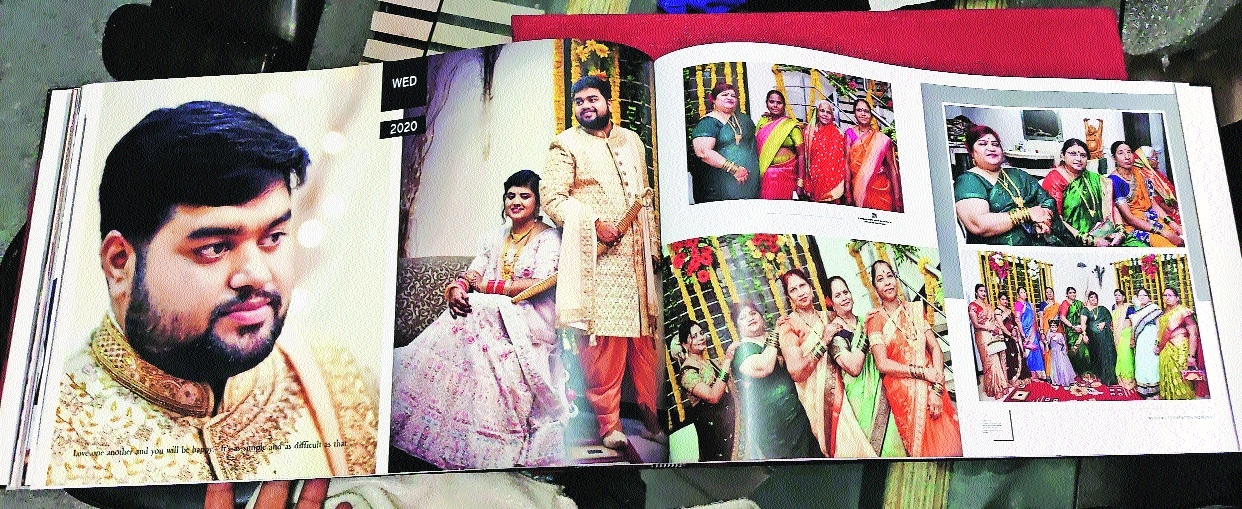
Albums with photos of weddings, birthdays, etc offer something which digital storage often does not -- permanence.
By Reema Mewar
There was a time when memories occupied physical space in every household. Family photographs were carefully arranged in albums, wedding invitations were tucked away in cupboards, and video recordings of important occasions sat safely inside labelled CDs and DVDs. These objects were more than keepsakes; they served as tangible reminders of people, places and moments that families revisited over the years. Today, as smartphones and digital storage become the primary repositories of memory, many of these physical formats are slowly fading away.
For Umesh Wathodia, who has been running a photo studio in Sitabuldi for over three decades, the change has been impossible to miss.
“Earlier, people would take photographs on cameras and print only the best ones. Those photographs almost always found their way into albums. Birthdays, weddings, family trips and religious ceremonies were carefully preserved in pages that could be revisited decades later.
Today, smartphones have transformed that relationship with photography,” he said.
“People take hundreds of photographs every day. But when was the last time someone opened their gallery just to revisit old memories?” Wathodia asked. “Earlier, there were fewer photographs, but people actually revisited them from time to time,” he said.
According to Wathodia , one of the biggest changes is visible among younger generations.
“Many children born in the last 10 years don’t even have photo albums of their own. Their photographs are
scattered across phones, social media accounts and family groups. The pictures exist, but there is no album that belongs to them,” he said.
For Wathodia, albums offered something digital storage often does not -- permanence.
“When relatives visited, families would sit together and go through old albums. They would remember people who were no longer with them and tell stories connected to those photographs.
The album itself became a part of family history,” he added.
The decline of physical memory-keeping is not limited to photographs. Wedding invitation cards, once an essential part of family traditions, have also seen their role diminish.
Nilesh Mathews, who runs a wedding card store in Itwari, recalls a time when invitations were much more than a means of sharing information.
“Earlier, wedding invitations were not just cards. The families of the bride and groom would personally visit relatives, hand over the invitation and seek blessings. It was a ritual in itself,” he said.
Today, printed invitations are increasingly being replaced by digital cards circulated through WhatsApp.
“We now get barely 20 per cent of the wedding card orders we used to receive. The demand hasn’t disappeared entirely, but many people prefer digital invitations. We have adapted by offering digital designs and graphic services as well, but something more than paper has been lost in the process,” Mathews said.
“Wedding cards were often preserved in albums and family collections. Years later, children could see their parents’ wedding invitation and learn about that occasion. Now, most invitations exist only as files on a phone,” he said.
Wedding videos, once stored on CDs and DVDs, are also gradually disappearing. For many families, however, those recordings continue to hold immense emotional value.
Nagpur resident Neha Chhabaria recalled how her parents’ wedding video, stored on a CD, went missing while they were shifting from one house to another. Her grandmother, who loved revisiting family memories, was deeply upset by its loss. Years later, while cleaning the house before Diwali, the family rediscovered the damaged disc in an old trunk and managed to recover much of its contents with the help of a specialist.
On her grandmother’s 85th birthday, the entire extended family gathered to watch the restored footage. “My grandmother had tears in her eyes. She was seeing relatives who were no longer with us and reliving memories she cherished deeply. Moreover, she later told us that the video was last place where she could hear her mother's voice. It became one of the last and most significant memories I shared with my grandmother before I moved to Mumbai for my Masters.
Dadi passed away eight months later,” Chhabaria recalled.
Ironically, people today capture more moments than any generation before them. Weddings generate thousands of photographs, videos and social media posts. Yet the albums, invitation cards and discs that once gave those memories a lasting physical presence are becoming increasingly rare.
The shift from paper, albums and discs to digital files is undoubtedly more convenient and accessible. Yet convenience has altered the relationship people have with their memories. A wedding card once preserved for decades, an album passed from one generation to another, or a video rediscovered years later could become catalysts for family stories and shared nostalgia. The moments remain the same; only their form has changed. Whether they will be revisited with the same affection decades from now is a question only time can answer.