First breeding record of Clamorous Reed Warbler in C’garh
| Date :09-Jun-2026 |
Staff Reporter
RAIPUR
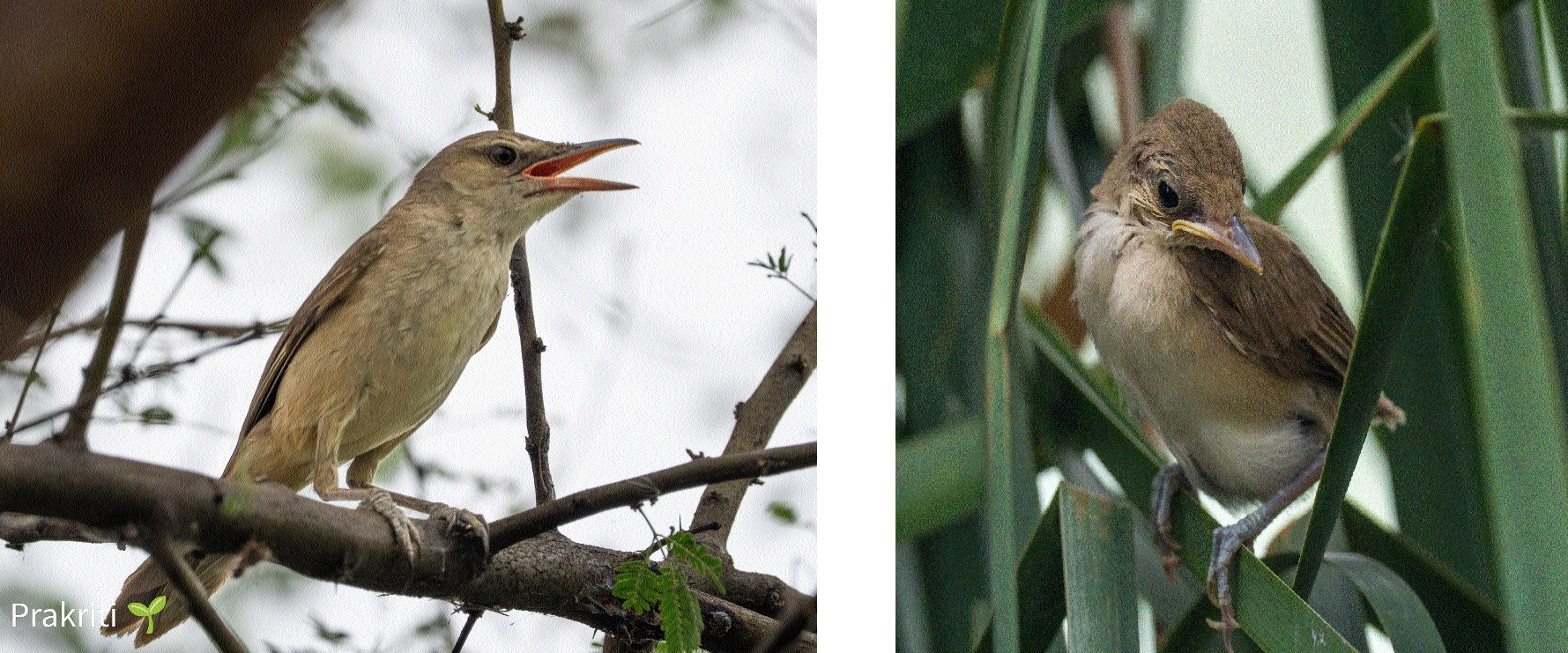
A birdwatching trip during a family wedding has led to an important ornithological discovery in Chhattisgarh. Wildlife researcher and birder Pratik Thakur of Prakriti Shodh Evam Sanrakshan Welfare Society has documented the first confirmed breeding record of the Clamorous Reed Warbler (Acrocephalus stentoreus) from State, a finding recently accepted for publication.
The observation was made on 1 June 2025 while Thakur was attending a relative’s wedding in Mungeli district. During some free time, he explored a nearby wetland identified through Google Maps. The pond, surrounded by dense Typha reeds and lotus vegetation, supported a variety of wetland birds. While watching Baya Weavers constructing nests, Thakur heard the loud call of a Clamorous Reed Warbler. The sighting drew his attention because the species is generally regarded as a winter visitor in the region.
After searching the reed-bed, he photographed a fledgling Clamorous Reed Warbler begging for food among the Typha vegetation, providing clear evidence of local breeding. A review of available literature found no previous breeding record of the species from Chhattisgarh. “I was simply exploring a wetland during a family function,” said Thakur. “Nature still holds many secrets, and even brief observations can lead to valuable discoveries.”
The Clamorous Reed Warbler is a widespread wetland bird across South Asia. Although breeding has been reported from several parts of India, including Gujarat, Maharashtra, Kerala, and northern India, no confirmed breeding evidence had previously been documented from Chhattisgarh. The discovery follows the recent publication of a checklist documenting 294 bird species from the
Rajnandgaon and Khairagarh-Chhuikhadan-Gandai region by Thakur and his team. The new record highlights the importance of careful observation and the need for more monsoon-season surveys of wetlands in the state. The finding adds another valuable contribution to the knowledge of Chhattisgarh’s bird diversity and demonstrates that even routine visits to local wetlands can result in significant scientific discoveries.