OCW’s tankers log 500 trips per day to provide drinking water across city
| Date :09-Jun-2026 |
By Kabir Mahajan :
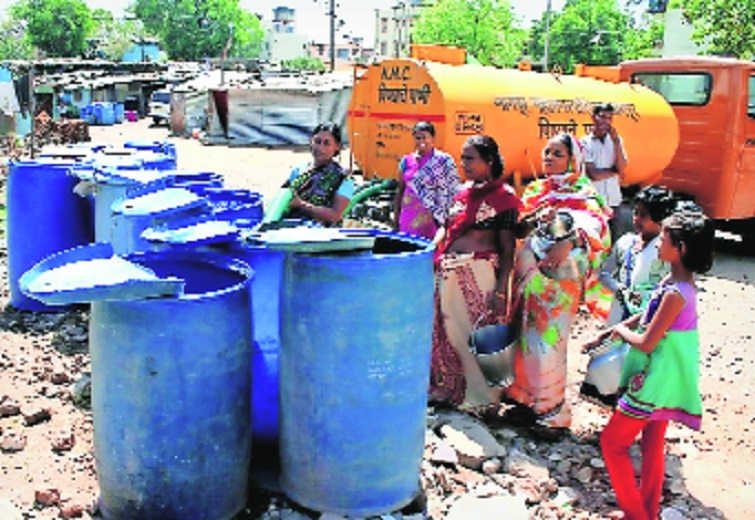
Beyond the network of underground pipelines, a massive mobile operation runs daily to ensure no citizen is left dry. Orange City Water (OCW) currently operates an active field fleet of 51 water tankers, where Nehru Nagar zone receives the highest number of emergency tankers across the city. These tankers work round the clock daily to bridge supply gaps caused by infrastructure disruptions and technical breakdowns.
Out of a city-wide grand total of 51 active water tankers, Nehru Nagar leads deployment with 15 tankers. This is closely followed by the Lakadganj zone, which accounts for ten tankers, and the Ashi Nagar zone with nine tankers. Together, these three high-demand sectors consume over 66 per cent of the mobile water distribution resources.
During the standard off-peak months, the city’s emergency requirement remains stable, with tankers logging anywhere between 110 and 150 trips daily to parched patches. However, when summer heatwave strikes and pipeline disruptions multiply, this operational footprint explodes. To handle the seasonal load, OCW scrambles an additional 26 hired tankers into rotation, pushing the total capacity to nearly 500 tanker trips per day across the metropolis.
Financially, maintaining this stop-gap supply network is an expensive endeavour. A standard 3,000-litre tanker trip incurs a flat operational cost of Rs 560, covering fuel, transit infrastructure, and contracted workforce management. Whenever a major pipeline is compromised by third-party excavation, the water grid fractures.
To keep household taps running conceptually, OCW has to instantly divert a minimum of ten water tankers to the affected pocket to absorb the impact.
Strategically, tanker distribution is categorised by specific consumer grievances. Free-of-cost emergency tankers are strictly dispatched under three specific circumstances -- complete supply failure due to network blockages; low-pressure supply issues; or sudden localised water contamination. These emergency dispatches act as the city’s primary line of defense against severe civic discomfort. The remaining fleet is distributed across the other municipal zones as follows, Dharampeth - four tankers; Satranjipura - four tankers; Hanuman Nagar - three tankers; Gandhibagh - two tankers; Mangalwari - two tankers; Dhantoli - one tanker; and the last one tanker in Laxmi Nagar.
This deployment pattern highlights how water scarcity and supply challenges heavily impact the eastern and northern belts of Nagpur during peak summer periods. While the fleet size will be systematically scaled back as monsoon showers settle the summer demand by July, the operation stands as a vital reminder of the immense financial and logistical pressure required to keep the city hydrated.