CBI files six chargesheets
| Date :10-Jul-2026 |
RAIPUR :
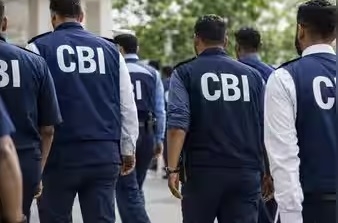
THE Central Bureau of Investigation (CBI) on Thursday significantly advanced its probe into the Mahadev App case by filing a chargesheet in Special CBI court against six accused in the alleged corruption case and five separate chargesheets against 66 accused in the connected illegal online betting syndicate case, adding fresh prosecutorial material to one of India’s largest cross-border financial crime investigations.
In the corruption case, the agency has charge-sheeted Asim Das, Rohit Gulati, Vikash Chhaparia, Anil Dhammani, Vishal Ahuja and Dheeraj Ahuja under provisions of the Prevention of Corruption Act, 1988, besides relevant sections of cheating, forgery and criminal conspiracy.
According to the CBI, the accused were allegedly part of a criminal conspiracy involving the routing of illicit payments to public servants in return for extending protection to the Mahadev App betting syndicate. Investigators allege that Asim Das functioned as a cash courier, while the remaining accused facilitated or handled transactions connected with the alleged flow of bribe money. The agency has also placed additional evidence on
record against alleged Mahadev App promoters
Saurabh Chandrakar and Ravi Uppal, both of whom had already been chargesheeted earlier as principal accused. The duo remains the subject of Interpol Red Notices issued at India’s request.
While Chandrakar was recently arrested in Oman after allegedly entering the country using a forged Indonesian passport, the present whereabouts of Uppal remain unknown.
Indian investigating agencies continue coordinated legal efforts to secure the return of both accused to face criminal proceedings before Indian courts. In the parallel betting syndicate investigation, the CBI filed five separate chargesheets against 66 accused, including Chandrakar, Uppal and members of various alleged betting panels accused of generating and routing proceeds of crime. The accused have been booked under provisions of the The Bharatiya Nyaya Sanhita and the Chhattisgarh Gambling Prohibition Act.
The investigation has concluded that the Mahadev App allegedly evolved into one of the country’s largest illegal online betting syndicates, operating from outside India through multiple betting panels that enrolled users nationwide. Investigators allege the syndicate generated enormous illegal profits which were layered through a network of mule bank accounts before being transferred overseas. A portion of the alleged proceeds of crime was purportedly diverted as protection money to public servants to shield the syndicate from enforcement action.
Senior officials familiar with the investigation said the latest chargesheets constitute an important legal milestone in India’s extradition proceedings against Chandrakar. However, they cautioned that his return may not be immediate because of ongoing legal proceedings in Oman. Chandrakar’s alleged use of a forged Indonesian passport has triggered a separate legal process under Omani law, where offences involving forged travel documents are treated as matters affecting border security and national sovereignty.
Such offences can attract imprisonment ranging from three to five years, besides monetary penalties depending on the nature of the violation.
Officials explained that Oman ordinarily concludes domestic criminal proceedings before acting on foreign extradition requests. Consequently, if Chandrakar is prosecuted and convicted there, extradition or deportation proceedings would ordinarily arise only after completion of the trial and any sentence imposed by Omani courts.
The CBI, working in coordination with the Ministry of External Affairs (MEA), is simultaneously pursuing legal remedies available under the India-Oman Extradition Treaty, 2005, including the possibility of seeking Chandrakar’s temporary surrender to stand trial in India, subject to the treaty provisions and approval of competent Omani authorities.
Investigators are also examining whether Omani immigration laws provide an independent legal basis for deportation if authorities conclude that Chandrakar entered the country using forged travel documents or otherwise without lawful authorisation. Officials emphasised, however, that any such course would ultimately depend upon the outcome of proceedings before Omani authorities and the applicable legal framework.