City records highest Japanese Encephalitis cases in last 3 yrs
Date :10-Jul-2026
Staff Reporter :
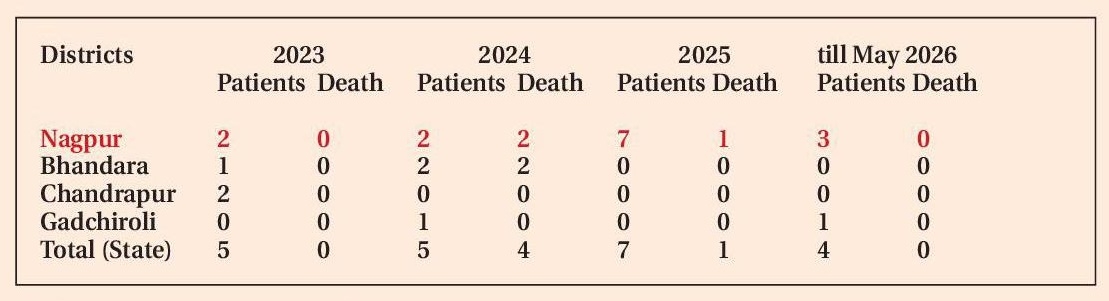
Nagpur has emerged as Maharashtra's biggest Japanese Encephalitis (JE) hotspot, recording 14 of the state's 21 cases reported over the past three-and-a-half years. The mosquito-borne disease claimed three lives in the district during the period, accounting for more than half of the five deaths reported statewide, according to information tabled by Prakash Abitkar, Minister for Public Health and Family Welfare in the Maharashtra Legislative Assembly on Wednesday.
According to the Government, Nagpur reported two JE cases in 2023, two cases and two deaths in 2024, seven cases and one death in 2025, and three cases till the end of May 2026. The district has reported a total of 14 cases and three deaths during the period, the highest in the state.
The Minister, however, said it was not correct to state that Japanese Encephalitis was spreading on a large scale across the State. He said Vidarbha remains a sensitive region because of extensive paddy cultivation, increased mosquito breeding during the monsoon, the presence of pigs and water
birds, and a large rural and tribal population. Nagpur, Bhandara, Gondia, Chandrapur, Gadchiroli and Wardha have been identified as high-risk districts.
Japanese Encephalitis is a viral disease spread by infected Culex mosquitoes, which usually breed in paddy fields and stagnant water. Pigs and water birds act as natural hosts of the virus. While most infected persons develop mild or no symptoms, severe cases can cause high fever, headache, vomiting, neck stiffness, seizures, confusion and inflammation of the brain. Children are the most vulnerable, and the disease can lead to permanent neurological disability or death if treatment is delayed.
There is no specific antiviral treatment, making vaccination and mosquito control the most effective preventive measures.
The Government informed the House that Japanese Encephalitis vaccination has been included in the Routine Immunisation Programme in affected districts. Children receive two doses of the vaccine, the first between Nine and 12 months of age and the second between 16 and 24 months.
Nagpur (rural), along with Amravati and Bhandara, was among the first districts where the vaccination programme was introduced in 2007.
The programme has since been expanded and now covers 16 districts and eight municipal corporation areas in Maharashtra.The Minister said the State has set up five sentinel centres for disease surveillance and Paediatric Intensive Care Units (PICUs) in all 16 sensitive districts. Other preventive
measures include surveillance of Culex mosquitoes, blood sample collection from suspected patients, outdoor fogging in affected villages, public awareness campaigns and the release of guppy fish to control mosquito breeding.