Vanishing webs signal loss of biodiversity in city
| Date :10-Jul-2026 |
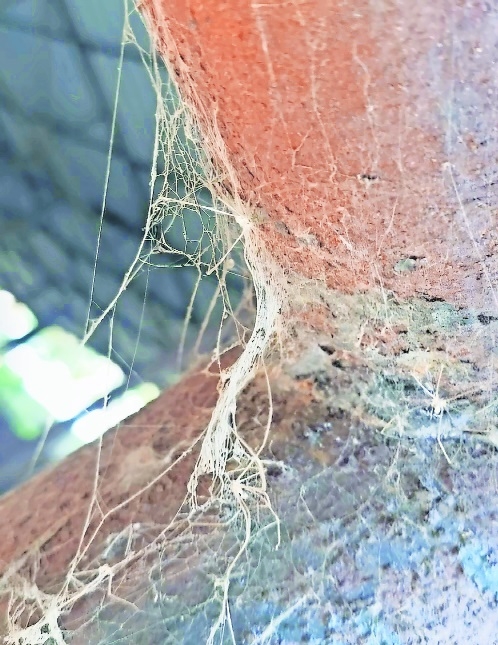
A dew covered orb spider-web found in the city.
By Simran Shrivastava :
The disappearance of spider webs from many parts of Nagpur may be a warning sign that the city’s biodiversity is slowly declining. While most people rarely notice these delicate silk structures, scientists say they are important indicators of a healthy environment. The type and number of spider webs found in an area reflect the presence of vegetation, insects and natural habitats. A recent study has found that as green spaces shrink and human disturbance increases, several web types are becoming less common which signals changes in Nagpur’s ecological balance.
Recent observations across Nagpur district show that no two lands are woven the same.
From the parks of Nagpur city to the agricultural fields of Mouda, the forests of Ramtek and the stretches of Kamptee, each area supports a distinct kind of spider web, caused by its own conditions. According to Sonu Thawkar, Research Scholar at the Post Graduate Teaching Department of Zoology, Rashtrasant Tukadoji Maharaj Nagpur University (RTMNU), who conducted the study under the guidance of Dr Sharyu Ghonmode, Professor, Department of Zoology, Shivaji Science College, the distribution of spider web types shows the ecological character of each area.
The study documented 106 spider species from 18 families and found that the webs change with the habitat. Orb, sheet and funnel webs were commonly seen in city’s gardens and green pockets where open vegetation and flying insects are still available. In Mouda, cob and tangle webs dominated old structures, field boundaries and shrubby patches that remain relatively undisturbed. Ramtek’s dense vegetation favoured mesh webs, while triangle webs were largely confined to stable habitats in Kamptee.
Orb webs signal open green spaces rich in insect life. Funnel webs indicate dense grasses and ground vegetation.
Cob and tangle webs thrive where disturbance is minimal, while mesh and triangle webs are often associated with structurally complex natural habitats. Spiders prey on mosquitoes, flies, moths and several agricultural pests, helping regulate insect populations naturally and reducing dependence on chemical pesticides. The findings also hint at what Nagpur may be losing. Researchers observed that orb webs, once common across many green spaces, are becoming scarce in urbanised parts of the city. Unlike spiders that build irregular cobwebs inside buildings, orb-weaving spiders depend on trees, shrubs and open spaces where their large circular webs can be anchored.
As these spaces disappear under roads, buildings and commercial development, suitable habitat for these spiders shrinks with them. Regular trimming of roadside shrubs, intensive maintenance of gardens, dust deposition, air pollution and bright artificial lighting all influence spider populations by reducing suitable web-building sites and altering insect movement after sunset. Seasonal changes too
impact webs.
“Monsoon remains the busiest season for spiders. Higher humidity keeps silk flexible, insect populations increase and large orb webs become common across vegetated areas. Winter supports stable web construction, while the harsh summer months witness decline as high temperatures suppress insect activity and many spiders reduce web-building to conserve
energy,” Thawkar explained.