Chakras & Hormonal Symphony
| Date :12-Jul-2026 |
By DR BHUSHAN KUMAR UPADHYAYA :
Yogic traditions treat the
human body as more than a
physical structure. It speaks of
subtle energy centres which
impact physical, mental, and emotional wellbeing. Modern neuroscience and endocrinology do not
recognize the Chakras as anatomical structures, yet many
researchers and practitioners find
interesting parallels between locations of the Chakras and endocrine
glands. These correspondences are
more computational rather than
scientifically proved. They provide
a very useful framework to understand the body-mind connection.
Endocrine glands consist of the
system which releases hormones
into the blood stream. These hormones regulate growth, metabolism, mood, immunity, reproduction, stress, sleep, and emotional
balance. Yoga propounds that
when the flow of Prana or vital
energy is balanced, harmony is
reflected in the functions of the
body and the mind. In this sense
the Chakras and hormonal system
may be described as the complementary languages describing
human regulation and emotional
wellbeing.
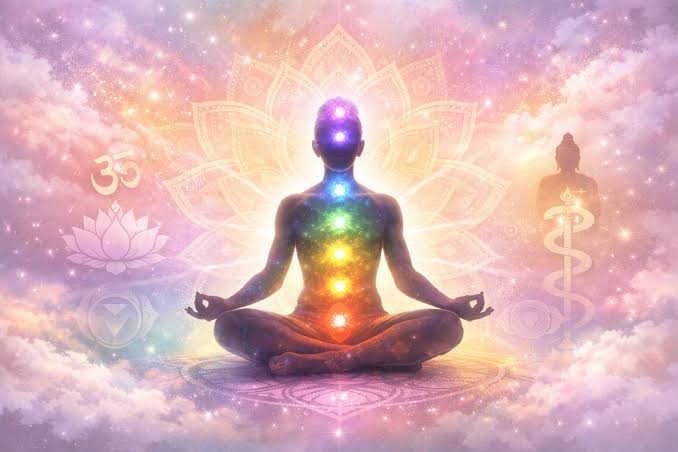
Following is the description of
the Chakras and their parallels
with the hormonal system:
The Muladhara Chakra- This
Chakra is located at the base of the
spine. It is associated with stability, survival, and security. The corresponding part of the body is
linked with the adrenaline glands
which secrete adrenaline and cortisol. During stress these hormones
prepare the body for further action.
Yogic practices like Asanas,
Pranayamas, Mudras , and Bandhas
reduce excessive stress responses
by enhancing parasympathetic
activity and improving emotional
stability.
The Swadhisthana Chakra- It is
situated in the pelvic region. It is
associated with creativity often
linked with the reproductive
organs. These organs release hormones like estrogen and testosterone.
Research suggests that
gentle hip opening postures and
diaphragmatic breathing influence
these reproductive organs.
The Manipura Chakra- Located
near the navel, this Chakra represents confidence, will power , and
transformative energy.This
anatomical part of the body is frequently associated with the pancreas which regulate blood glucose
through insulin. Twisting postures,
core strengthening Asanas , and
Pranayamas like Kapalbhati
improve metabolic health and
enhance insulin sensitivity.
The Anahata Chakra- This
Chakra is believed to be located in
the centre of the heart. It is linked
with love, compassion, kindness,
emotional healing, and empathy.
It
has a parallel with the thymus
gland which contributes to the
immune system. Research shows
that meditation, gratitude, kindness
practices reduce stress hormones
and improve immune response,
illustrating close relationships
between emotional health and
physiological resilience.
The Vishuddhi Chakra- This
Chakra is situated in the throat
region and associated with communication and self expression.
This part of the body is traditionally associated with the thyroid
glands which control metabolism
and energy production. It is found
that chanting, Bhramari
Pranayama, and mindful vocalisation stimulate vagus nerve , promoting relaxation and potentially
influencing autonomic balance.
The Ajna Chakra- This Chakra is
located between eyebrows. It symbolizes intuition, awareness, and
higher cognition. This region of the
body is associated with the pituitary gland.
This gland is called the
master gland as it controls other
glands. Concentration practices,
meditation, Shambhavi Mudra
strengthen attention, improve emotional balance , and enhance functions of the brain specially the prefrontal cortex.
The Sahasrara Chakra. It is called
the crown Chakra as it is located at
the top of the head. It represents
unity and transcendence. This
region is linked to the pineal gland
which secretes melatonin responsible for regulating sleep and waking cycles.Meditational practices
improve sleep cycles, reduces
stress and supports circadian
rhythms.
Thus, both Yoga and neuroscience offer an integrated framework and vision in which the body,
mind , and consciousness function
as a harmonious symphony.
(The writer is Former DG Police
& CG, Homeguards,
Maharashtra) ■
