US attacks Iranover ship beinghit in Hormuz
| Date :13-Jul-2026 |
DUBAI :
- Iran responded with attacks targeting US bases in several countries in the Gulf, including Bahrain, Kuwait, Qatar and Oman.
- The era of one-sided deals is OVER and the strait would remain closed “until further notice”: Iran
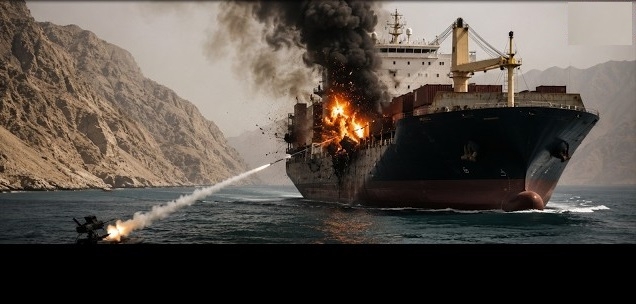
- A merchant vessel with 11 Indian nationals on board was attacked off the coast of Oman.
THE US attacked Iran early on
Sunday morning over an Iranian
strike on a vessel in the Strait of
Hormuz that set the container
ship ablaze and forced its crew
to abandon it.
Iran responded with attacks
targeting several countries in the
Gulf, including Bahrain, Kuwait,
Qatar and Oman.
The outburst of fighting raised
new questions about efforts to
reach a permanent end to a war
that began on February 28.
The strait, a key transit route
for oil and natural gas, has
become the key sticking point in
negotiations, and repeated fighting over the past week has left
negotiations in danger of collapse. The US military’s Central
Command said it hit some 140
targets in Sunday’s strikes, far
more than in the two previous
rounds of attacks, and went after
missile and drone launch sites,
ammunition dumps, communication equipment and other sites.
It said the attacks would weaken Iran’s ability to threaten civilian shipping.
“Iran made a poor choice. Now
they pay,” US Defence Secretary
Pete Hegseth wrote online.
The US has launched three
rounds of airstrikes targeting Iran
in the last week over Iranian
attacks on ships heading through
the strait using a route seeking
to avoid the Islamic Republic’s
territorial waters.
Iran retaliated by attacking
nations in the region hosting US
military forces, while insisting it
alone must control the strait and
potentially charge vessels for
travelling through it.
Iran’s Islamic Revolutionary
Guard Corps (IRGC) said it targeted US bases in Jordan, Qatar,
and Oman on Sunday in retaliation for US attacks against
southern Iranian provinces earlier in the day.
In the first phase of its retaliatory operations, the IRGC said its
forces hit ‘important’ US infrastructure and facilities at the Prince Hassan Air Base in Jordan, destroying the base’s command and control centre and the hangar for MQ-9 Reaper drones.
In the second phase of its strikes, the IRGC targeted and stopped a ‘violating’ vessel in the Strait of Hormuz, and hit the US Al Udeid Air Base in Qatar, devastating its command as well as fighter aircraft overhaul and maintenance centres.
In the third phase, it noted, the logistical support centres and refuelling platforms of US aircraft carriers in the
Omani port city of Duqm were targeted and demolished
in a ‘heavy and surprise’
attack.
The Iranian Army also targeted drone attacks early Sunday on what it described as ‘terrorist’ US Army bases and centres in Kuwait and Bahrain in response to the US ‘aggressions’ earlier in the day. It added that in Kuwait, a Patriot air defence system, an ammunition depot, and a radar site belonging to the US Army were hit by Iranian kamikaze drones, while in Bahrain, the US Army’s communications system and a radar site were targeted.
Iran said that the strait would remain closed “until further notice” and said it would consider targeting “additional enemy bases in the region” if it faced more attacks.
The IRGC warned of more severe responses if the United States repeats its attacks against Iran. “The era of one-sided deals is OVER,” Mohammad Bagher Ghalibaf, the Speaker of Iran’s Parliament and a main negotiator, wrote Sunday.
“We told you: keep your word or pay the price. Reality is knocking.”
Iran reports new attacks on military targets on Qeshm island: Iran’s state-run IRNA news agency cited the Governor of Qeshm island, located near the strait, as saying that under a dozen projectiles had been fired at military targets there, with no casualties. There was no immediate comment by the US military. The largest island in the Persian Gulf is home to about 150,000 people.
“We bombed the hell out of them last night,” President Donald Trump told NBC’s “Meet the Press.”
Semiofficial Iranian news agencies reported that a navy officer was killed. Iran retaliated by attacking nations in the region hosting US military forces, while insisting it alone must control the strait and potentially charge vessels for traveling through it.