Over 5,000 patients admitted to Regional Mental Hospital annually in past 2 years
Date :14-Jul-2026
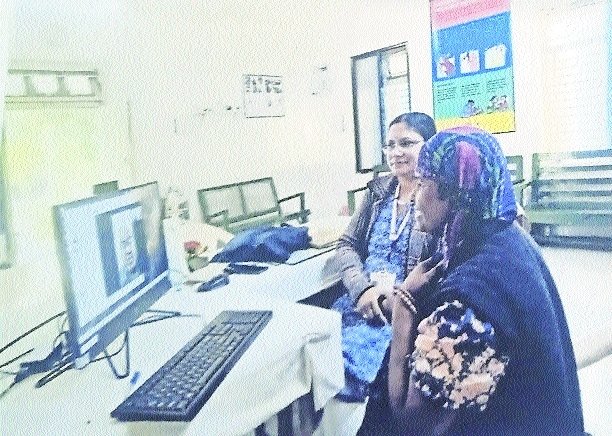
A patient connecting with her family through
e-Visit at the Regional Mental Hospital.
By Saniya Chakraborty :
While the economy is booming and the country is witnessing rapid evolution in new-age technology plus new infrastructure, underneath the gleam and sheen, however, the mental health of citizens seems to be taking a toll. On one hand, new millionaires driven by the tech boom are emerging from unknown quarters and on the other hand a few are unfortunate in society as they are falling apart in the process of achieving desirable success. Same is reflected from a boom, not a happy word for this scenario that is being described ahead, at Regional Mental Hospital (RMH) which is witnessing a surge in patients with Inpatient Department (IPD) remaining above 5,000 annually as Outpatient Department (OPD) numbers also steadily rise.
The contrast in society, one which is aspiring to make its impact on the global stage, and volume of new patients with mental illness also rising unexpectedly needs a deeper study.
A study of the hospital patient data, IPD have registered 1,994 admissions in 2023-24, which increased sharply to 5,536 in 2024-25. The number remained almost unchanged at 5,405 in 2025-26. During the first quarter of the current financial year, from April to June 2026, the hospital has already recorded 1,392 indoor admissions, including 358 new or readmission cases and 1,034 existing patients. OPD attendance rose from 37,141 in 2022-23 to 51,599 in 2023-24, 56,896 in 2024-25, and further to 68,700 in 2025-26. till June 2026, 14,836 patients have already visited the OPD, indicating that the demand for psychiatric consultation continues to remain high.
According to Dr Deepak Awache, Psychiatrist, Class 1, RMH, the reason for such increase in the past two years is because of awareness, but beneath it is even deeper cause of concern, rise in drug consumption. “Post-covid, mental health awareness has been taken seriously and people are supporting people and not shaming,” he shared. “Another reason is drug substance consumption has increased which not only deteriorates physical body but also mental health. In extreme cases, people lose their mind and start behaving violently and family members then admit them to the hospital,” he stated. Even family history having Schizophrenia, Psychosis, and any other disorders have increased due to diganosis and are admited.
e-Visit facility
connected 462
people together
Under the National Family Reunion Programme, hospital authorities co-ordinate with district administrations, police and families to trace relatives of abandoned or wandering patients and facilitate their return home after recovery. The data reveals that 92 patients were reunited with their families in 2022-23, 103 in 2023-24, 142 in 2024-25, 101 in 2025-26, while 25 more patients have been reunited with their families till June. Recognising the difficulties faced by families living far away, the hospital introduced the E-Visit facility in December 2024. The digital initiative allows relatives to communicate with admitted patients through video calls. The service has facilitated 462 virtual interactions till June 2026.
Paediatric patients’
number also rising
The hospital is also witnessing an increase in child mental healthcare services. Official figures show that 46 children have attended the Child Psychiatry OPD till June 2026, indicating a growing demand for specialised psychiatric assessment and treatment among younger patients. Apart from routine psychiatric care, the hospital continues to provide specialised therapeutic services. The statistics show that 482 Electroconvulsive Therapy (ECT) procedures, 20 Electroencephalogram (EEG) investigations, and 12 Repetitive Transcranial Magnetic Stimulation (RTMS) sessions have been conducted till June 2026. These services form part of the hospital’s comprehensive treatment approach for patients with severe psychiatric issues.
Primary routes of admissions; two statutory process
of discharge
Many are brought by family members seeking specialised psychiatric care. Others are wandering persons rescued by police and produced before the hospital under the provisions of the Mental Healthcare Act (MHCA) 2017, after medical evaluation and legal procedures. Official MHCA records for 2025-26 show that 1,421 admissions were made under the Act, comprising 928 male and 493 female patients across different legal provisions including Section 89 Section 102 and Section 103.
Discharge: One discharge mechanism is Leave on Absence (LOA), which allows clinically stable patients to return home with their families for a specified period, usually around 50 days, before a medical review determines further treatment. The second mechanism involves the Mental Health Review Board (MHRB), which assesses a patient’s mental condition and legal status before approving discharge. The records show 1,278 patients were granted LOA during 2025, while 139 patients were discharged through the MHRB. Till June 26, 320 patients have been granted LOA and 28 patients have been discharged through the MHRB process.