Unsafe mental hospital continues serving patients as re-development remains stalled
| Date :24-Jul-2026 |
By Saniya Chakraborty
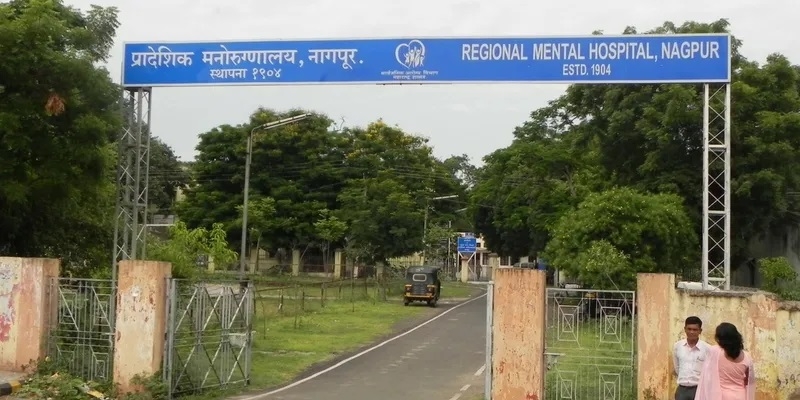
Hundreds of mentally ill patients at the Regional Mental Hospital (RMH) in Nagpur continue to live and receive treatment in buildings that have been declared structurally unsafe. Although the need to redevelop the 162-year-old hospital has been acknowledged,
the project has remained stalled for nearly three years. As a result, the hospital administation is keeping several unsafe wards operational for around 455 patients.
Mental Asylum was established at Nagpur in 1864 under Mental Asylum Act 1854. Later in 1904 it was converted to RMH. While the authorities have acknowledged the deteriorating condition of the over a century old hospital and proposed its redevelopment, the project remains stalled from almost three years, leaving the patients open to hazards.
A structural audit conducted by Visvesvaraya National Institute of Technology (VNIT) found that all wards except Ward Nos 15, 16 and 29 are unfit to use. Despite this, many of this wards continue to function because there is no alternative infrastructure available to relocate patients. Hospital authorities stated that Wards four, five, eight, nine, 10,11,12,13,14,17,18,19 and 20, accommodating despite being declared unsafe. They admitted that vacating these wards would create a serious accommodation crisis as there is no space to shift the patients.
The situation is even more alarming as Wards two, three, six, and seven have already been shut after becoming dilapidated. Authorities have also warned that the remaining occupied wards are in a declining condition and the possibility of an unfortunate incident cannot be ruled out, instigating them to seek guidance on whether patients should continue to be admitted or alternative arrangements should be made. In September 2024, the hospital requested the Public Works Department (PWD) to prepare the architectural layout, maps and cost estimates for the proposed new hospital building to facilitate government funding. However, the redevelopment process failed to move forward as the Additional Director, Health Service, Mental Health, Mumbai, failed to provide Rs 26, 16, 900. In May 2026, the Dr Ambrish Mohabey, Medical Superintendent, RMH, again sought administrative approval for infrastructure works worth over Rs 5.27 crore, but was not sanctioned yet.
The proposals included renovation of century-old toilets and bathrooms, construction of a ‘Dharamshala’ for relatives of indoor patients, three rooms for security guards, consultancy charges for the proposed new hospital building, resurfacing of internal roads, painting of wards and OPD buildings, renovation of waiting areas and gates, construction of a new drainage and sewerage system, renovation of toilets in male wards, and completion of the fire alarm system along with replacement of a transformer. The proposal highlighted that the toilets and bathrooms in the indoor men’s and women’s wards, built during the British era, have damaged doors, windows and tiles, while ageing and blocked sewer lines have resulted in clogged toilets and bathrooms, directly affecting patient care.
This is not only about redevelopment but about people safety. The same question lies beneath the issue that who will be accountable if any mishaps happen in the century-old building ? Precautionary measures should be taken immediately before some unfortunate incident occurs. Progress should not come at the cost of peoples’ live, but should be done thinking about peoples’ lives.
Poor drainage, sanitation
double trouble at Regional Mental Hospital
The Regional Mental Hospital is also grappling with a major drainage and sanitation crisis. The existing drainage and sewerage network has become choked and is no longer functional. The campus does not have a municipal drainage connection, worsening the situation.
A proposal for laying a new drainage and sewerage line was submitted but was not approved, and the hospital is now preparing to send the proposal again. Hospital officials said the existing system has deteriorated to a point where repairs are no longer enough and complete replacement has become essential. Authorities have become deaf to peoples’ needs that they do not even acknowledge the issue anymore, which shows lack of accountability of the officials.