Free e-Bus trials to finallybegin; 245-bus fleet planned
| Date :27-Jul-2026 |
BHOPAL :
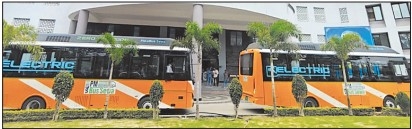
BHOPAL’S urban transit landscape is set for a major transformation as free passenger trials for 10 air-conditioned electric buses commence on
Wednesday under the PM e-Bus
Sewa scheme. Municipal
authorities estimate that the
city will eventually operate a
total fleet of 245 electric buses, significantly improving daily urban mobility for over one
lakh commuters across various municipal zones. In the initial rollout phase, 100 buses
have been sanctioned under
the Gross Cost Contract model, while Bhopal City Link
Limited will induct an additional 145 electric buses in subsequent phases, with 21 buses
already delivered to the newly
constructed Bairagarh depot
facility.
Trial runs operate free across
designated corridors
The trial service will initially operate along two key urban
routes, connecting Chirayu
Hospital to Bairagarh Chichli
via the Board Office Metro
Station, and linking Chirayu
Hospital to the Railway Coach
Factory along the same central
transit node. Passengers can
access free public travel during this experimental testing
phase, allowing operations
staff to evaluate vehicle performance and route efficiency. Full commercial operations
for the first fleet of 100 electric
buses are scheduled to officially commence on August
15.
Transport Department
sanctions twelve key city
routes
The Transport Department
has formally approved 12 operational routes out of 26 proposals submitted by Bhopal
City Link Limited to maximize
transit efficiency across suburban corridors.
The longest
operational route will connect
Sehore to Ratapani over a distance of 68.5 kilometers, while
the shortest service will run
between Acharpura Industrial
Area and BDA Colony across
32 kilometers. Additional
approved corridors include
Sukhi Sewaniya to Bhojpur,
Coach Factory to
Obaidullaganj, Bilkhiria to
Sehore, and Phanda to
Mandideep.
Under the operational allocation for the PM e-Bus Sewa
project, 65 buses will operate
out of the Bairagarh depot
while 35 vehicles will be stationed at the Kasturba Nagar
ISBT depot facility. Central
authorities selected GreenCell
Mobility to provide trained
drivers and technical maintenance staff, with the concessionaire already installing 11
fast-charging stations at the
Bairagarh facility. Under the
Gross Cost Contract framework, each bus must run a minimum of 180 kilometers daily,
with the operator receiving Rs
58.14 per kilometer, comprising a central subsidy of Rs 22
and Rs 36.14 funded by the
State Government.
The newly inducted electric
bus fleet comes equipped with
advanced technological features, including AIS-140 GPS
tracking units, full air conditioning, five security CCTV
cameras, and AI-based automated passenger counting systems. Vehicles are further fitted with emergency panic buttons, hydraulic wheelchair lifts,
safety hammers, public
announcement systems, and
LED display panels.
Commuters can also utilise a
dedicated mobile application
for digital ticketing and pass
purchases, while all operational metrics remain monitored in real time from the central control room.