Relief showers bring respite as dry Shivnath river raises farmers’ concern
| Date :03-Jul-2026 |
Raipur :
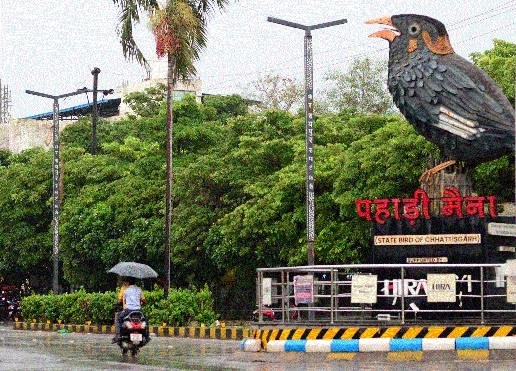
Monsoon showers lashed Raipur and several adjoining districts on Thursday evening, bringing some respite from days of sultry weather. However, despite the welcome showers, meteorologists and agriculture experts caution that the delayed onset of the southwest monsoon continues to cast uncertainty over Chhattisgarh’s kharif
season, with official rainfall
statistics indicating that the
State remains under a severe
seasonal deficit.
The India Meteorological Department (IMD) has simultaneously issued a warning for thunderstorms, lightning and gusty winds across several parts of Chhattisgarh, advising people to avoid taking shelter beneath trees, near electric poles and in open fields during intense weather activity.
The advisory assumes added significance in view of recent lightning-related fatalities reported from rural areas, prompting authorities to urge farmers, labourers and those working outdoors to remain vigilant. While scattered rainfall revived hopes of an active monsoon, visual evidence from the Shivnath River near Durg paints
a contrasting picture. Even in the beginning of July, extensive stretches of the riverbed remain exposed, reflecting the impact of the delayed monsoon and reinforcing concerns over future water availability for irrigation and domestic use if rainfall does not improve substantially over the coming weeks. Official rainfall data released by the IMD’s Meteorological Centre, Raipur, further underlines the seriousness of the situation. Seasonal rainfall recorded between June 1 and July 2 shows Chhattisgarh has received only 99.6 mm rainfall against the normal 215 mm, leaving the State with an overall 54 per cent rainfall deficit. District-wise figures reveal widespread deficient rainfall across most regions.
Rajnandgaon and Bilaspur have recorded among the highest deficits at 79 per cent below normal, followed by Bemetara (77 per cent), Raipur (74 per cent) and Surguja (71 per cent). Korba and Kanker each remain 69 per cent below normal, while Baloda Bazar, Dhamtari, Durg and Mahasamund have reported deficits of nearly 63 per cent. In contrast, Dantewada has received 207.7 mm rainfall against a normal 198.1 mm, registering a 5 per cent surplus, while Narayanpur has also fared comparatively better than most districts. The figures suggest that although parts of Bastar have benefited from active monsoon conditions, large swathes of central and northern Chhattisgarh continue to grapple with acute rainfall deficiency.
Concerns have also intensified over the possible impact of El Niño, which is expected to suppress seasonal rainfall and directly affect paddy cultivation. State estimates indicate that the area under paddy could decline by nearly 50,000 hectares this year if rainfall remains below normal. Anticipating such a scenario, the State Government has launched an ambitious crop diversification programme, encouraging farmers to shift towards pulses and oilseeds. Registered farmers under the Integrated Farmer Portal will receive an incentive of Rs 15,000 per acre, with nearly Rs 200 crore earmarked for promoting crop diversification across 50,000 hectares. Agricultural experts point out that crop rotation also helps restore soil fertility and reduces long-term dependence on water-intensive paddy cultivation. With reservoirs, rivers and groundwater sources yet to receive adequate recharge, weather experts believe the next fortnight will be crucial in determining not only the success of the kharif season but also the State’s overall water security.