LS passes anti-paper leak bill
| Date :30-Jul-2026 |
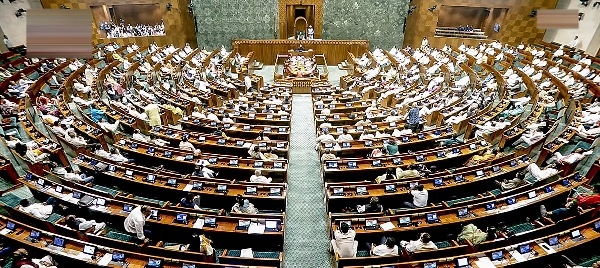
NEW DELHI :
AFTER an intense and often acrimonious debate spread over two
days, the Lok Sabha on
Wednesday passed the Public
Examinations (Prevention of
Unfair Means) Amendment Bill,
2026, by a voice vote, paving the
way for stricter legal measures
to combat paper leaks and examination-related malpractices.
The legislation amends the
Public Examinations (Prevention
of Unfair Means) Act, 2024, and
was passed following prolonged
discussions that witnessed sharp
exchanges between the treasury
and Opposition benches.
While the NDA and its allies
supported the Bill and called for
wider reforms in the examination system, Opposition members questioned whether the proposed amendments addressed
the fundamental reasons behind
recurring examination failures
and paper leaks.
The amended law seeks to
strengthen transparency,
accountability, and integrity in
public examinations through
tougher punitive provisions
while safeguarding the interests
of students. Among its major provisions are enhanced penalties,
including imprisonment of up
to 10 years, fines of up to Rs 10
crore, confiscation of assets of
those found guilty, and a mechanism aimed at ensuring that
judgements in such cases are
delivered within three months.
The passage of the Bill also
comes against the backdrop of
the large-scale ‘Sansad Chalo’
protest organised by the
Cockroach Janta Party (CJP) in
New Delhi on July 20.
Defending the legislation,
Union Minister Jitendra Singh,
who introduced the bill, said
the Government had incorporated suggestions received
from multiple stakeholders
while finalising the amendments. “We have amended certain clauses of the Bill to include
many inputs from various
stakeholders,” he said.
Speaking in Lok Sabha on
Wednesday, Singh said the government acted swiftly in the
NEET paper leak case, and as
many as 52 FIRs have been
lodged since the anti-paper
leak law came into force in 2024.
The amendment bill indicates that the Government is
open to learning from experience, he said, noting that the
rate of suicide related to paper
leaks has also reduced over the
last few years.
Explaining the revised penal
provisions, Singh said the maximum fine for service providers
under the 2024 law had been
increased from Rs 1 crore to Rs
5 crore.
He added that the punishment for directors and senior
management had also been
enhanced, with imprisonment
remaining between five and 10
years while the maximum fine
had been raised to Rs 5 crore
from the earlier Rs 1 crore.
He further said that the earlier punishment of three to five
years’ imprisonment and a fine
of up to Rs 10 lakh had now
been increased to five to 10
years in jail along with a fine
of up to Rs 50 lakh.
Singh also highlighted that
the punishment for in-charge
personnel had been strengthened under the amended law,
with imprisonment ranging
from five to 10 years and fines
increased to Rs 5 crore.
Congress MP Priyanka
Gandhi, Samajwadi Party
President Akhilesh Yadav, BJP’s
Anurag Thakur and Tejasvi
Surya, and NCP’s Supriya Sule
were among those who participated in the debate.
For organised examination
rackets and criminal syndicates
involved in paper leaks, the
amended Bill proposes a minimum prison term of seven
years, up from five years, along
with a fine of up to Rs 10 crore,
significantly higher than the
earlier ceiling of Rs 1 crore.