Nagpur is drowning; Not because of rain alone, but because of failure of planning
| Date :30-Jul-2026 |
By Dinesh Naidu :
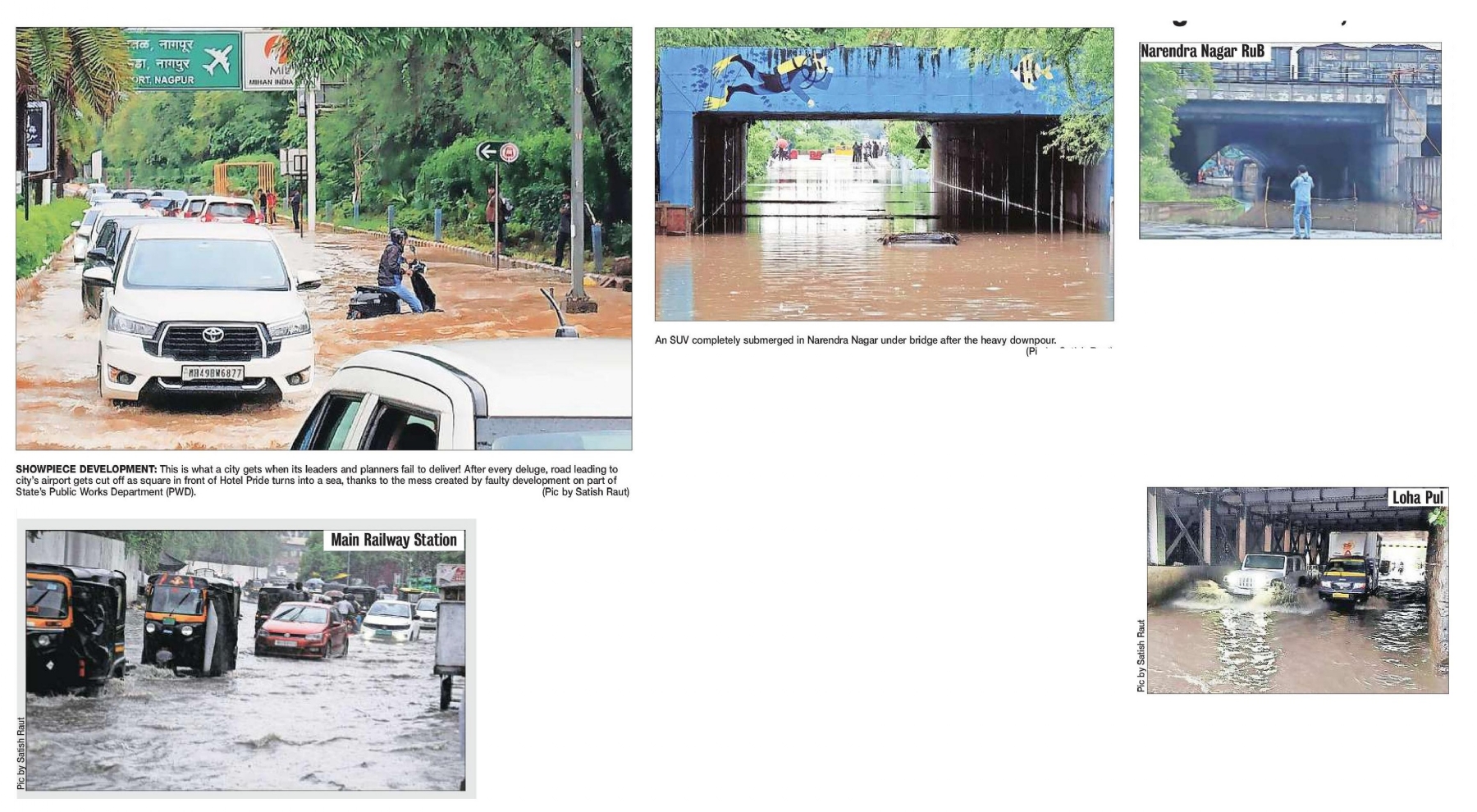
The extensive coverage in ‘The Hitavada’ on Nagpur’s collapse after Tuesday’s 180 mm rainfall is not merely a report on an extreme weather event; it is a damning report card of our city’s governance. Every page tells the same story: flooded roads, submerged underpasses, stranded school children, paralysed traffic, inundated homes, failed drainage systems and helpless citizens. The common thread is not rainfall, but administrative failure.
The Nagpur Municipal Corporation (NMC), Public Works Department (PWD), Traffic Police and every agency responsible for urban planning have collectively failed the people of Nagpur. Every year, crores of rupees are spent in the name of desilting drains, constructing cement roads, flyovers and beautification projects. Yet, a few hours of heavy rain are enough to expose the hollowness of these claims.
The city today resembles a giant engineering experiment where roads are repeatedly dug up, concretised and elevated without any integrated drainage planning. Natural water channels have been blocked, road levels have been raised above adjoining properties, storm-water drains have either disappeared or remain disconnected, and nullahs have been narrowed or encroached upon. Water has nowhere to go except homes.
The irony is painful. Nagpur is projected as a model city, yet citizens are rescued from school buses by excavators, vehicles disappear under railway underpasses, newly-built roads become rivers, and even the airport connectivity is cut off. If this is the outcome of thousands of crores spent on infrastructure, then serious questions must be asked about the quality of planning, execution and accountability.
After every flood, officials blame ‘record rainfall’ or ‘cloudburst-like conditions.’
However, cities across the world receive comparable or even heavier rainfall without coming to a complete standstill because urban infrastructure there is designed scientifically. Climate change may increase rainfall intensity, but poor planning converts rain into disaster. As Nagpur’s sitting Member of Parliament and the Union Minister known nationally for infrastructure development, Shri Nitin Gadkari must also share responsibility for the direction in which the city’s development has progressed. Nagpur has undoubtedly received impressive flyovers, roads and expressways, but world-class infrastructure cannot be judged merely by kilometres of concrete.
True infrastructure must first solve everyday problems of citizens - storm-water drainage, flood resilience, pedestrian safety, sewage management and scientific urban planning. If every monsoon brings the city to its knees, then the model itself deserves scrutiny.
Similarly, Chief Minister Devendra Fadnavis, who represents Nagpur and has
consistently championed the city’s development, cannot remain insulated from these failures.
While ambitious projects continue to receive priority, the city’s basic civic systems appear neglected. Development cannot be measured only by ribbon-cutting ceremonies and
capital expenditure; it must
ultimately be judged by the quality of life experienced by ordinary citizens.
The larger issue is the absence of accountability. Who approved cement roads without ensuring proper drainage? Who certified projects that now flood every monsoon? Who audited whether pre-monsoon desilting was actually completed? Why are the same locations - Narendra Nagar, Manish Nagar, Loha Pul, Swavalambi Nagar, Besa, Karve Nagar and several other localities - flooded year after year despite repeated expenditure?
Nagpur does not need another committee, another survey or another public relations exercise. It needs an independent technical audit of all major road, drainage and cement road projects executed over the last decade. Every engineering decision that has obstructed the natural flow of storm water must be reviewed by independent experts. Contractors, consultants and approving authorities must be held personally accountable wherever negligence is established.
A city cannot keep pouring concrete over its
problems and call it development. Development that
ignores basic engineering
principles eventually becomes destruction.
The rains have exposed more than flooded roads; they have exposed a governance model that priorities visible infrastructure over functional infrastructure. Unless this changes, Nagpurians will continue paying the price every monsoon.