Chips’ packet helps crack blind murder
Rural police solve brutal rape-murder
Rural police solve brutal rape-murder
| Date :08-Jul-2026 |
Staff Reporter :
Rural police solve brutal rape-murder
An empty chips packet found at a murder scene helped Nagpur Rural Police crack a brutal rape and murder case that had almost no clues to begin with.
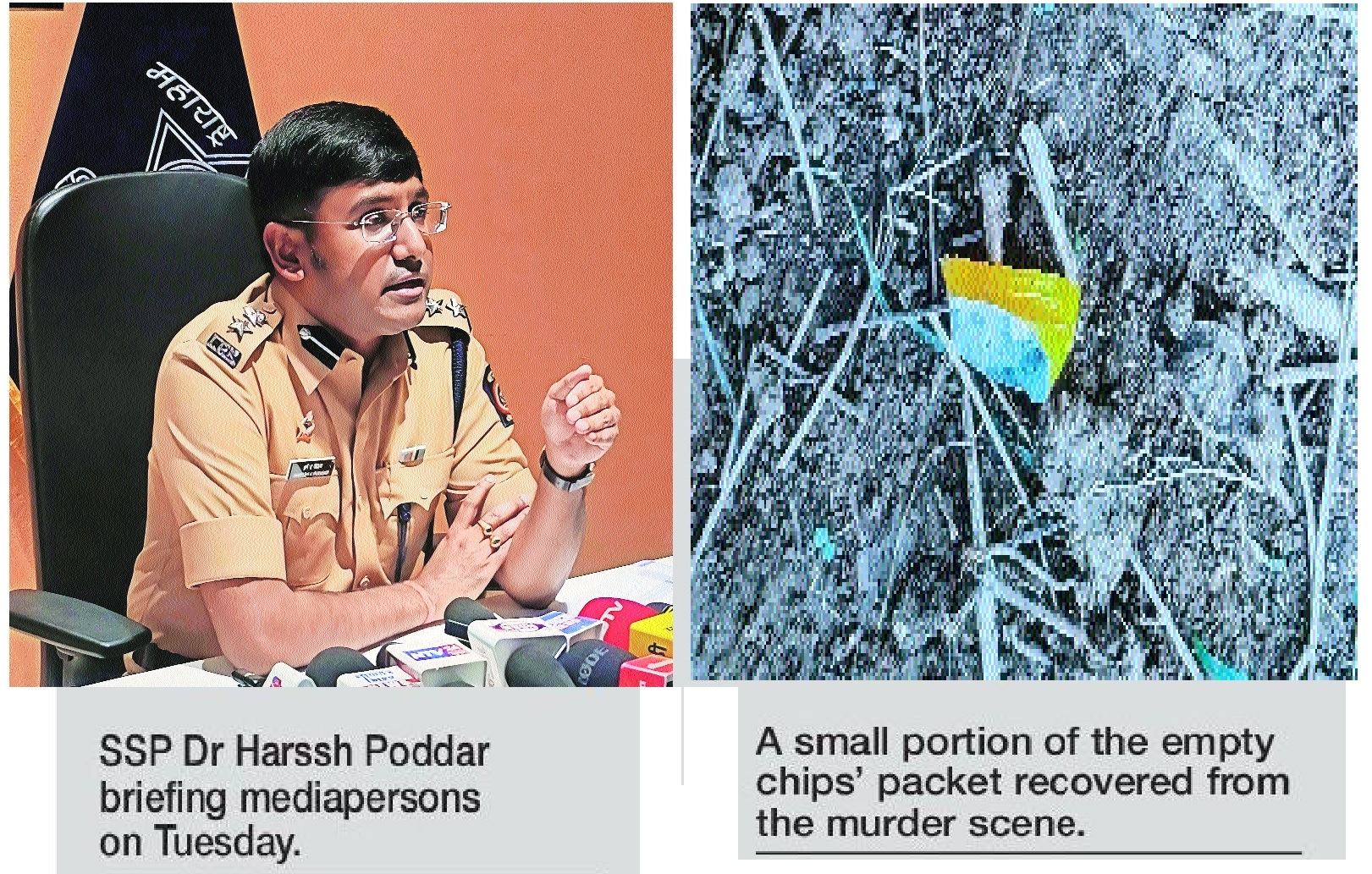
The body of an unidentified homeless woman, believed to be between 65 and 70 years old, was found in a farm near Patansaongi under Saoner police station jurisdiction on June 28. A post-mortem later confirmed that she had been sexually assaulted and murdered. For investigators, the case was anything but straightforward. The victim’s identity was unknown, there were no eyewitnesses, and the crime scene offered little evidence. The only item that stood out was an empty chips packet of Balaji company.
Rather than dismissing it as litter, Senior SP Dr Harssh Poddar and Addl SP Anil Mhaske directed the investigation team to follow that lead.
LCB Sr PI Ankush Mane and his officers contacted the Balaji chips distributor and traced the shops where the packet had been supplied. They then visited those shops and collected CCTV footage from the surrounding areas.
The effort paid off. One of the cameras captured the suspect moving through the area, giving police their first breakthrough. From there, investigators gradually built the chain of evidences and identified the accused as Sudhakar Dadarao Mandpe (48), a resident of Bansali Takli in Saoner taluka. He was arrested from Nagpur city on July 6 and has been remanded to five days of
police custody.
SSP Dr Poddar said the case was solved through scientific investigation, careful collection of evidence and effective use of technology. As part of the investigation, police examined footage from 182 CCTV cameras, analysed nearly 5,000 mobile tower records, verified details of around 15,000 vehicles, questioned 80 to 90 people and checked missing persons’ records from across Maharashtra as well as neighbouring districts of Madhya Pradesh. The investigation team was led by ASP and SDPO Sagar Kharde.
MARVEL’s ‘D-TAMS’ gave cops a major edge
Along with conventional investigation methods, police used D-TAMS (Digital Technology-Aided Morphological Reconstruction System), an artificial intelligence-based tool that proved crucial in solving the case. The system reconstructed the face of the unidentified woman from her decomposed remains, allowing police to circulate her image among social workers and other agencies in an effort to establish her identity. D-TAMS also analysed CCTV footage and generated a reconstruction of the suspect’s facial features and body structure from distant and low-quality camera images. After the accused was arrested, police found that his appearance matched the AI-generated reconstruction by about 85%.