Passport fraud case emerges...
| Date :09-Jul-2026 |
Coordinating with the Enforcement Directorate (ED) and the Ministry of External Affairs (MEA) to invoke remedies available under the India-Oman Extradition Treaty.
Signed at Muscat on December 26, 2004 and brought into force in October 2005 following the exchange of instruments of ratification, the treaty provides the bilateral legal framework for cooperation in suppressing crime and facilitating the extradition of fugitive offenders between the two countries.
Officials said one of the options under active examination is seeking Chandrakar’s temporary surrender for trial in India, subject to the treaty provisions and approval of the competent Omani authorities.
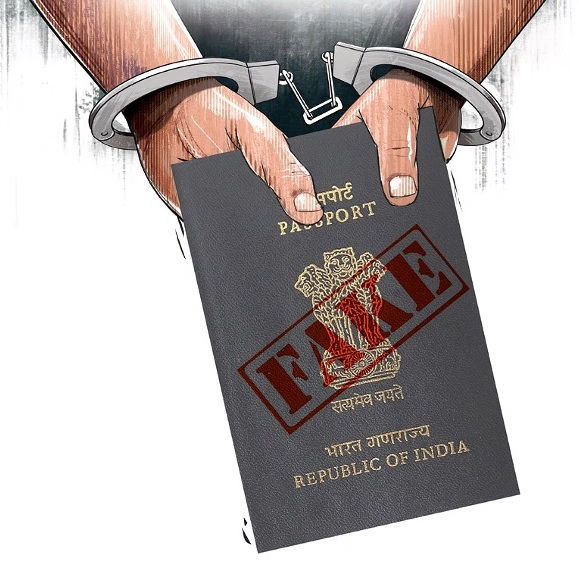
Officials said the criminal case registered against Chandrakar in Oman has introduced an independent legal process that could influence the timeline of the extradition proceedings. According to highly placed sources associated with the investigation, offences involving forged passports are treated as serious violations under Omani law because they directly concern border security, immigration control and national sovereignty. Depending upon the findings of the competent court, such offences may attract imprisonment and financial penalties.
Sources privy to the developments said Omani authorities ordinarily deal with offences committed within their territorial jurisdiction before acting upon extradition requests from foreign countries. Consequently, if Chandrakar is prosecuted in Oman, the outcome of those proceedings could become a significant factor in determining the timing of his transfer to India.
Officials further disclosed that Indian agencies are also examining whether Omani immigration laws provide any legal basis for deportation if investigators establish that Chandrakar entered the Sultanate using forged travel documents or without lawful authorisation. They, however, maintained that any such course would remain entirely contingent upon the findings of the Omani authorities and the applicable legal framework.
The extradition process is continuing through diplomatic channels. The CBI has already forwarded a comprehensive judicial dossier through the MEA after translating the complete record into Arabic, as mandated under Omani law.
The dossier comprises court records, non-bailable warrants, supporting judicial documents, the INTERPOL Red Notice and the order of the Commission for the Control of INTERPOL’s Files (CCF), which rejected Chandrakar’s plea seeking deletion of the notice.
Officials said that once the Omani court approves India’s extradition request, a joint team of CBI and ED officers will travel to Muscat to complete the legal extradition formalities.
The latest legal hurdle marks the second phase of India’s pursuit of Chandrakar. Investigators allege that while remaining under regulatory scrutiny in the United Arab Emirates and during the pendency of proceedings before the Commission for the Control of INTERPOL’s Files, Chandrakar allegedly fled the UAE and entered Oman using a forged Indonesian passport before being intercepted by the Royal Oman Police. He is presently lodged at the high-security Al Khoud detention centre in Muscat, where he is contesting the proceedings through local legal counsel even as Indian agencies continue pursuing his return through diplomatic and judicial channels.