Art keeps your moral memory intact: Prajakt Deshmukh
| Date :01-Aug-2026 |
By Reema Mewar :
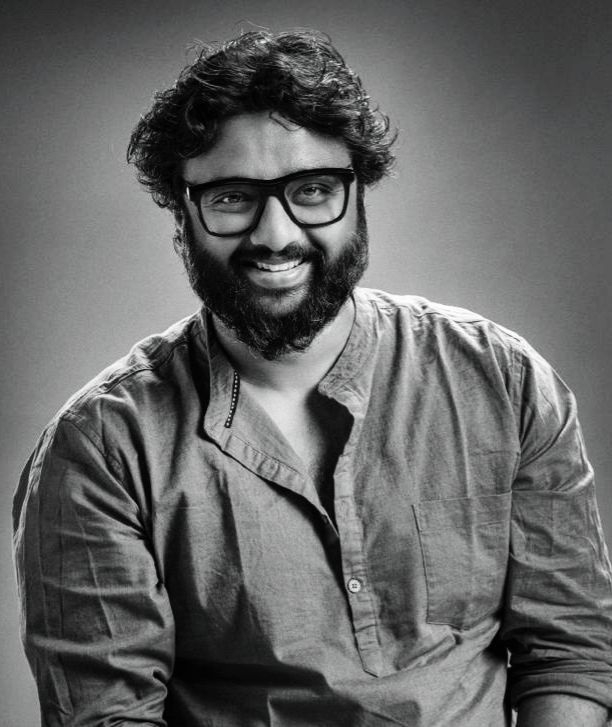
There is a curious quality to ‘Sangeet Devbabhali’. Even after the curtain falls, conversations around the play continue. That explains why audiences continue to return to it year after year. Writer and director of the play Prajakt Deshmukh finds a philospohical connection to its enduring relevance. “Art keeps your moral memory intact,” he reasons, while reflecting on the journey of ‘Sangeet Devbabhali’.
Deshmukh believes the play’s enduring success lies in its simplicity. Maharashtrian audiences already know Sant Tukaram, Avali and Rakhumai. They are familiar with the characters, the setting and the emotions long before they take their seats.
What ‘Sangeet Devbabhali’ offers, he says, is not a new mythology but a fresh perspective on one that already belongs to the audience. “We have also managed to keep the core of the characters and their integrity intact, so there is no contradiction in the way the characters are known by the audience and how they are presented by us. I think they enjoy that we have stepped just beyond an established story and imagined something without disturbing its truth. They relate to the philosophy behind it, and that is what makes it personal.”
He also credits actors Manasi Joshi (Rakhumai) and Shubhangi Sadavarte (Avali) for their dedication and consistency, and for pouring their souls into every performance. He also lauded the play’s producer Prasad Kambli and Bhadrakali Productions from Mumbai, for standing firmly behind the play through its long journey.
Deshmukh says that at the time of writing, he was not aware of any other literature or formats retelling our great epics or stories through the eyes of its women. The thought emerged from natural curiosity that he has posessed, even as a child.
“I always had this habit of looking outside the story I was being told, and examining and interpreting different characters. I suppose that’s where this thought came from.”
“I was writing a play for a competition and that is when this thought struck me. We all knew about Lord Vitthal and Sant Tukaram; both are widely celebrated figures in our mythology. But we know so little of their wives and partners.” Deshmukh feels the very nature of our epics enable these kind of conversations.
“That is the thing about our mythology. It was written so thoughtfully that it has continued to resonate with audiences across eras. There is some element of it that every generation always finds relevant and personal. That is how it stays immortal,” he explains.
As the play nears its 1000th production, Deshmukh admitted that he sometimes wonders whether he should have added more emotional nuances to it. “That is of course, a creative process, something that every artist feels in one way or the other. But over the years, my understanding of the play has gotten deeper, and I understand why people keep coming back to it.”
Speaking on the history and relevance of Marathi cinema, Deshmukh says that Marathi sangeet-natak is a centuries old tradition, and has existed since long before cinemas and OTTs. “When you go to a cinema, or watch a movie at home, and don’t like it, you may ask yourself, ‘what is missing?’
A possible answer could be that there was not enough ‘natya’ or conflict in the play. As an audience, one seeks this ‘natya’. Theatre presents ‘natya’ in its most authentic and diluted form.”
So, how can the Marathi theatre adapt to appeal to younger audiences? “The onus of adaptation is not on Marathi theatre,” Deshmukh states firmly, and explains the core of the conversation, his statement ‘Art keeps your moral memory intact’. Moral memory, he feels is the ability to remember the emotions, questions of justice and injustice, and values carried by stories across generations.
“Moral memory maintains our connection to the past while enabling us to address challenges that may arise in the future. Art teaches us to recognise injustice when it returns in a different form. It shapes our understanding of character, faith, devotion and even feminism,” Deshmukh gives the example of people enthusiastically attending plays or movies depicting Chhatrapati Shivaji Maharaj, or even that of Hollywood Director Christopher Nolan making ‘The Odyssey’, another great epic written centuries ago.
“This is why it is really important for the younger audience to keep coming back to theatre again and again, as their understanding and perception of the things they see will evolve over time.” But, he dismisses the notion that younger audiences do not enjoy Marathi theatre. “It often happens that after ‘Sangeet Devbabhali’ is performed, many young people come up to me and tell me ‘this is my fifth time attending the play’ or ‘this is my eighth time’, and it is very heartening.”
The positive response from his audience, however, is not enough to sustain the Marathi theatre industry. One of the biggest, and yet sadly the most basic shortcomings, that Marathi theatre faces, according to Deshmukh, is lack of sufficient infrastructure.
“I genuinely don’t think that OTT, cinemas, TV, social media, or technology is a threat to Marathi theatre. But at the same time, what discourages people is that many theatres in India are lacking even basic infrastructure like clean bathrooms, basic sanitation, or generally well-maintained infrastructure. There are obviously exceptions to this, but if we remain stuck discussing exceptions, then we will never actually get our heads out of the sand and address the problems artistes face.”
For Deshmukh, the future of Marathi theatre will not be secured by nostalgia alone. It will depend on audiences who continue to return, artists who continue to create, and institutions willing to preserve a tradition that has remained relevant not by standing still, but by allowing every generation to discover itself within it.