Out of 92 days of summer Nagpur breathed unsafe air for 46 days this year: CREA
Date :12-Aug-2026
Staff Reporter :
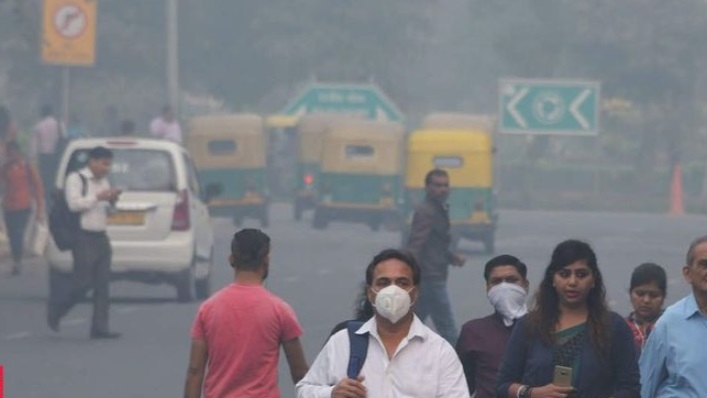
Nagpur choked on toxic air for half the summer, defeating both Mumbai and Pune to become one of the most polluted cities in the State
Out of 92 days between March and May, PM10 levels in city crossed the annual benchmark of 60 µg/m3 on 46 days
rapidly growing on the infrastructure front, Nagpur witnessed higher particulate matter (PM10) during previous summer season.
Nagpur choked on toxic air for half the summer, defeating both Mumbai and Pune to become one of the most polluted cities in Maharashtra revealed a study conducted by Centre for Research on Energy and Clean Air (CREA) recently.
As per the data shared by Central Pollution Control Board (CPCB), the PM10 levels of Nagpur city breached the national safety standards on 46 days from March to May this year.
PM10 stands for inhalable airborne particles that are 10 micrometers or less in diameter - small enough to be drawn into the respiratory tract.
According to studies, sustained exposure to this pollutant is associated with reducing lung function, asthma and increased risk of chronic respiratory and cardiovascular diseases.
India measures air quality against the National Ambient Air Quality Standards (NAAQS), a set of legally prescribed limits for major air pollutants laid
down by the CPCB. The permissible limit for PM10 is 60 micrograms per cubic meter (µg/m3) annually and 100 µg/m3 daily. Out of 92 days of monitoring between March and May, PM10 levels in Nagpur crossed the annual benchmark of 60 µg/m3 on 46 days - exactly half the summer. In a striking contrast, Maharashtra’s largest metros - Mumbai and Pune - crossed the same PM10 threshold on just five to six days during the same period. Nagpur also emerged as the second most polluted city in the State in May and fifth most polluted in April. Additionally, the average PM10 concentration recorded in May this year was around 100 µg/m3, making it the second most polluted May for the city in the last eight years. Earlier in 2022, the average PM10 level had soared to 140 µg/m3 in the same month.
Analysis of data further revealed that out of the four continuous ambient air quality monitoring stations (CAAQMS) in the city, the ones located in GPO Civil Lines and Mahal consistently recorded PM10 concentrations above the safe limits during the three summer months. Nagpur, one of the 130 non-attainment cities under the National Clean Air Programme (NCAP), had already recorded elevated pollution levels in winter.
The concentration of pollutant PM 2.5 was the highest in Nagpur in January and February this year.
Earlier in November, Nagpur ranked as the second most polluted city in the State, behind only Sangli. But the latest findings strongly suggest that Nagpur’s pollution problem extends well beyond winter. According to Dr Manoj Kumar, analyst at CREA, air pollution during summer has been a recurring pattern in Nagpur, but it has largely been overshadowed by the focus on winter pollution. “While winter conditions trap pollutants close to the ground, summer brings a different challenge, with coarse particulate matter (PM10) remaining consistently elevated.
The city’s emission inventory and source apportionment studies identify road dust and industrial emissions, including thermal power plants, as the dominant contributors to PM10.
These are year-round sources that do not disappear with the change in season,” Dr Manoj Kumar said.
Dr Kumar further said, “The number of polluted days depends not only on a city’s size but also on its emission profile, local meteorology and effectiveness of pollution control measures.”
Nagpur has substantial industrial activity, including nearby coal-fired thermal power plants, and its emission inventory identifies industrial sources as the largest emitter of particulate matter.
Road dust is another major contributor to PM10, especially during the dry summer months when the absence of rainfall allows dust to be easily resuspended by traffic. Unlike coastal cities such as Mumbai, which benefit from stronger sea breezes and greater atmospheric dispersion, inland cities like Nagpur generally experience weaker ventilation.”
As per the latest data, Nagpur Municipal Corporation (NMC) has utilised only 46 per cent of the total funds allocated under National Clean Air Programme (NCAP).