City’s biodiversity disappearing beneath concrete
| Date :17-Aug-2026 |
By Simran Shrivastava :
Walk through the lanes of Itwari, the markets of Gandhibagh, the commercial areas of Sitabuldi or the old neighbourhoods of Mahal and one thing becomes immediately apparent: exposed soil is becoming rare.
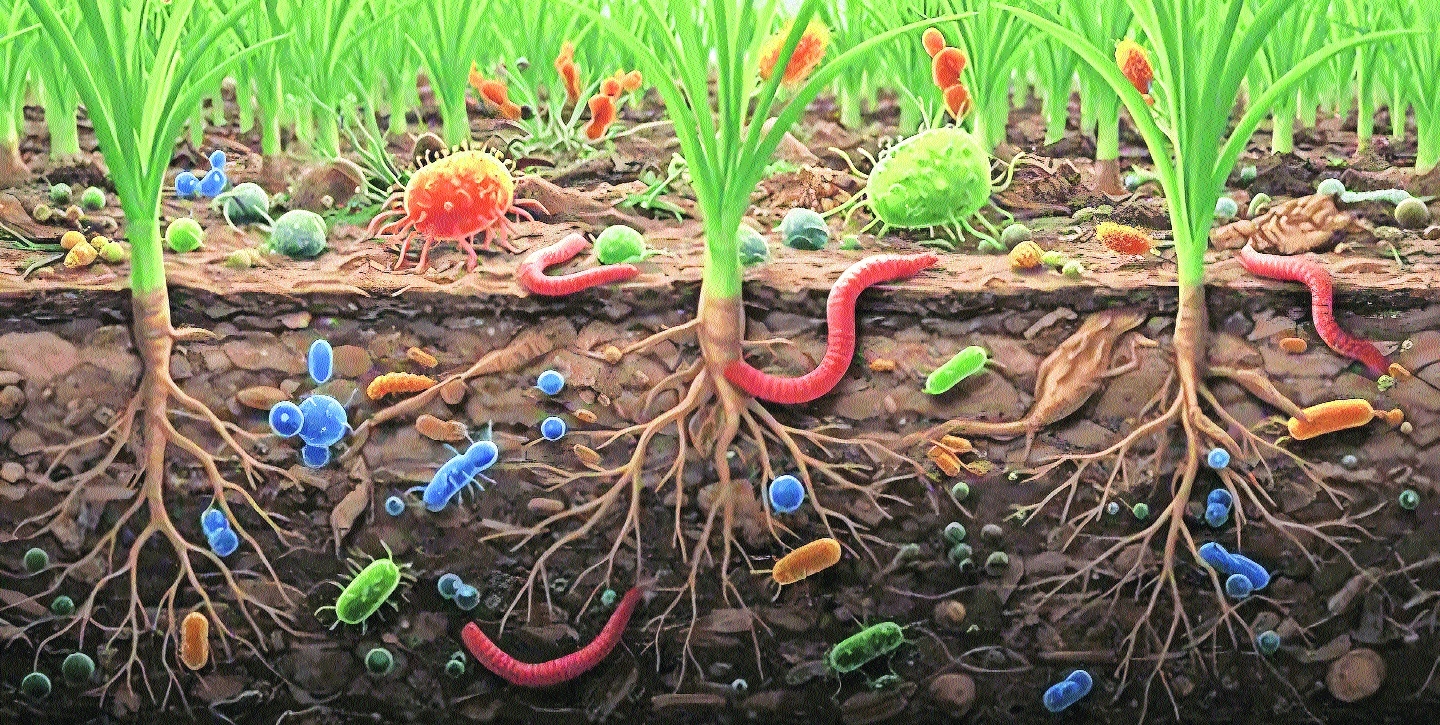
This is leading to the elimination of a vast underground biodiversity that plays a crucial role in maintaining soil health, supporting urban trees, recharging groundwater and absorbing rainwater.
Over the years, large parts of the city have replaced natural ground with roads, parking spaces, footpaths, paver blocks and buildings. Even the areas surrounding many roadside trees along Central Avenue, Sitabuldi Main Road and many commercial corridors have been covered with concrete.
According to entomologist and Shivaji Science College professor Sharyu Ghonmode, the soil beneath the city was far from lifeless before. It contained earthworms, ants, termites, mites, springtails, nematodes, insect larvae, fungi, bacteria and countless microscopic organisms that helped break down organic matter, recycle nutrients, improve soil structure and create pathways through which rainwater enters
the ground.
Increasing concretisation is reducing habitat available to these organisms. Ghonmode explained that when soil is sealed beneath concrete or paver blocks, rainwater can no longer infiltrate naturally, oxygen levels decline, soil becomes compacted and the supply of organic matter needed by underground organisms is disrupted. “Concrete can severely degrade the living ecosystem below it. Earthworms, soil arthropods, decomposer fungi and several root-associated microorganisms become particularly vulnerable when natural soil surfaces are sealed,” she added.
This issue is not just limited to biodiversity. Healthy soils absorb rainfall, support vegetation, store carbon and facilitate groundwater recharge. Soil organisms, roots and fungal networks create natural channels that allow water to move underground. As these systems are disrupted, more rainwater is forced onto roads and drains. For Nagpur, which routinely witnesses waterlogging in low-lying pockets during intense monsoon spells, the issue assumes greater significance. Areas around Sitabuldi, Cotton Market, the Nag River belt and several other localities often experience flooding despite investments in drainage infrastructure.
Environmentalist Dilip Chinchmalatpure said trees growing in heavily concretised areas frequently experience stress because their roots receive less water and oxygen. “When a tree is surrounded by concrete, the problem is not always visible immediately. But over time, reduced soil aeration and water infiltration affect root health and weaken the tree,” he shared. He added that reduced infiltration also means lower groundwater recharge. This is particularly relevant for our city as it depends on Pench and Kanhan reservoirs for its water supply while simultaneously facing concerns over future water security and urbanisation.
Preserving permeable surfaces, maintaining open soil around trees and reducing unnecessary concretisation will be essential for sustaining the ecological functions that support the city’s urban
environment.