Demolition of properties of serious offenders: A necessary debate
| Date :18-Aug-2026 |
By Tejinder Singh Renu :
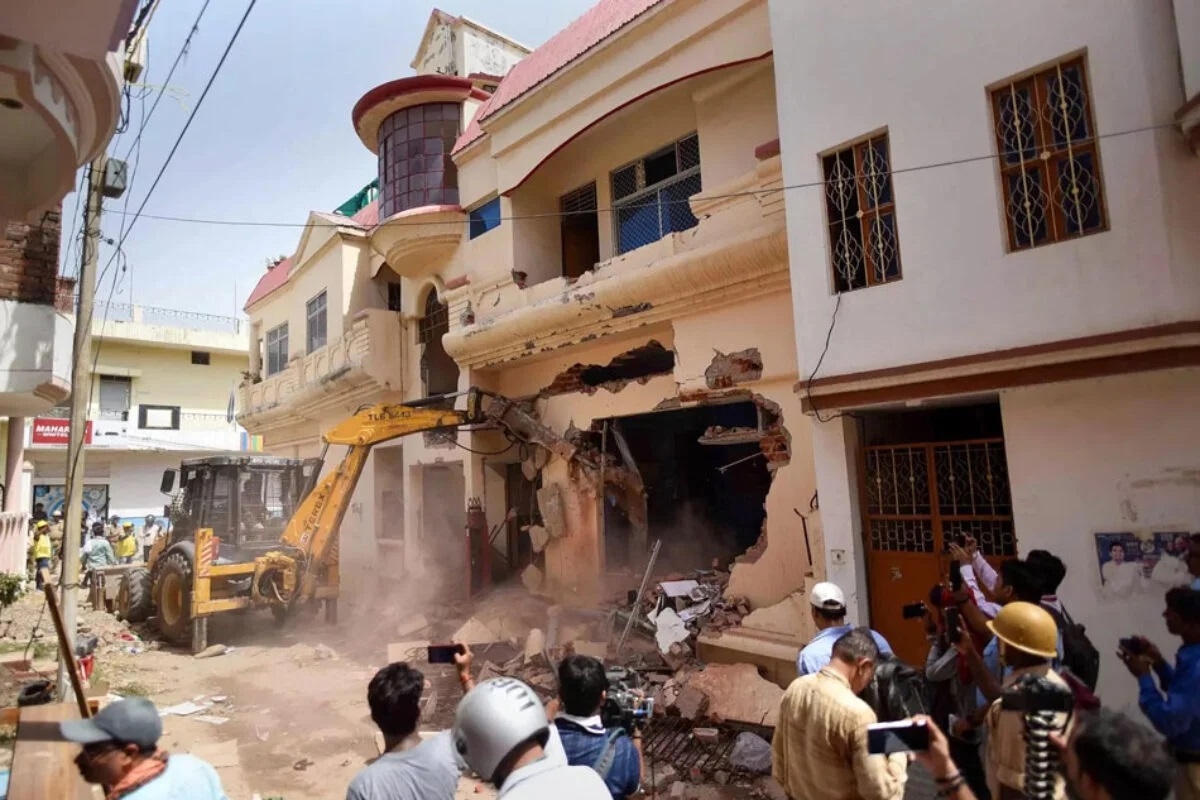
Am I the only one who believes that the demolition of properties belonging to serious offenders, under due process of law, can be an appropriate administrative measure or are there others who share this view? I believe that when the administration demolishes a property belonging to a gangster, arsonist, rioter, or a person involved in similarly grave offences, it may appear acceptable to a large section of citizens. Importantly, this issue should not be viewed through the prism of religion, caste or community. Wherever such action has been taken, it should be against the alleged offender based strictly on the nature of the offence and the applicable law, irrespective of his or her identity.
The Supreme Court laying down clear guidelines and safeguards for any such action is a welcome step. I firmly believe that all State Governments and administrative authorities must follow the constitutional and democratic procedures prescribed by the Hon’ble Supreme Court.
There can be no justification for arbitrary or selective action.
Yet, I continue to believe that demolition of a property belonging to a proven or legally established serious offender, where permitted by law and following due process, can be an effective deterrent.
The larger question is: Do we believe that our criminal justice system is presently robust enough to ensure that most such habitual offenders are convicted and remain behind bars? Unfortunately, the answer often appears to be no. Even persons accused of extremely serious crimes frequently return to the streets on bail within months, and sometimes even sooner, subject of course to the facts and circumstances of each case.
This can create a perception among habitual offenders that the consequences of their actions are temporary and
that they will soon be back in business. This is where the debate about deterrence becomes important.
If an individual repeatedly chooses to take the law into his own hands, there must be visible, lawful and proportionate consequences beyond merely arresting him.
At the same time, the rights of innocent family members cannot be ignored. They should never be punished for the crimes of another family
member. Therefore, the challenge before the State is to design a legal mechanism that creates a genuine fear of consequences for the offender without violating the rights of innocent persons.
In my view, if the existing legal framework prevents
certain forms of administrative action, the answer should not be arbitrary action outside the law.
The appropriate course would be to examine whether the law requires amendment through the proper constitutional and legislative process.
We cannot expect crime to decline merely by making arrests if habitual offenders repeatedly return to society without a meaningful deterrent. At the same time, a democratic society cannot fight crime by abandoning the rule of law.
There will inevitably be arguments both in favour of and against stronger punitive measures. The responsibility of the Government and the judiciary is to strike the right balance; between individual rights and the larger interest of society, between effective deterrence and constitutional safeguards, and between
decisive action and the rule
of law. Strong action against crime is necessary. But strong action must also be lawful, impartial and constitutionally sustainable.