Zadipatti cuisine A hidden gem of Vidarbha
| Date :02-Aug-2026 |
By Simran Shrivastava :
Spread across the forested districts of Bhandara, Gondia, Chandrapur and Gadchiroli, Zadipatti is celebrated for its folk theatre and Zhadiboli dialect
Zadipatti cuisine begins long before a meal reaches the plate. It begins in eastern Vidarbha’s paddy fields after the monsoon, in forests where edible flowers bloom for only a few weeks, in village boundaries where wild
greens emerge with the first rains, and in courtyards where vegetables are dried under the sun for seasons yet to come.
Spread across the forested districts of Bhandara, Gondia, Chandrapur and Gadchiroli, Zadipatti is celebrated for its folk theatre and Zhadiboli dialect. Less documented, however, is its culinary tradition, where every season, every harvest
and every available ingredient finds a place in
the kitchen.
Chef Vishnu Manohar, who has spent
decades documenting Maharashtra’s traditional cuisines, says the region continues to preserve recipes that have disappeared from many other parts of the State.
“Kandachi Akshi, Chinchavadi, Ahata, Aayate Ambil, Mahri, Kaanjan, Dhasla, Dubuk Vade, Saag Vade, Kukumsa, Pange, Borachi Amti, Dumbarsatichi Bhaji, Khaskhas Bhaji, Suwari, Panoriya, Phugphuga and Jawas Bond are still known here, although many are now prepared only occasionally,” he shared.
The forests, abundant rice cultivation and seasonal climate not only decide what people ate but also how they cooked. Rice became the foundation of everyday meals, while forests supplied edible flowers, mushrooms, fruits and leafy vegetables. Every season altered the menu, and almost nothing was allowed to go to waste. Rice, for instance, appeared in several forms.
One of them was Kandachi Akshi, a thin rice-flour preparation known locally as Sattar-bhoki because of the numerous tiny holes that form while cooking. Though it resembles a dosa, Manohar says it evolved independently in the Zadipatti region and was originally eaten with jaggery water or tamarind water before garlic, turmeric and chillies became common additions.
Another preparation was Kaanjan, in which rice was fermented overnight and later boiled into Ambil, a mildly sour drink that served as the region's everyday refreshment long before tea became part of daily life. Even broken rice left after milling was never discarded. It became Dhasla, a simple preparation made with water, salt and chillies. Leftover rice flour mixed with bottle gourd or cucumber pulp was shaped into Pange and roasted over traditional three-stone hearths. Seasonal vegetables such as brinjal and cluster beans were routinely sun-dried so families could continue eating them long after the harvest had ended.
“Earlier, vegetables were not available throughout the year. Right from curries to snacks, local ingredients were used extensively. Families dried vegetables like brinjal, cluster beans and other seasonal produce so they could be eaten months later,” Manohar shared.
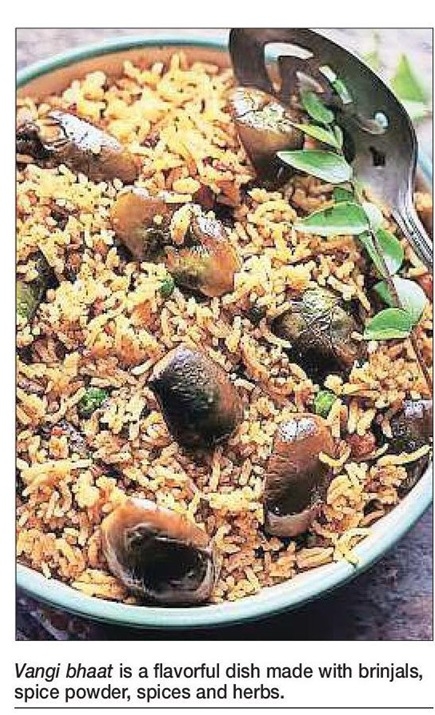
The cuisine also found a place beyond the household. According to Manohar, it became intertwined with Zadipatti’s famous folk theatre tradition. The plays begin around 11 pm or midnight and continue until dawn, turning them into all-night community gatherings. During these performances, Vangi Bhaat: spiced brinjal rice prepared using local produce, has traditionally been served to audiences. The custom reflects how food became part of the cultural experience itself, connecting agriculture, cuisine and theatre in a way unique to the region. As modern food habits become uniform, Zadipatti’s kitchens continue to preserve something older: a way of life by forests, farming, changing seasons and a culture where food remains inseparable from the land. n