From home to workplace: Building ‘Blissful Homes’ in a changing world
| Date :20-Aug-2026 |
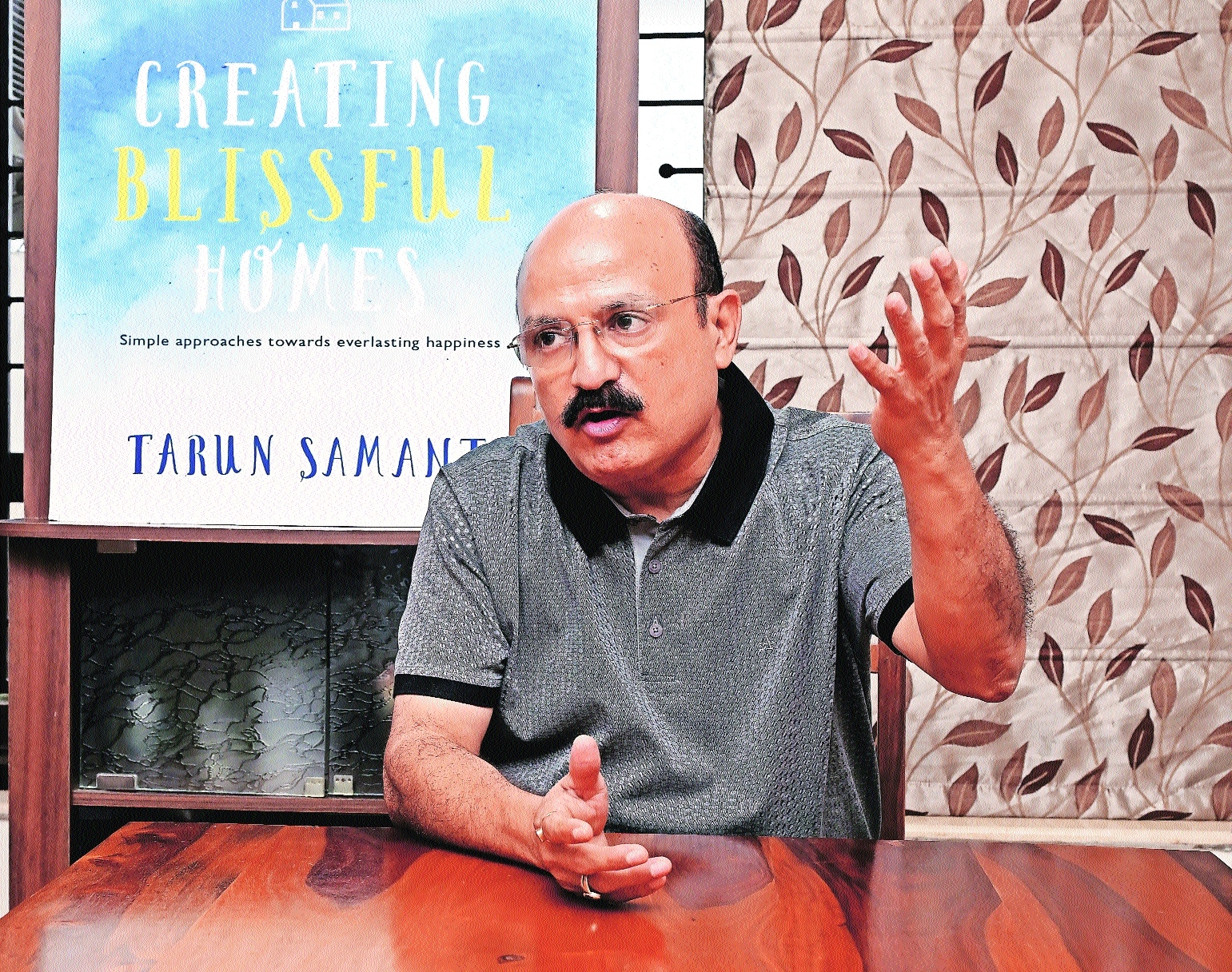
By Reema Mewar :
In an era where modern work culture emphasises on separating work and home life, Tarun Samant, in his book ‘Creating Blissful Homes’, somewhat challenges the notion. Samant, Former CEO of Tata Motors Insurance, who has spent over three decades working in the field, strongly believes that ones home is an extension of their self, and its ambience affects one’s personality and behaviour quite significantly. This is why, he argues, what we learn and practice in one space ultimately influences the other.
One of the most striking qualities of Samant’s book is its simplicity, a characteristic that he says is the foundation of the values his parents imparted from a young age. “I particularly credit my late father, D S Samant, who valued principles like kindness, fairness, empathy, and simplicity throughout his life,” he recalls. The book was written based on the experiences that he gathered throughout his life, be it as a son, father, husband, or a corporate professional.
“The idea behind this book is to create an environment of happiness in homes through mutual respect, effective communication, being kind and accommodating to everyone’s needs, and allowing the house to become a home,” This distinction between a house and a home is perhaps the most valuable analogy in the book. “A house is a structure built with bricks, stone, cement, and glass. A home on the other hand, is built on love, kindness, trust, respect, and empathy. We must not assume the two to be interchangeable,” he explains.
Speaking on the emerging gap between parents and children, he advises that parents must up their game.
“This generation gap seems wider because of technology. Parents must take the effort to be updated with technology, even if it is something as simple as booking a cab. You should not rely on someone for these simple things. Another important thing is finding informal ways of interaction with your children. It could be sports, a book, or a web series that the family sits together to enjoy and discuss.” Samant also believes that the nature of the parent-child relationship itself has evolved. While earlier generations often grew up in stricter
family structures, where parents were largely seen as authority
figures, today’s parents need to recognise the changing expectations of children and find ways to build greater familiarity and openness within the family.
The methods suggested by Samant are small ways in which a family can find love and belonging in a common space. ‘Reaction vs response’ is another prominent theme in his book. He believes that a responsive person conveys understanding, validation, and make those around them feel valued and understood. A reaction may make the other person feel small and demotivated, which may discourage them from ever approaching the person in the future, which is not a healthy practice in either a home or a workplace.
Lack of communication, he says, is one of the biggest reasons why there is so much dissatisfaction in relationships now-a-days. “Any time a company interviews a candidate, it is because the candidate was qualified enough for an interview. To be hired, however, the company looks for what the candidate can do in the future. Similarly, when someone meets a prospective partner for marriage, they look at their education, family status, and other such details. What should be given more value is their temperament, value system, and their potential to grow as a human being.”
The distinction between a house and a home lies not only in
the affection shared within it, but in the willingness to accommodate one another. For Samant, that quality extends beyond the family, shaping the way people respond, lead, and work with others. The same willingness to make room for another person may be what turns a collection of individuals into a home -- and a workplace into a team.