Beyond brothers: When Rakhi ties hearts!
Date :25-Aug-2026
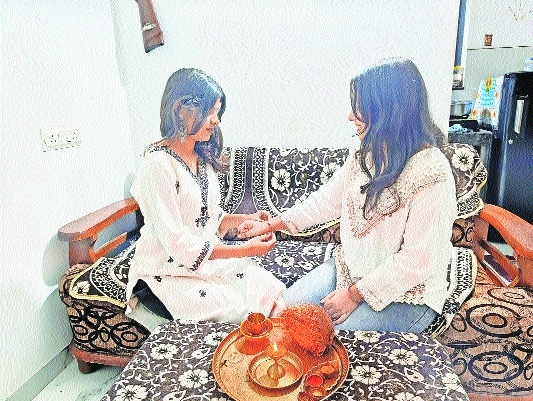
A girl tying a rakhi to her sister.
By Saniya Chakraborty :
Siblings tying rakhi to each other or a daughter tying rakhi to her father; both are symbols of trust, and a promise of being with each other in difficult times
Raksha Bandhan has always been celebrated as a ‘thread of love’ tied around a brother’s wrist, but today, the festival is quietly rewriting its own tradition. Across homes, sisters are tying rakhis not only to brothers, but also their sisters, fathers and even those who stood by them like family - because protection has never belonged to just one gender. The colourful thread, once seen as a sister’s promise to a brother, is increasingly becoming a symbol of mutual care.
Sisters tie rakhi to each other, promising to stand together through life’s changing seasons. Some daughters also tie rakhi to their fathers, turning the ritual into an emotional acknowledgement of the man who was their first protector, strongest supporter and often, their
safest place.
From childhood fights over the smallest things to becoming each other’s confidantes, sisters often grow into one another’s strongest support systems. A rakhi
celebrates that bond, one built not on duty, but on shared memories, laughter, secrets, disagreements and an unspoken promise of always being there.
“I never had a brother, so Raksha Bandhan was never about feeling that something was missing. I tie rakhi to my elder sister because she has always been my strongest support. For me, she is the person I can count on, no matter what,” said Ananya Bhardwaj.
For many families, the moment carries a deeper meaning.
A father may have spent years holding his daughter’s hand while she took her first steps, waited outside school gates, encouraged her dreams and silently worried about every difficult road she took. On Raksha Bandhan, when that same daughter ties a rakhi around his wrist, the gesture becomes more than a ritual - it is her way of saying, “You protected me all
these years; now, I promise to always stand by you too.”
“I am a single child, but I have never felt that Raksha Bandhan is incomplete. I tie a rakhi to my father every year. He has been my first protector, my biggest cheerleader and the person who has always made me feel safe,” said Priya Naik.
What makes the changing celebration beautiful is that it does not erase tradition; it expands it.
Raksha Bandhan is no longer simply about a brother promising protection and a sister seeking it. It is about recognising that love protects, regardless of who gives it. “My daughter tying a rakhi to me reminds me that the bond is not about who protects whom. It is about being there for each other. I may have held her hand while she was growing up, but today, knowing that she wants to stand beside me means everything,” shared Priya’s father Swapnil Naik.
After all, a rakhi is only a thread. It is the emotion woven into it that makes it unbreakable.