New cement roads block stormwater drains, trigger water-logging in city
Date :03-Aug-2026
Staff Reporter :
The intense downpour that lashed the city on July 28 has exposed critical engineering flaws in the road infrastructure in the city, with elevated cement roads emerging as a primary trigger for widespread urban flooding, as same has resulted in mismatch in the levels. Logic says that while constructing any road, the contractor needs to keep in mind the drainage system, as it is the basic fact and without it the stretch is going to get submerged even after light drizzle.
Three to four hour spell of heavy rain is enough to expose the condition of the city’s drainage system, as the water does not properly flow from the drainage system which results in flood-like situation, which puts citizens at the suffering end. Deluge on July 28 left vast stretches of the city submerged, inundating homes, shops, and educational institutions, while evoking memories of the devastating floods of September 23, 2023.
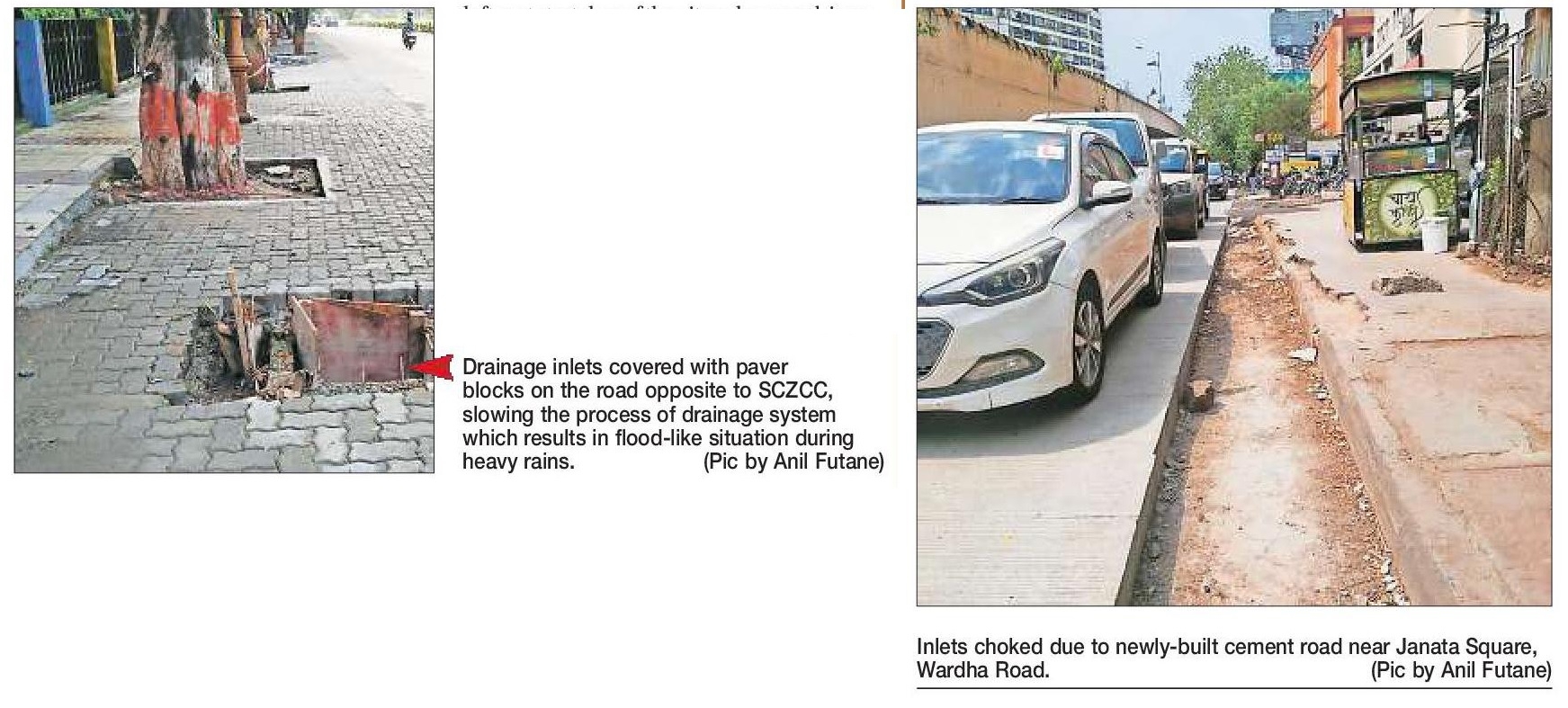
Citizens and urban planning experts point directly to improper elevation of newly-laid cement roads as the root cause of the crisis. Across various localities, contractors built concrete roads significantly higher than the original ground level. In doing so, road-laying crews obstructed or completely sealed off the natural inlets of roadside stormwater
drains located beneath the footpaths. Sujit Rodge, Architect Planner, and former Chairman, Institute of Town Planners, India (ITPI) Maharashtra Regional Chapter (MRC) Nagpur, opined that “Contractors are only the performing hands but it is the responsibility of the authorities and engineers who design the roads to ensure that all the process and procedures are followed to the hilt.
They must cater every negative aspect which could possibly arise after the construction. Today, the sewage and drainage systems are not ready to handle excessive rain and adding to the problems are blocking the drainage inlets along with the rapid concretisation of the roads.”
Previously, tar roads used to percolate rain water which reduced chances of water-logging. Now instead of channelling surface runoff into the subterranean drainage network, the raised concrete surfaces act as artificial barriers, trapping rainwater on the carriageways and diverting floodwaters directly into low-lying residential and commercial areas,” added Rodge.
Serious questions are now being raised regarding the technical oversight provided by NMC’s zonal engineers and supervising officials. According to standard civil engineering norms, road reconstruction projects must maintain existing drainage gradients and preserve stormwater intake points.
However, despite the civic body executing four extensive phases of cement road construction spanning over 150 roads at a cumulative expenditure exceeding Rs 1,040 crore, basic drainage integration was severely neglected. Same is true about State Public Works Department (PWD) as they also show scant regard to Civil Engineering code, as newly constructed stretches in Civil Lines are prime example of violations.
Despite spending nearly Rs 15 crore in five years for the annual pre-monsoon desilting drive across the nullahs of the city, it proved largely ineffective due to ongoing encroachments and narrowed drainage channels.
With inlets blocked by elevated asphalt and concrete overlays, stormwater infrastructure remained inaccessible to surface water. Residents are now demanding immediate corrective measures, calling on the civic administration to modify road elevations, restore drainage inlets, and hold erring contractors and engineers accountable before the next heavy showers.