Waste to Wealth: Biodegradable, eco-friendly tableware from citrus waste
| Date :05-Aug-2026 |
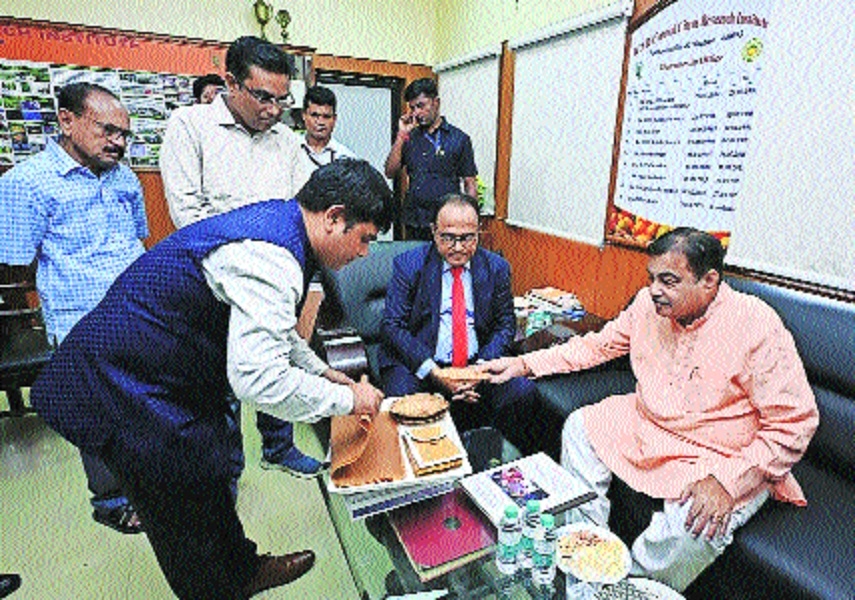
Dr Dilip Ghosh and scientists at ICAR-CCRI showcasing the biodegradable tableware to Union Minister Nitin Gadkari.
Staff Reporter :
Addressing the long-standing challenge of disposing of citrus processing waste, the ICAR-Central Citrus Research Institute (ICAR-CCRI), Nagpur, has successfully developed eco-friendly biodegradable tableware from citrus peel and other by-products.
The innovation offers a sustainable alternative to single-use plastic and thermocol products while transforming agricultural waste into a valuable resource that can generate additional revenue for citrus processors, strengthen the citrus value chain and support a circular bio-economy.
The technology was developed by a research team led by Dr Venkatraman Bansode, Senior Scientist (Food Technology), under a project funded by the Rajiv Gandhi Science and Technology Commission (RGSTC), Government of Maharashtra. It converts citrus peel, pomace and other processing residues into biodegradable and compostable plates, bowls, cups and other disposable tableware with desirable mechanical strength, providing an environmentally friendly solution to waste generated during citrus processing. According to Dr Dilip Ghosh, Director, ICAR-CCRI, the innovation not only addresses waste disposal challenges but also creates value-added products that can benefit citrus growers, processors and rural entrepreneurs.
Besides reducing dependence on petroleum-based disposable products, the technology is expected to improve resource efficiency, promote rural agro-based enterprises and enhance the profitability of the citrus sector. The innovation was showcased during Union Minister Nitin Gadkari’s visit to ICAR-CCRI on July 25.
ICAR-CCRI is now working towards commercialising the technology and transferring it to entrepreneurs, start-ups, self-help groups and industries. The institute believes large-scale adoption of biodegradable tableware made from citrus waste will reduce the environmental burden of citrus processing, improve the utilisation of agricultural by-products and contribute to a cleaner, greener and more sustainable future.